WHO and Africa CDC launch $518 million Ebola response plan
Cases kept rising past 450 in the DRC as WHO and Africa CDC sought $518 million to fight Bundibugyo Ebola without an approved vaccine.

A fast-rising Bundibugyo Ebola outbreak in the Democratic Republic of the Congo has met an even sharper problem: there is no licensed vaccine or specific treatment for this strain. WHO and Africa CDC responded with a US$518 million continental plan, but the money now has to move as quickly as the virus does across borders, trade routes and displaced communities.
The joint plan, launched on June 5, is meant to run from June through November 2026 and follows a “one response” approach across emergency coordination, surveillance, laboratory testing, infection prevention, clinical care, community engagement, logistics and support for essential health services. WHO said the plan complements national response plans in the DRC and Uganda, where the outbreak was confirmed in May.
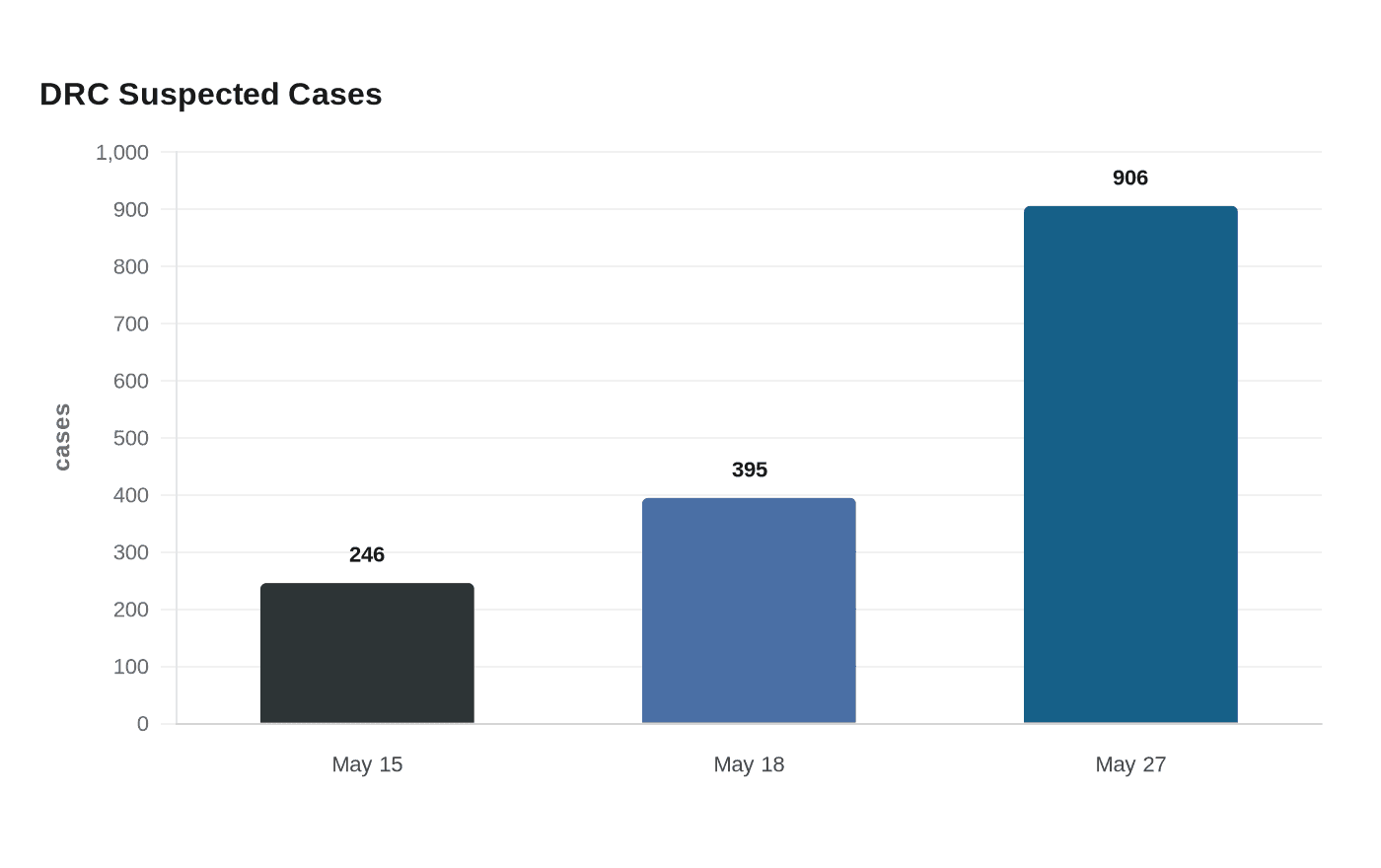
That timing matters because the outbreak has accelerated. Africa CDC first warned on May 15 that regional spread risk from Ituri province was high, when the DRC had about 246 suspected cases and 65 deaths. By May 18, Africa CDC said suspected cases had climbed to about 395 with 106 associated deaths, and Uganda had reported a confirmed imported case in a 59-year-old Congolese man who died on May 14. WHO later said that by May 27 the DRC had 906 suspected cases and 223 deaths among suspected cases, while by May 29 there were 134 confirmed cases across the DRC and Uganda, including nine in Uganda, with 18 confirmed deaths.
WHO Director-General Tedros Adhanom Ghebreyesus said the outbreak had already triggered a public health emergency of international concern on May 17. He said the regional risk was high and the global risk low, but stressed that countries bordering the DRC were especially vulnerable. WHO had already released US$3.9 million from its Contingency Fund for Emergencies, while also scaling up surveillance, contact tracing, clinical preparedness, supply delivery, community engagement and cross-border preparedness.
The outbreak has unfolded in a difficult setting marked by humanitarian crisis, insecurity, dense population pockets and heavy movement of people and goods. WHO said that by June 3 the DRC had 344 confirmed cases and 60 deaths across 24 health zones in Ituri, North Kivu and South Kivu, while Uganda had 15 confirmed cases and one confirmed death. Africa CDC declared the event a Public Health Emergency of Continental Security on May 18, and WHO said the DRC outbreak is the country’s 17th Ebola outbreak.
The funding plan is designed to buy time, but the region’s main constraint is not only cash. It is speed: delivering supplies, tightening border health measures, coordinating laboratories and persuading communities to trust a response built around a virus that still lacks an approved vaccine.
This article was produced by Prism’s automated news system from verified source data, official records, and press releases, then run through automated quality and moderation checks before publishing. The system is built and supervised by the people who set the standards it runs under. Read our full AI policy.
Did this article answer your question?


