WHO announces restart of preventive cholera vaccination campaigns after supply doubles
WHO says preventive cholera campaigns resume as global oral cholera vaccine supply rebounds, with 20 million doses allocated to high-risk countries.
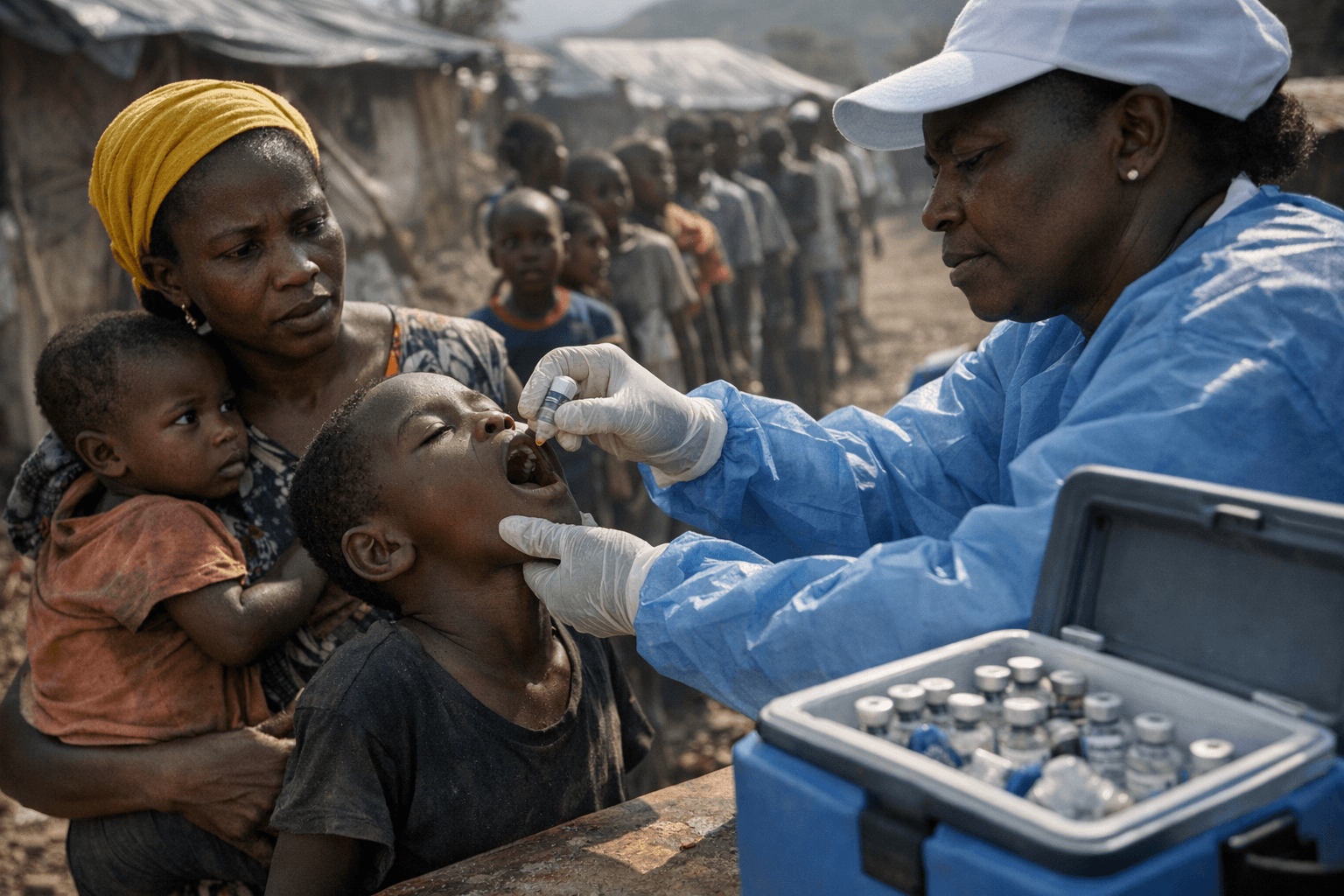
The World Health Organization announces that preventive cholera vaccination campaigns are resuming globally after a rebound in oral cholera vaccine supply that officials say will allow countries to shift from reactive response to prevention. Director-General Dr Tedros Adhanom Ghebreyesus outlined the development at a WHO media briefing on Feb. 11, noting a multiyear effort to rebuild stocks and scale production.
Global annual supply of oral cholera vaccine doubled from 35 million doses in 2022 to nearly 70 million doses in 2025, WHO and partners report. The first allocation for preventive campaigns totals 20 million doses. Of those, 3.6 million doses have been delivered to Mozambique and 6.1 million to the Democratic Republic of the Congo, while a further 10.3 million doses are planned for delivery to Bangladesh. The shipments are financed by Gavi, the Vaccine Alliance, procured and delivered by UNICEF, and distributed free to countries in need.
“Global vaccine shortages forced us into a cycle of reacting to cholera outbreaks instead of preventing them. We are now in a stronger position to break that cycle. I thank EUBiologics, currently the only manufacturer producing cholera vaccines at the scale needed for mass vaccination campaigns, for its efforts, and urge others to enter this vital space. These vaccines will save lives,” Dr Tedros said.
The restart ends a near four-year hiatus in preventive campaigns that followed a 2022 supply shortfall. That shortage prompted WHO to recommend a one-dose strategy to stretch limited supplies; the agency now says a one-dose strategy will remain the standard, with two-dose campaigns considered on a case-by-case basis. The pause in prevention coincided with a sustained rise in cholera cases beginning in 2021; reported cases declined in 2025, but fatal outcomes continued to climb. More than 600,000 cholera cases and nearly 7,600 deaths were reported to WHO in 2025.
Officials linked the renewed push for prevention to acute vulnerabilities created by recent climate and humanitarian shocks. Flooding that affected more than 700,000 people displaced communities and damaged water and health systems, elevating the risk of waterborne disease in already fragile settings. The Democratic Republic of the Congo was specifically cited as experiencing significant ongoing outbreaks even as it begins to receive vaccine shipments.
Dr Sania Nishtar, CEO of Gavi, framed the replenished stockpile as a lesson in global solidarity and precaution. “The multi-year surge in cholera cases and resulting unprecedented demand for vaccines were stark reminders that sustainable, accessible vaccine supply is a global public good – and the world cannot afford complacency. We are grateful to our partners and manufacturers, particularly EUBiologics, for the collaboration that has made the resumption of these essential preventive campaigns possible, and to Gavi's donors, whose support enables us to finance the global OCV stockpile and life-saving outbreak and preventive campaigns,” she said.
Dr Ilesh Jani, chair of the Steering Committee of the Global Task Force on Cholera Control, urged that vaccines be paired with longer-term investments. “This milestone shows the power of bringing together diverse partners to build a more reliable response to cholera. Preventive vaccination helps shield communities and buys critical time. However, lasting progress will depend on long-term investment in infrastructure, for which political commitment is indispensable,” he said.
Public health experts emphasize that vaccine deliveries alone will not end cholera: sustained funding for water, sanitation and health systems, stronger supply chains and more manufacturers entering vaccine production are crucial to protect the most vulnerable communities and prevent future reactive cycles.
This article was produced by Prism’s automated news system from verified source data, official records, and press releases, then run through automated quality and moderation checks before publishing. The system is built and supervised by the people who set the standards it runs under. Read our full AI policy.
Did this article answer your question?