WHO chief visits Bunia as Ebola outbreak spreads in Congo
WHO chief Tedros reached Bunia as Congo’s Ebola outbreak spread to neighboring provinces, with 85 confirmed cases and community cooperation now decisive.
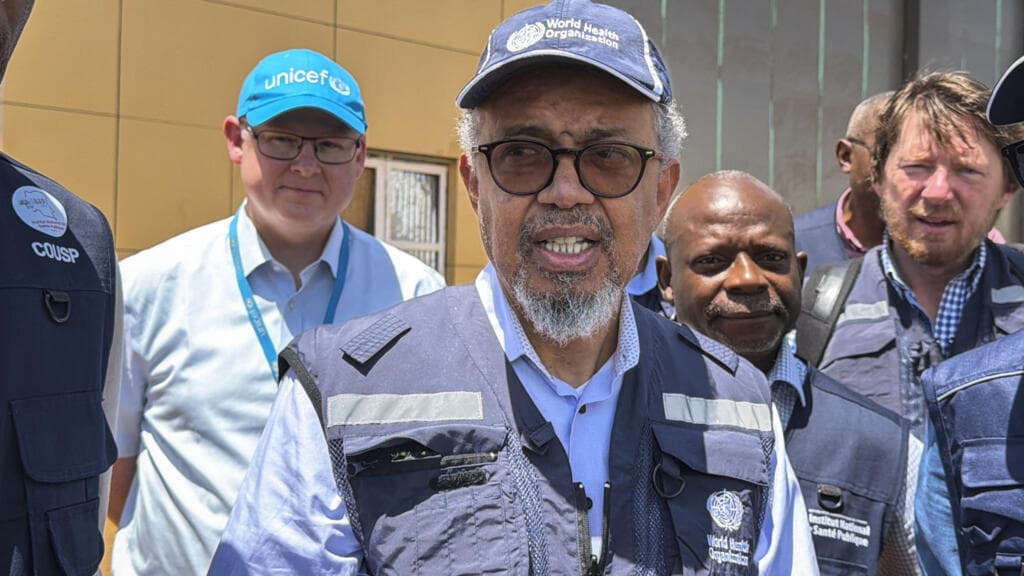
Dr. Tedros Adhanom Ghebreyesus arrived in Bunia as Congo’s latest Ebola outbreak widened across a region already strained by insecurity, displacement and a fragile health system. The World Health Organization said the emergency, caused by Bundibugyo virus, was first confirmed on 15 May and has become the Democratic Republic of the Congo’s 17th Ebola outbreak since the disease was identified in 1976.
The outbreak first surfaced after an alert on 5 May from Mongbwalu Health Zone, where officials reported an unknown illness with high mortality and four health workers died within four days. Laboratory testing by the National Institute of Biomedical Research in Kinshasa confirmed Bundibugyo virus disease in 8 of 13 samples collected from suspected cases linked to severe illness and deaths in Mongbwalu and Rwampara health zones. The outbreak initially affected Rwampara, Mongbwalu and Bunia, then spread geographically into North Kivu and South Kivu provinces.

By 21 May, Congo had reported 746 suspected cases and 176 deaths among suspected cases. Across Congo and Uganda, WHO counted 85 confirmed cases and 10 deaths among confirmed cases, including one death in Uganda. Uganda reported two imported cases on 15 and 16 May, with no confirmed local transmission at that point. WHO also said an American national working in Congo tested positive and was transferred to Germany for care.

The response has moved quickly on paper: rapid response teams, surveillance, contact tracing, laboratory confirmation, infection prevention and control, safer burials, treatment-center support, supplies and community engagement. But WHO said the situation is complicated by insecurity, inadequate isolation and referral systems, and heavy population movement in a mining area, where people cross neighborhoods and borders in ways that can outpace health workers. In that setting, the outbreak cannot be stopped only by orders from Kinshasa or Geneva. Families have to trust the system enough to report symptoms, accept contact tracing, bring the sick for care and allow safe burials instead of hidden ones.
WHO said the risk remains high nationally and regionally, but low globally. Dr. Tedros determined on 17 May that the epidemic met the threshold for a Public Health Emergency of International Concern, and WHO convened the first meeting of the IHR Emergency Committee on 19 May. It was the first time a director-general declared a PHEIC before calling the committee together, underscoring how seriously the agency viewed the spread.
Dr. Mohamed Janabi, WHO’s Regional Director for Africa, said the organization was rapidly scaling up support and working closely with national authorities and partners to halt the virus and save lives. With no approved vaccines or therapeutics for Bundibugyo virus, the outbreak in Bunia will be won or lost in the places where fear, rumor and displacement meet the public health response.
This article was produced by Prism’s automated news system from verified source data, official records, and press releases, then run through automated quality and moderation checks before publishing. The system is built and supervised by the people who set the standards it runs under. Read our full AI policy.
Did this article answer your question?


