WHO chief visits Congo as Ebola outbreak outpaces response
Tedros arrived in Congo as Ebola cases topped 900 suspected infections, with attacks and fear making contact tracing nearly impossible.
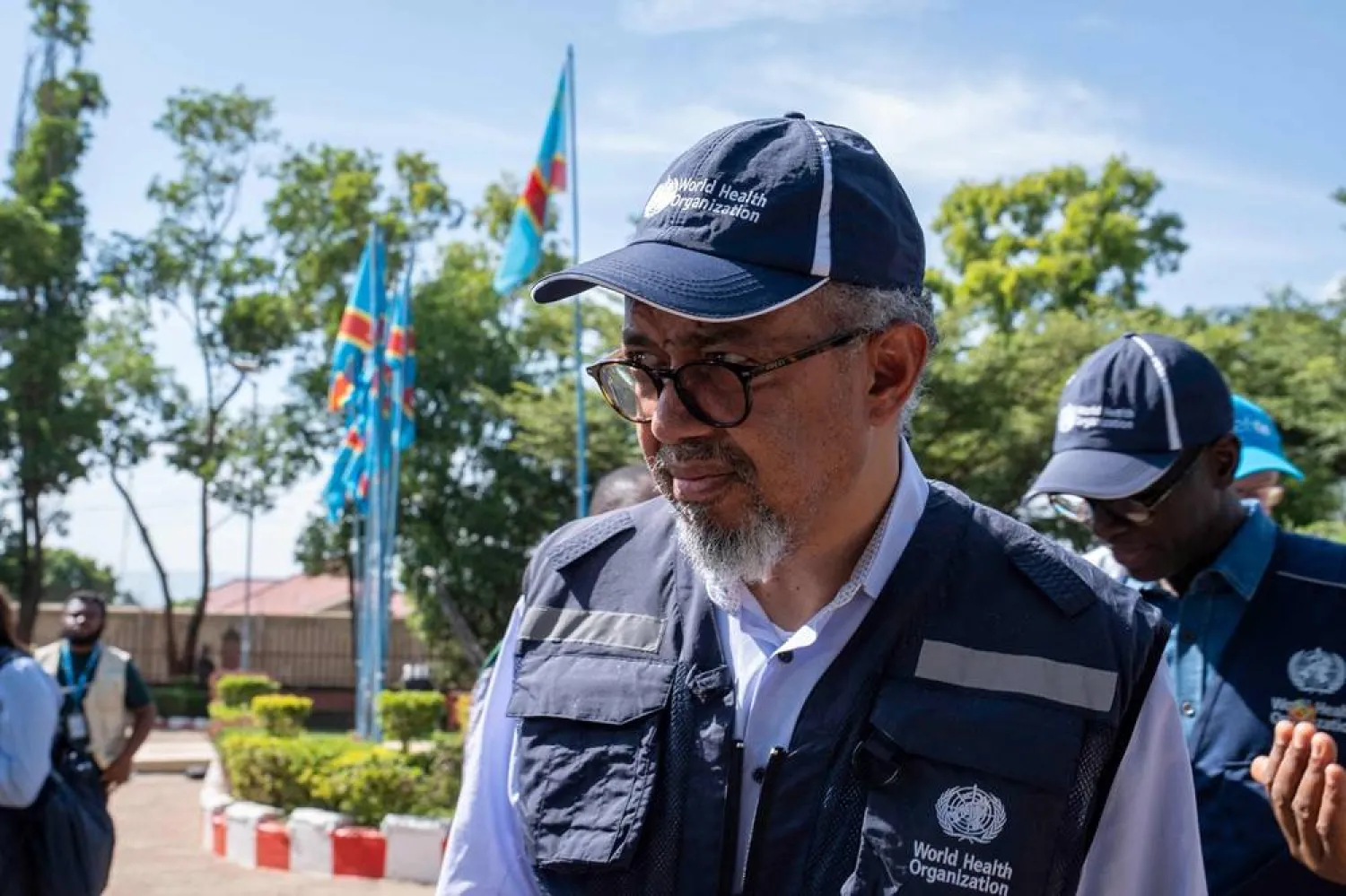
Dr. Tedros Adhanom Ghebreyesus arrived in Congo as health workers raced to contain an Ebola outbreak in northeastern Democratic Republic of the Congo that had already spilled across borders and outrun the first response.
By May 25, the outbreak in Ituri province had grown to more than 900 suspected cases and 220 suspected deaths, far beyond the 8 laboratory-confirmed cases, 246 suspected cases and 80 suspected deaths WHO reported just days earlier on May 16. Health officials said the surge was unfolding in Bunia, Rwampara and Mongbwalu, in an area marked by insecurity, a remote and densely populated population center, and heavy movement of people and trade.
WHO said the response was being hampered on two fronts: the virus itself and the conditions around it. Tedros said attacks on health facilities, insecurity and population movements were making it “nearly impossible” to trace contacts and isolate cases. He also appealed to armed groups to declare a ceasefire so health workers could reach affected communities and slow transmission. WHO said community engagement was critical, especially as misinformation threatened to erode trust in public health teams already working in difficult terrain.

The agency declared the outbreak a public health emergency of international concern on May 17, after Congo and Uganda confirmed the outbreak on May 15 and Uganda reported imported cases on May 15 and 16. WHO said the national risk in Congo had been upgraded to very high. It also said there was no approved Bundibugyo-specific vaccine or treatment, leaving isolation, tracing, surveillance and supportive care as the main tools available.
Tedros’s visit was aimed at tightening those operations, not simply signaling concern. WHO said it was scaling up support to the governments of Congo and Uganda through surveillance, contact tracing, clinical preparedness, delivery of supplies, cross-border preparedness and community engagement, all of which are being tested by the outbreak’s speed and the insecurity around it.

The Centers for Disease Control and Prevention said the risk to the American public and travelers remained low and that no cases had been confirmed in the United States. Still, the agency began enhanced travel screening, entry restrictions and public health measures on May 18.
The crisis is Congo’s 17th Ebola outbreak since the virus was first identified in 1976, a reminder that the country has spent decades confronting repeated flare-ups. Previous Bundibugyo outbreaks were recorded in Uganda in 2007 and in Congo in 2015, but this one is spreading in a setting where violence, displacement and fear could turn a local emergency into a regional crisis if trust breaks down.
This article was produced by Prism’s automated news system from verified source data, official records, and press releases, then run through automated quality and moderation checks before publishing. The system is built and supervised by the people who set the standards it runs under. Read our full AI policy.
Did this article answer your question?