Who should replace Steve Clarke as Scotland manager?
Scotland’s next manager will inherit Clarke’s qualifying record, but the real brief is bigger: decide whether the team keeps its cautious edge or rediscovers a bolder identity.
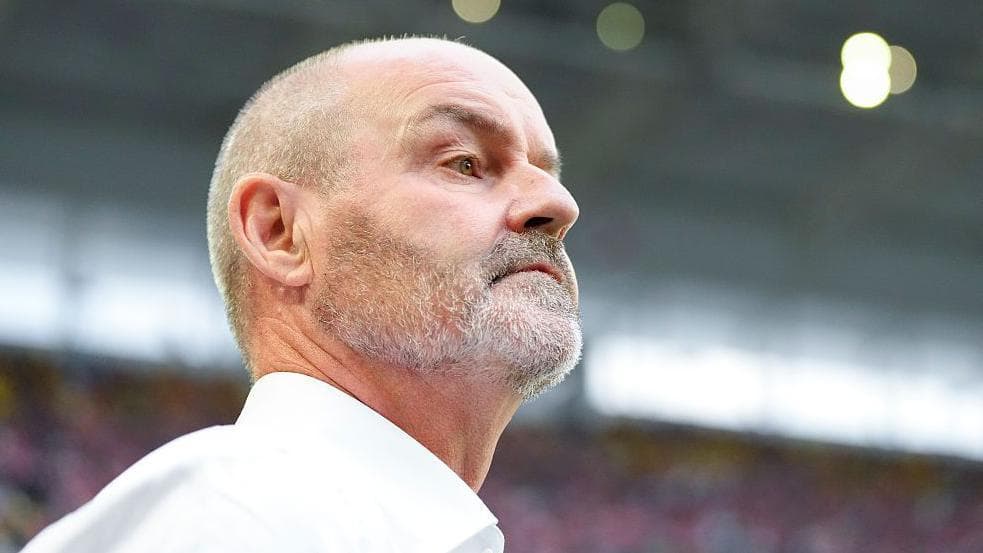
Scotland’s next manager will inherit a team that has just returned to the men’s World Cup for the first time in 28 years, and a fan base that is no longer satisfied with simply getting there. Steve Clarke stepped down on 27 June 2026, barely a month after signing a new contract to stay through the 2030 FIFA World Cup, ending a seven-year spell that the Scottish FA called its "most successful" in the men’s game.
What Clarke leaves behind
Clarke’s record gives the Scottish FA a strong starting point, not an easy one. He led Scotland to back-to-back European Championship qualifications and then guided the country to the 2026 finals in the United States, Canada and Mexico, ending a 28-year wait for a men’s World Cup appearance. That is the benchmark the next appointment must live with, because any successor will be measured against a manager who repeatedly turned Scotland from outsiders into qualifiers.
The timing makes the handover unusually sharp. Clarke named his 26-player squad for North America on 19 May 2026, the World Cup opened on 11 June 2026, and his departure came on 27 June 2026 after Scotland were eliminated from the group stage. In practical terms, the federation moved from planning for a cycle that was supposed to run to 2030 to preparing for a search within days of the tournament ending.
Why the debate is bigger than one name
The argument around Clarke has always been about more than wins and losses. After Scotland’s Euro 2024 exit, Sky News described supporters leaving the Stuttgart stadium and blaming Steve Clarke, a reminder that the team’s style and emotional connection with fans had already become part of the debate. That friction matters now because the next manager will not only inherit a squad, but also the expectations attached to it.
Scotland’s core is no longer a group of players in search of international experience. Andy Robertson, Scott McTominay, John McGinn, Kieran Tierney and Kenny McLean formed part of the Clarke era’s established spine, and that makes the next discussion less about raw talent than about how to use it. Supporters who want change are not necessarily asking for a complete rebuild; many are asking for a clearer identity, more attacking ambition, or a version of Scotland that feels less cautious when qualification is already secured.
Style, development and ambition are the real tests
That is why the coaching debate is really three debates at once. One is tactical, because some supporters want a cleaner, more proactive style that goes beyond game management and conservative structure. Another is developmental, because Scotland still need a national system that helps players move from promise to certainty without waiting for a tournament cycle to force the issue.
The third is the most consequential: ambition. Clarke proved Scotland could qualify, but the next manager will be judged on whether qualification becomes a floor rather than a ceiling. The issue is not whether Scotland can survive in major tournaments, because Clarke already answered that by taking them to consecutive Euros and then a World Cup, but whether the federation is prepared to build a program that can compete after arrival.
What the Scottish FA must get right
The Scottish FA now has to decide what kind of national team it wants to back. If the priority is continuity, the new appointment has to preserve the defensive discipline and consistency that Clarke brought while finding enough extra invention to satisfy a restless support. If the priority is reset, the federation must accept the risk that comes with changing direction after the country has just ended its long World Cup absence.
Either way, the next manager cannot be chosen on reputation alone. The brief has to match the reality Clarke leaves behind: a team that qualified, a squad with senior players in their prime, and a public that has seen both the limits and the value of steady leadership. Scotland now needs a head coach who can turn a qualification record into a broader football identity, because occasional runs to tournaments will not settle the question of where the national team is meant to go next.
This article was produced by Prism’s automated news system from verified source data, official records, and press releases, then run through automated quality and moderation checks before publishing. The system is built and supervised by the people who set the standards it runs under. Read our full AI policy.
Did this article answer your question?