Why ads seem to hear you, tracking is usually the real culprit
Your phone usually isn't eavesdropping. The real machinery is quieter: tracking, location, app permissions and data brokers that make ads feel oddly clairvoyant.
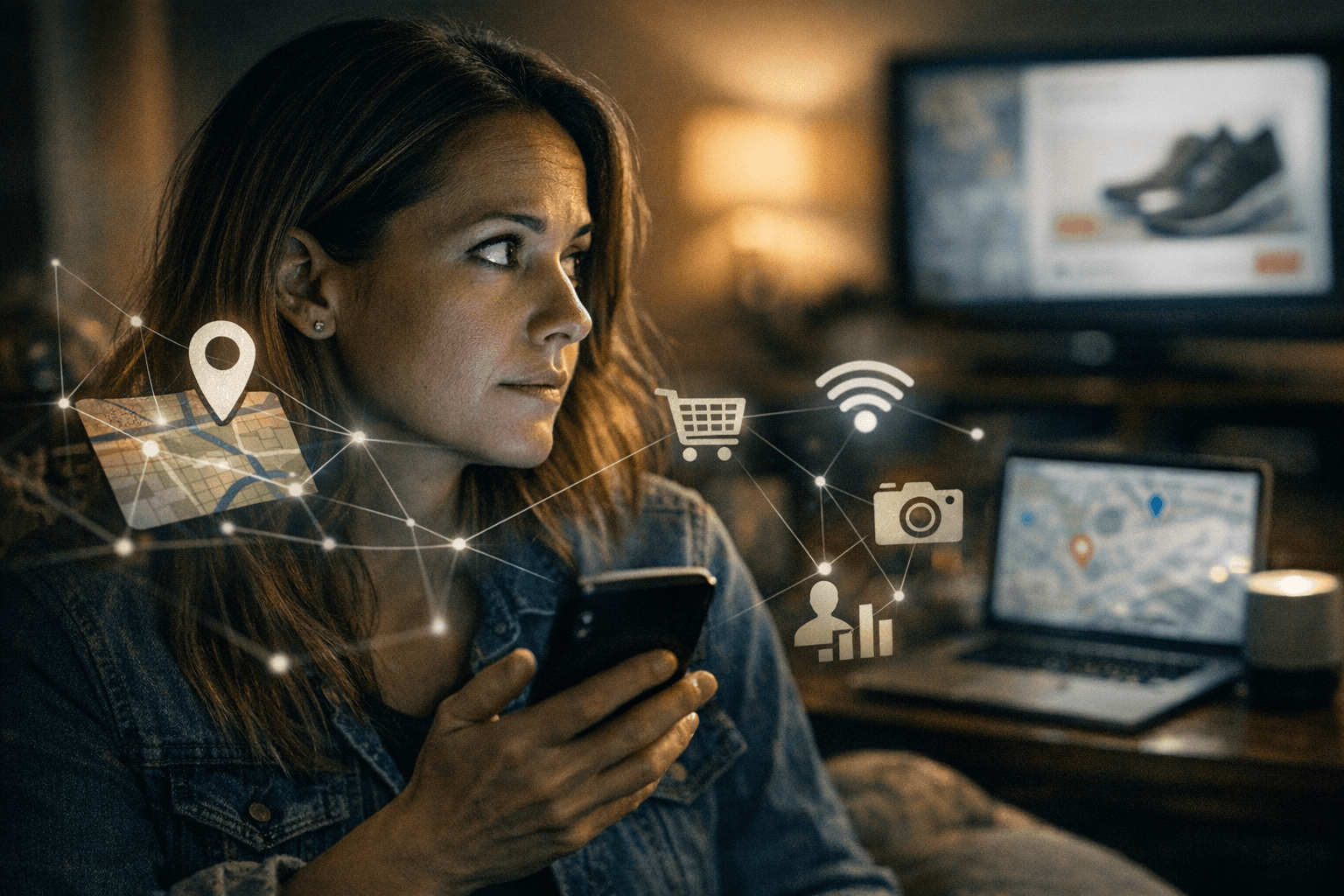
The myth of the listening phone
The creepy part is not just that an ad appears after you mention a product. It is how often the ad seems to know too much, too fast. In most cases, that effect does not require a secret microphone; it comes from a far larger advertising machine built on browsing history, app activity, location signals and data brokers.
That is the core tension David Pogue has explored: the feeling of being overheard is real, but the mechanism behind it is usually ordinary data collection scaled up into something unnervingly precise. The result is a system that can feel like surveillance even when no one is literally listening through your phone.
What ad-tech actually knows
The Federal Trade Commission says websites and apps collect and use information to personalize ads, which is why an ad can follow you from one app to another or seem to arrive moments after a search, click or purchase. Ad-tech systems do not need to hear a sentence out loud if they can connect enough signals from your device, your browser, your location and your shared identifiers.
That is where the creepiness comes from. A location trail can reveal where you work, shop and sleep. Browsing behavior can expose what you are comparing, researching or postponing. Data brokers then assemble those fragments into profiles that advertisers use to target you more aggressively than most people realize, which is why the ad often feels as if it arrived by mind reading rather than math.
Privacy advocates at the Electronic Frontier Foundation, including Gennie Gebhart and Jamie Williams, have made the same basic point: a creepy ad experience can be driven by tracking, data sharing and ad-tech profiling without any microphone spycraft at all. The market logic is straightforward. The more data an advertiser can buy, infer or combine, the better it can narrow a message to a person who is statistically likely to click, buy or convert.
Why voice assistants are a separate issue
That said, voice systems are not imaginary. The FTC says devices like Alexa and Google Assistant can listen for wake words, may mishear users and can send recordings to company servers, which means a device can capture speech without that being the same thing as an ad network secretly mining your conversations for saleable intent.
The practical takeaway is different from the myth. If you use a voice assistant, the risk is not necessarily that every conversation is being monetized in real time, but that mistaken activations, stored recordings and overbroad permissions can still create privacy exposure. Checking microphone settings, reviewing privacy controls and limiting what the assistant is allowed to store matter because the system is designed to listen at least some of the time.
When the rumor becomes harder to dismiss
The suspicion around microphone-based targeting did not appear out of nowhere. In August 2024, 404 Media reported a Cox Media Group pitch deck describing an “Active Listening” ad-targeting service, a claim that landed because it seemed to confirm users’ worst fears about phones and smart speakers. Google responded by removing Cox Media Group from its advertising partners program, while Meta and Amazon publicly denied using the alleged program.
That episode did not prove that mainstream ad systems are routinely eavesdropping, but it did show why consumers stay skeptical. When a pitch deck suggests that speech data could be turned into targeting fodder, the line between inference and intrusion starts to blur, even if the broader industry says it is not operating that way. The damage is partly reputational and partly economic: the more invasive the ad ecosystem appears, the more pressure it puts on platforms that depend on trust as much as on reach.
What regulators say to watch instead
The FTC’s consumer guidance points away from the fantasy of constant microphone spying and toward the real levers users can control. It advises people to opt out of personalized ads where possible, review browser privacy protections and limit location sharing, because those are the channels most likely to feed ad targeting in the first place.
The agency also says its Division of Advertising Practices enforces truth-in-advertising laws that require advertisers to back up claims with reliable, objective evidence. That matters because ad-tech lives on promises about precision, performance and conversion. When those promises depend on opaque data flows, regulators want proof, not just a pitch that sounds technologically impressive.
- Turn off or reduce personalized ads where the platform allows it.
- Check which apps have location access and remove the ones that do not need it.
- Review browser protections against tracking, cookies and cross-site profiling.
- Inspect microphone permissions for voice assistants and unrelated apps.
- Delete old voice recordings or auto-save features if the service allows that control.
A practical privacy reset starts with the boring settings menu:
The Amazon case shows how serious voice data can be
The most concrete reminder that voice data is not trivial came in 2023, when Amazon agreed to a $25 million civil penalty and injunctive relief in a federal case involving Alexa children's privacy and voice recordings. That settlement shows regulators are not treating voice data as a harmless byproduct of convenience; they see it as information that can trigger real legal exposure when companies mishandle it.
Put together, the story is less about one all-seeing microphone than about a sprawling ad economy that knows enough to feel invasive. Phones usually are not “listening” in the literal sense people fear, but the combination of tracking, location sharing, app permissions and brokered data can still produce the same gut-level unease. The truth is less cinematic than covert eavesdropping, and in some ways more troubling, because it is built into the business model.
This article was produced by Prism’s automated news system from verified source data, official records, and press releases, then run through automated quality and moderation checks before publishing. The system is built and supervised by the people who set the standards it runs under. Read our full AI policy.
Did this article answer your question?