Why Canada and the US call football soccer
Soccer is not an American invention. Its name shows how a British game was reshaped by North American football and World Cup-era identity.
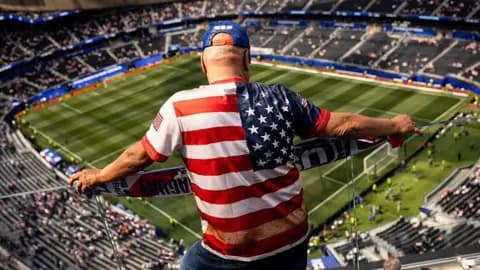
The word soccer is not a U.S. coinage at all. It began as late-19th-century British slang for association football, then stayed alive in the United States and Canada because those countries already had another major code called football.
How a British game became “soccer”
Modern football took shape in England in the 19th century, and the Football Association was founded in 1863 to codify its rules. That mattered because the new code needed a name that separated it from rugby football and other football-like games already played across Britain. From that distinction came association football, then the shortened slang that eventually settled on soccer.
The Oxford English Dictionary traces the noun soccer to the 1880s, with the earliest known evidence from 1885. Other accounts describe the same evolution more playfully, from assoc to assoccer and then to soccer, a reminder that even the vocabulary of a global sport often begins as informal, local shorthand.
Why North America kept the word
In the United States and Canada, soccer survived because football meant something else. In both countries, the name was useful precisely because it avoided confusion with North American football, the distinctly regional code that developed from rugby-like games in the late 19th century.

That naming split says as much about social development as it does about sport. Britain exported the rules of association football, but North America organized its own football traditions around different institutions, different spectators, and eventually different cultural meanings. The result was not just two game codes, but two naming systems that reflected two sporting identities.
Walter Camp sits inside that wider North American story. His work on the development of the American game helped give football here its own shape, which is part of why the English word football could not simply travel unchanged across the Atlantic. In Canada, the same logic applied: soccer remained the practical term for the global game because Canadian football already occupied the football label.
Canada’s early football history runs deep
Canada’s use of soccer is not a recent borrowing or a media habit. Organized soccer history in the country reaches back to the 1870s, and the Dominion Football Association was organized in Montréal in 1877. By 1912, the Dominion of Canada Football Association had been formed, becoming the predecessor of today’s Canadian Soccer Association.
That history helps explain why the game never looked like a foreign import in Canada, even as its terminology stayed distinct. Canada also has a notable international record: Galt Football Club won Olympic gold in 1904, and the International Olympic Committee recognizes that result. Long before the modern global broadcast era, Canadian clubs and administrators were already part of the sport’s international fabric.
What the name reveals about culture and identity
The soccer versus football debate is often framed as a language puzzle, but it is really a map of cultural power. Around much of the world, football is the default because the sport’s rules spread through British institutions and then through FIFA’s global network. In North America, however, local sporting life developed along a different path, and the local terms followed those institutions.
That is why the argument can sound heated even when the sport is the same. Names carry class associations, regional loyalties, and ideas about authenticity. In Britain, soccer once had a working-class, even slightly jokey ring in some circles, while football became the cleaner national term. In the United States and Canada, soccer became the practical term for a game that had to coexist with another football already embedded in schools, colleges, and professional leagues.
The World Cup puts the naming split on display
The 2026 FIFA World Cup makes this terminology debate unusually visible. The tournament is being jointly hosted by the United States, Canada, and Mexico, with 16 host cities across the three countries and 104 matches in an expanded 48-team format. For millions of visiting fans, the same sport will be spoken about in two different ways depending on where they stand.
That matters because World Cup moments do more than crown champions. They also reveal how a sport adapts when it enters new civic spaces. In North America, broadcasters, governing bodies, and everyday fans will keep saying soccer even while much of the rest of the world says football, a split that will be heard in stadiums, fan zones, and news coverage throughout the tournament.
Why 1994 still shapes expectations for 2026
U.S. soccer leaders see the 2026 World Cup as a chance to repeat one of the sport’s biggest North American breakthroughs. The 1994 World Cup in the United States helped give birth to Major League Soccer, and officials believe the next tournament can do more than fill stadiums. It can deepen the sport’s place in the region’s civic and commercial life.
That is where the naming issue becomes more than semantics. If the World Cup expands the game’s audience, it also expands the social meaning of the word soccer. Major League Soccer, U.S. Soccer, and the broader North American game have built an identity around that term, not as a rejection of football, but as a marker of how the sport was localized here. Don Garber and other league leaders have treated the 2026 event as part of that larger growth arc.
A global sport, locally named
FIFA and international football culture still overwhelmingly use football, and that will remain the dominant term in most of the world. But in the United States and Canada, soccer persists because it fits the sporting landscape that grew there. The name reflects a long-running accommodation between imported rules and local institutions.
That is the real lesson of the term. Soccer is not a mistake, a corruption, or an American invention. It is evidence that global sports do not arrive intact. They are translated by class, by custom, by national identity, and by the competing games already living in the same civic space.
This article was produced by Prism’s automated news system from verified source data, official records, and press releases, then run through automated quality and moderation checks before publishing. The system is built and supervised by the people who set the standards it runs under. Read our full AI policy.
Did this article answer your question?

