Wild Recall Aube-Kubel, Haight and Jiříček After Boldy, Eriksson Ek Injuries
Minnesota recalled Aube-Kubel, Haight and Jiříček from Iowa after placing Matt Boldy and Joel Eriksson Ek on injured reserve, shoring up roster depth for the short term.
Three call-ups from the Iowa Wild landed in St. Paul as Minnesota moved to plug gaps created by injuries to two established forwards. On January 16, 2026 the Wild recalled forwards Nicolas Aube-Kubel and Hunter Haight and defenseman David Jiříček, while placing Matt Boldy and Joel Eriksson Ek on injured reserve. The club’s roster action signals an immediate shift in lineup priorities and a reliance on the AHL pipeline to steady the NHL club.
The team’s release summarized each recalled player’s AHL production and role with Iowa, and placed the moves in roster context and related assignments. Those summaries framed the signings as performance-driven promotions and pragmatic roster management. Calling up two forwards and a rearguard addresses forward losses and also replenishes defensive depth, giving the Wild flexibility to reconfigure lines without rushing long-term roster decisions.
From a performance perspective, the recalls underscore the dual mission of the AHL: to develop talent and to serve as an insurance policy for the parent club. Players like Aube-Kubel and Haight typically arrive with a track record in the American Hockey League that suggests they can step into minutes, bring some energy, and stabilize special teams or checking roles as needed. Jiříček’s elevation provides a fresh defensive option who can be slotted into the backend rotation while the coaching staff balances icetime and matchups. The moves are classic next-man-up upgrades that reward AHL play and test how well recent development translates under NHL pressure.
These transactions also reflect broader industry trends. NHL clubs increasingly treat their AHL affiliates as strategic depth rather than mere development pools, shuttling players to manage short injury stretches without disrupting salary-cap architecture or long-term roster construction. For the Wild, leaning on Iowa highlights an organizational investment in depth and the economics of internally sourced reinforcements, which can preserve trade capital and roster flexibility down the stretch.
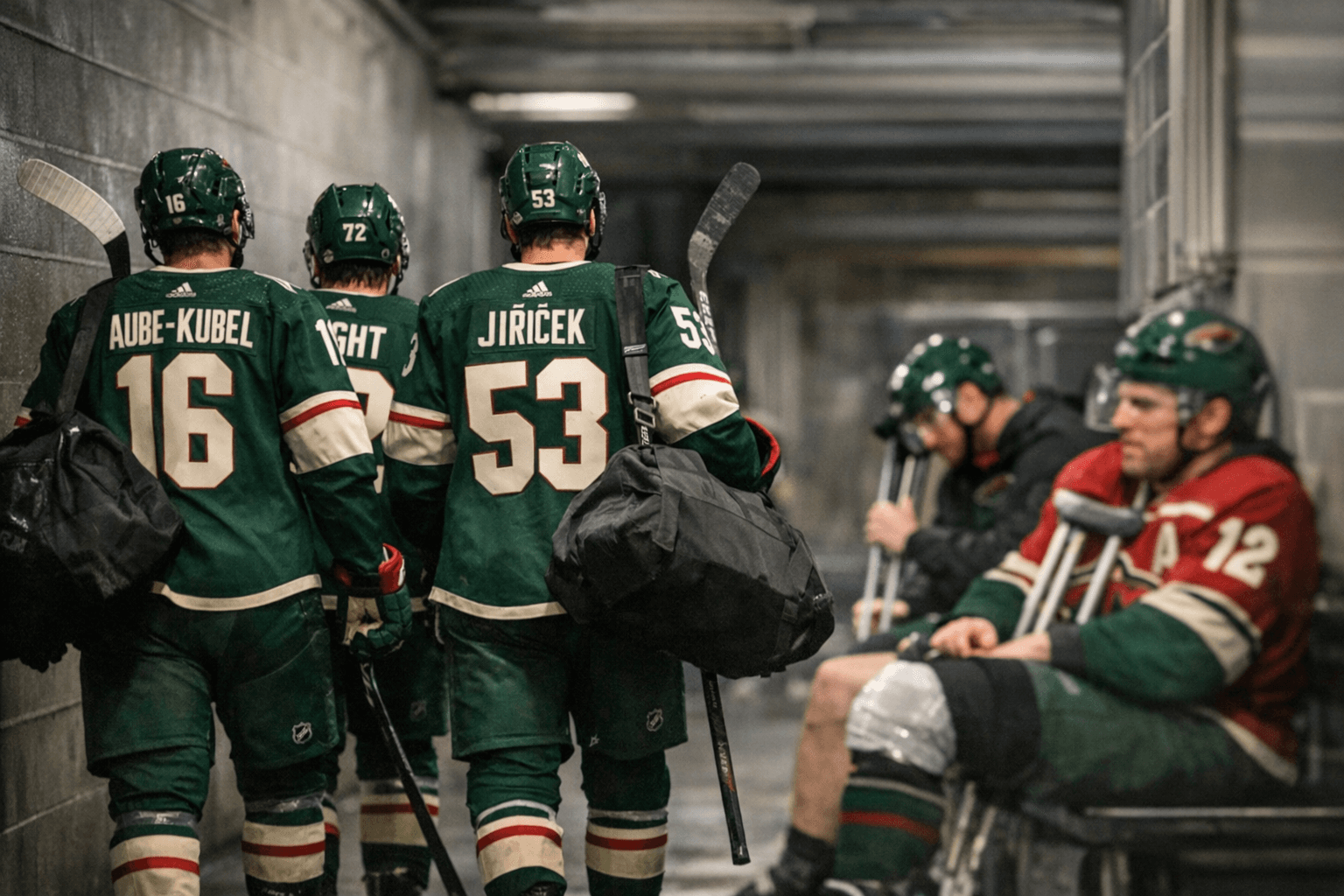
Culturally, call-ups like these energize the farm system narrative and connect local fan bases across levels. Iowa’s supporters see their players take the next step, while Minnesota’s fanbase gains immediate storylines and roster intrigue. There is a social dimension as well: these moves spotlight younger or lesser-known players getting a chance to secure careers, livelihoods, and visibility on a bigger stage.
For fans tracking the playoff push and lineup chemistry, the immediate impact will be how quickly the recalled players adapt and whether they can mitigate the absence of Boldy and Eriksson Ek. The Wild have signaled trust in their AHL production line; the coming games will determine if these call-ups keep the club competitive and whether the organization’s internal depth model pays off.
Sources:
Know something we missed? Have a correction or additional information?
Submit a Tip