Will F1's 2026 rules make Monaco more competitive?
Monaco produced just four overtakes in 78 laps, and the 2026 reset may still leave the race trapped by its own streets.
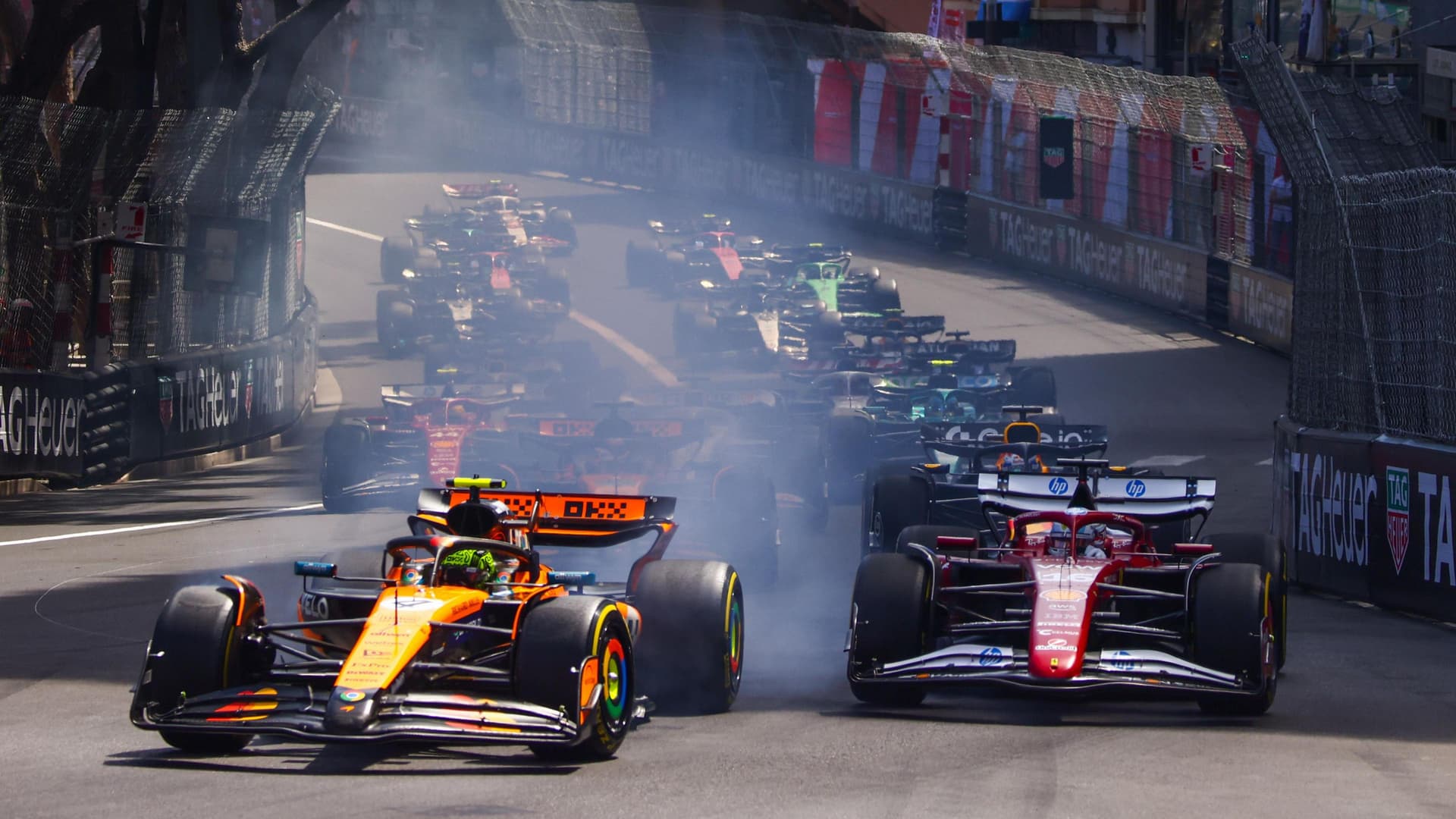
Monaco still obeys its own laws
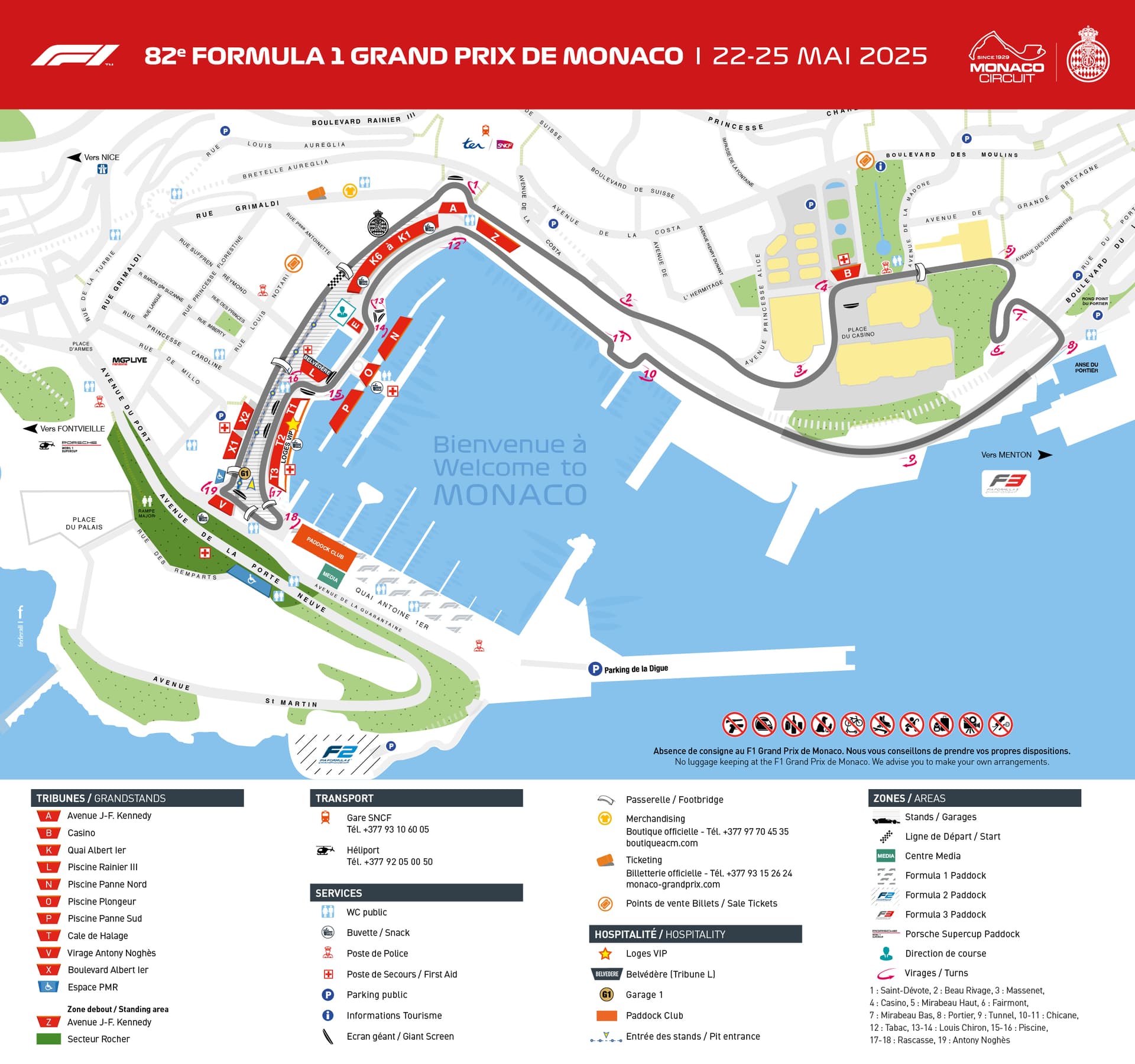
Four overtakes across 78 laps is the sort of statistic that exposes Monaco’s resistance to normal Formula 1 logic. The 2025 Monaco Grand Prix was won from pole by Lando Norris, and the race again underlined how much the circuit rewards position over pace. At 3.337km, with barriers close and passing room scarce, the Circuit de Monaco has spent generations making overtaking feel like a secondary objective rather than the main event.
That is not a recent quirk. Monaco hosted one of the seven venues on the inaugural 1950 Formula 1 World Championship calendar, and it has been the sport’s most famous outlier ever since. Lewis Hamilton’s lap record of 1m 12.909s, set in 2021, says as much about the track’s precision as its speed. The lap is short, the walls are unforgiving, and the average pit-stop time loss of 19.4 seconds gives track position enormous value. Even when the racing changes from year to year, Monaco’s fundamental incentive structure does not.
The numbers also show why any simple verdict is misleading. Formula 1’s figures recorded 17 overtakes in the 2024 race, compared with just four in 2025. The same stats guide put the probability of a Safety Car at 43 percent and a Virtual Safety Car at 29 percent, which means the race is often shaped by interruptions as much as by pure pace. Monaco can swing wildly from one year to the next, but the variance does not mean the circuit has become easy to race on. It means chaos sometimes masks the underlying problem.
Why the 2025 two-stop rule was not a cure
The FIA’s mandatory two-stop rule for Monaco, approved by the World Motor Sport Council for 2025, was an explicit attempt to improve the sporting spectacle. Drivers must use at least three sets of tyres, and in dry conditions they must also use at least two different slick compounds. The rule applies in both wet and dry races, and Formula 1’s own explanation was clear: under the standard tyre rules, drivers would normally only need one stop, so Monaco was given a special exception.
The Automobile Club de Monaco backed the change as a way to diversify race strategies, and on paper it did exactly that. In practice, though, a forced second stop does not automatically create competition. When a pit stop costs 19.4 seconds, strategy becomes a way to shuffle track position, not necessarily a way to produce genuine wheel-to-wheel fights. If the leading car controls the pace, the rest of the field is often left trying to outguess the cycle rather than race through it.
That is the central reality check for Monaco reform. A mandatory two-stop can create more tactical variety, but if overtaking remains nearly impossible, the result is often a more complicated procession rather than a more competitive race. The action shifts from the track to the pit wall, which is not the same thing as changing the race’s incentives.
What the 2026 reset actually changes
The 2026 Formula 1 rules are a much bigger technical reset than the Monaco-specific tyre mandate. The new cars are set to be 30kg lighter, with active aerodynamics and a redesigned power unit that splits output evenly between combustion and electrical power. Formula 1 also plans to introduce the Manual Override system, which gives a short burst of extra battery power when a driver is within one second of the car ahead. The governing idea is simple: make the cars more agile and give drivers more tools to attack.
There is some reason to think that matters. F1’s own rulebook logic suggests that less mass and more flexible aerodynamics should help with responsiveness, while the override system is designed to create a temporary closing advantage where normal battery deployment would not. In a place like Monaco, where power is not king in the way it is at faster venues, even a modest improvement in how closely a driver can follow could change the shape of a fight.
But Benson’s point is the crucial one: the physical limits of Monaco are still the physical limits of Monaco. F1 says the 2026 cars are 10cm narrower and slightly shorter, yet they are still 10cm wider than cars from 20 years ago. That is an improvement, not a revolution. In a street circuit where overtaking between cars of similar performance has been all but impossible for at least half a century, shaving a few centimetres off the dimensions of the car is unlikely to transform the race by itself.
What yo-yo racing means at Monaco
The term yo-yo racing gets to the heart of the problem. It describes a pattern where one car can briefly close on another, often by using fresher tyres, better energy deployment, or a DRS-style assist elsewhere in the calendar, but cannot complete the pass cleanly. The attacking driver then loses momentum, falls back again, and the cycle repeats. Instead of a sustained battle, the race becomes a series of short surges and retreats.

That dynamic is especially relevant at Monaco because the circuit punishes any attempt to force a move. A driver can look fast enough to attack, but unless the pass is completed decisively, the move tends to collapse back into the same order. The 2026 Manual Override system may increase the number of moments when a pass looks possible, but that is not the same as making a pass likely. If the lead car can still defend into the narrowest braking zones and the following car cannot remain close without overheating tyres or exhausting its extra electrical push, the race risks becoming a more sophisticated version of the same stalemate.
What would have to change for Monaco to become strategically dynamic
For Monaco to become materially more competitive, something more fundamental has to give. One option is a real reduction in the cost of trying to pass, either through cars that can follow more closely without losing performance or through a power tool that lasts long enough to finish the move rather than merely threaten it. Another is a circuit change, because the geometry of Monaco is the biggest strategic fact in the sport. More width, more braking space, or a layout with more genuine passing zones would do more than any tyre mandate.
Without that, the 2026 rules may still improve the race at the margins. They could create more pressure, more variation, and more chances for drivers to look dangerous in traffic. What they are unlikely to do on their own is overturn the basic economics of Monaco, where track position remains priceless, clean overtaking remains scarce, and qualifying still decides most of the story before the lights even go out. The streets may be a little friendlier to racing in 2026, but they are still Monaco.
This article was produced by Prism’s automated news system from verified source data, official records, and press releases, then run through automated quality and moderation checks before publishing. The system is built and supervised by the people who set the standards it runs under. Read our full AI policy.
Did this article answer your question?
.jpg&w=1920&q=75)