Winter storm freezes East Coast, cripples travel and power grid
Widespread outages and grounded flights stalled commerce across the American East, costing the economy billions and exposing infrastructure weaknesses.
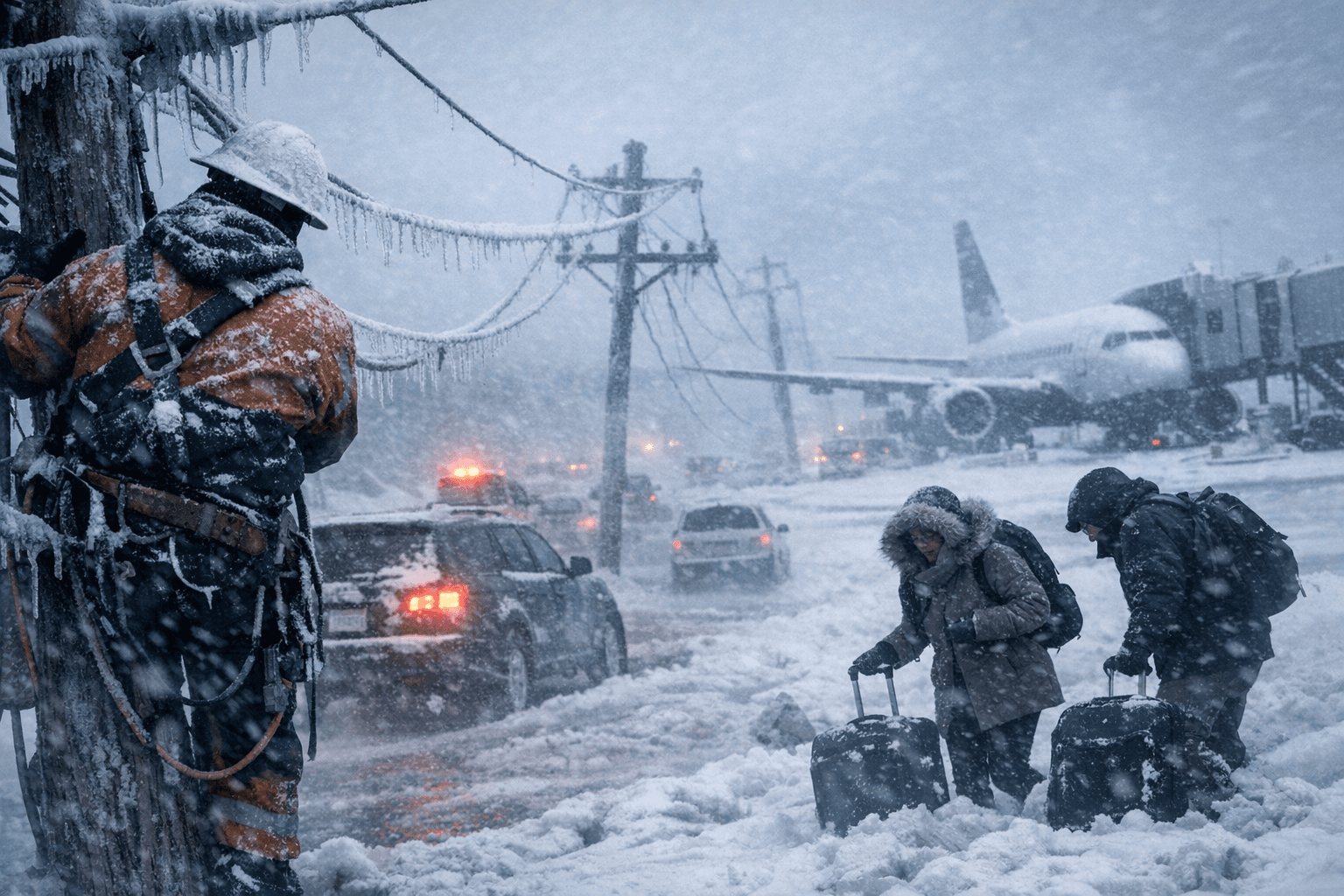
The deadly winter storm that paralyzed much of the American East grounded at least 11,400 flights, toppled power lines and left hundreds of thousands without service, taking a multi-billion dollar bite out of the U.S. economy, officials and experts said. The breadth of disruption stretched airlines, utilities and supply chains and underscored gaps in infrastructure and emergency planning.
Air travel was the most visible economic casualty. With thousands of flights canceled and airports operating at reduced capacity, cargo movements slowed and perishable shipments were delayed. Airlines faced mounting costs from rerouted crews, aircraft repositioning and passenger accommodations, and analysts said that ripple effects through freight networks would amplify losses for manufacturers and retailers dependent on just-in-time delivery.
Power outages compounded the crisis. Utility crews worked around the clock to repair downed lines and restore service, but prolonged outages in residential neighborhoods and commercial districts forced closures of businesses, schools and medical facilities. The interruption of heating and electricity intensified the human toll of the storm and increased demand for emergency shelters and municipal assistance.
Retail and service sectors also suffered. Brick-and-mortar commerce in affected regions saw sharply reduced foot traffic as road travel became hazardous. Trucking companies reported slower runs and route cancellations, adding costs for shippers and raising the risk of inventory shortages in some markets. Energy markets reacted to surges in demand for heating fuel and electricity, while losses from business interruptions contributed to the broader economic estimate described as multi-billion dollars.
The scale of the event focused attention on institutional preparedness. Utilities faced scrutiny over winterization practices and infrastructure resilience, with legislators and regulators expected to review maintenance records and investment plans. Emergency management officials were tested on coordination between state and federal agencies and on the capacity of local systems to shelter displaced residents and maintain critical health services. The storm highlighted persistent tensions between short-term emergency response and long-term capital investment decisions.
Policy implications are likely to be central in coming weeks. Lawmakers confronted with recovery costs may renew debates over federal funding for grid modernization, targeted subsidies for hardening infrastructure and incentives for utilities to invest in resilience. Planners and public officials will also face questions about how to integrate extreme weather risk into transportation scheduling and supply chain contingency planning.
There are political and civic stakes beyond immediate repairs. Large-scale disruptions tend to shape public perceptions of competence among elected officials and service providers, potentially influencing local and state accountability measures. The storm also posed risks to civic participation by disrupting travel and public services, a factor election officials may need to consider for continuity and access.
Officials said recovery would take days in many areas and longer where damage was extensive. As crews worked, economists and municipal leaders began tallying losses and mapping priorities for restoration. The immediate calculus centered on restoring power, reopening key travel corridors and stabilizing supply chains so that commerce and daily life could resume while longer-term debates over resilience and funding proceed.
This article was produced by Prism’s automated news system from verified source data, official records, and press releases, then run through automated quality and moderation checks before publishing. The system is built and supervised by the people who set the standards it runs under. Read our full AI policy.
Did this article answer your question?

