Wisconsin brother calls Knicks games to brighten sister’s day
A Wisconsin brother turns Knicks play-by-play into a daily ritual, helping his sister smile eight years after a teen crash left her with a traumatic brain injury.

Mitch Widmeier does not need Madison Square Garden to call a Knicks game. From his living room in Wisconsin, he turns New York broadcasts into a private lifeline for his sister, Hannah, who suffered a traumatic brain injury eight years ago after a car accident as a teenager.
The routine is simple and deeply personal. Mitch narrates Knicks games for Hannah, using basketball as a way to stay connected and give her a reason to smile on difficult days. What began as a family coping mechanism has drawn wide attention because of its plain humanity: one brother, one sister, and a shared ritual built around the rhythm of an NBA game.
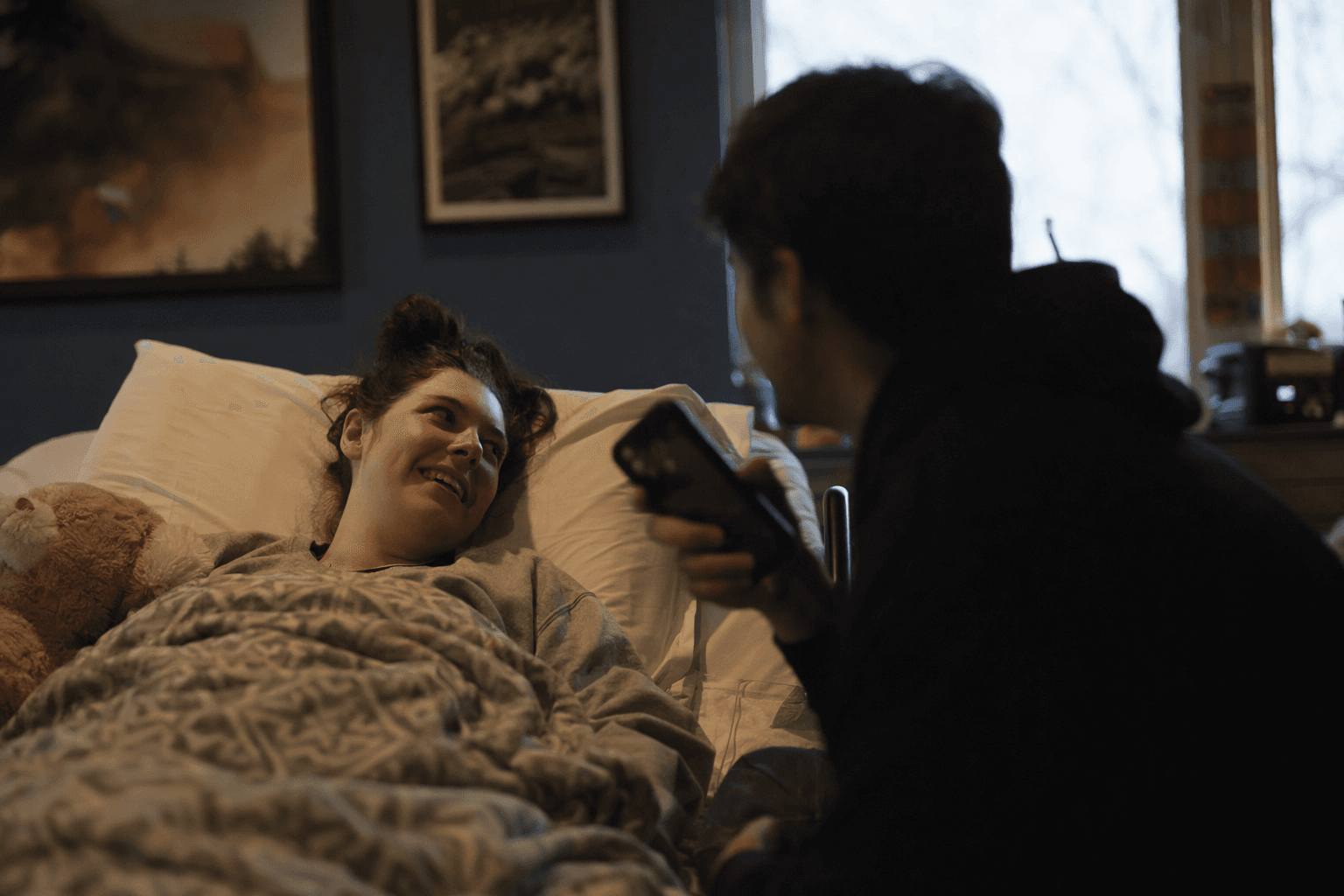
Hannah’s injury changed the family’s life. Mitch has said the Knicks became a source of bonding after the accident, and that connection has carried through years of recovery and adjustment. In a story shaped by trauma, the most durable detail is not the injury itself but the repetition that followed it, with Mitch returning to the same living-room broadcasts to keep Hannah engaged.
Mike Breen, the longtime lead play-by-play voice for NBA games on ABC and ESPN and the lead announcer for New York Knicks games on MSG Network, profiled the story for ESPN and ABC News. The video clip featuring Mitch Widmeier and Hannah ran last week, helping push the family’s story across those outlets and into a broader national conversation about care, disability and the small routines that help families hold together.
Mitch later joined Chris Cuomo on NewsNation’s CUOMO on May 15, 2026, where he discussed how the Knicks became a source of bonding after Hannah’s traumatic brain injury. That added another layer to a story already resonating far beyond Wisconsin: not as a feel-good novelty, but as an example of how family members often improvise their own forms of rehabilitation support when formal recovery stretches on for years.
In a sports culture built on highlight reels and arena noise, Mitch Widmeier’s calls from the living room stand out for a different reason. They show how care can be repetitive, ordinary and still life-giving, especially when a sibling bond has to adapt to a brain injury, isolation and the long work of recovery.
Know something we missed? Have a correction or additional information?
Submit a Tip