Wisconsin Supreme Court Race Could Expand Liberal Majority to 5-2
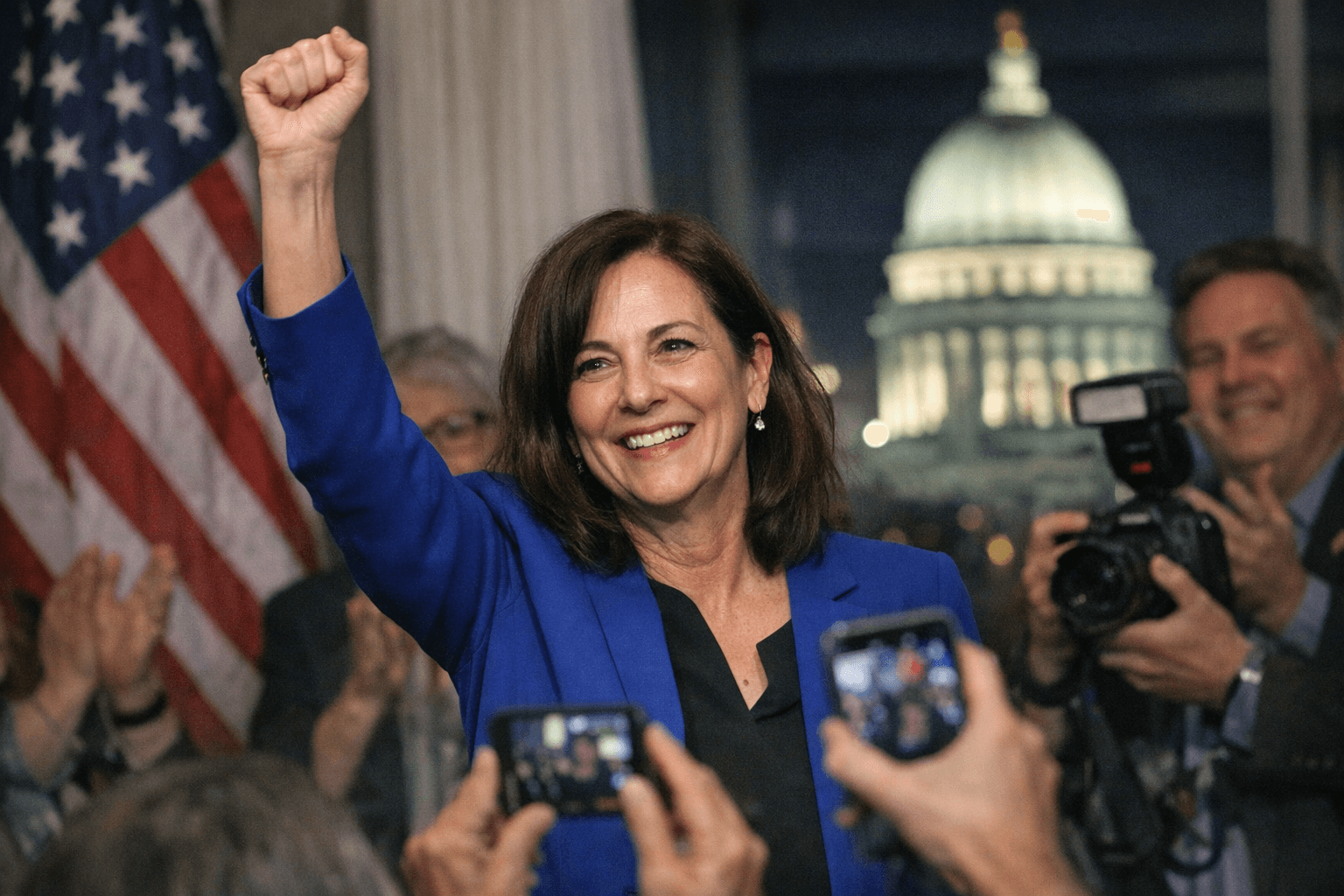
Wisconsin voters cast ballots Tuesday for a Supreme Court seat that could shift the liberal majority from 4-3 to 5-2, in a race drawing a fraction of last year's record $115M.
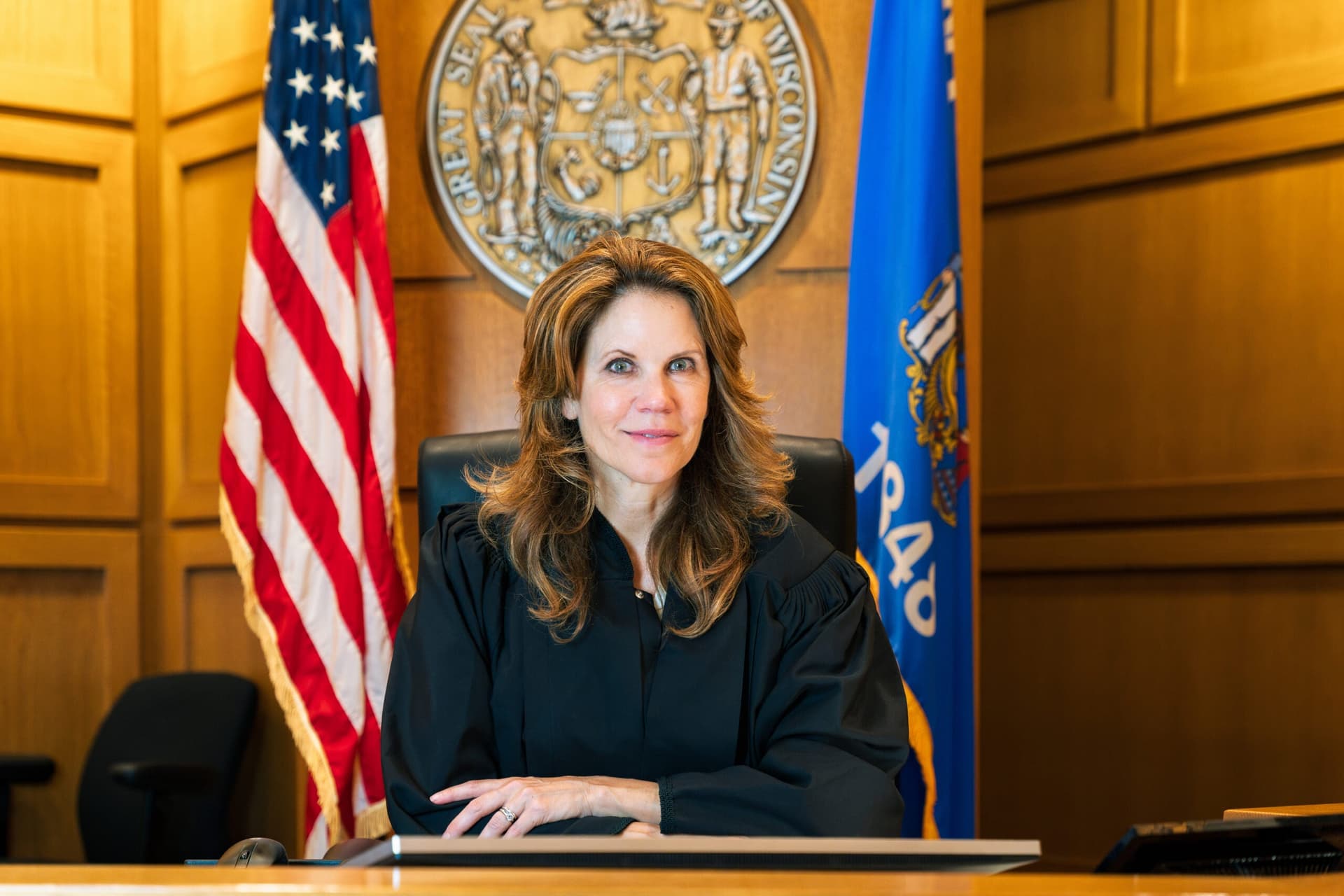
Wisconsin voters went to the polls Tuesday in a state Supreme Court race that carried far lower national fanfare than recent contests but significant consequences for the ideological balance of the state's highest court. With liberal-backed Judge Chris Taylor facing conservative-backed Judge Maria Lazar for a ten-year seat, the question was not whether liberals would retain control of the court, but by how much.
Liberals currently hold a 4-3 majority on the Wisconsin Supreme Court. A Taylor victory would push that margin to 5-2, locking in progressive control until at least 2030. A Lazar win would leave the existing balance unchanged.
Both Taylor and Lazar are judges on the Wisconsin Court of Appeals. Taylor, who serves on District IV, is a former Democratic member of the Wisconsin Assembly. Lazar, who serves on District II, was an assistant attorney general under two Republican Wisconsin attorneys general.
The seat opened after conservative Justice Rebecca Bradley, who had served on the court since October 2015, withdrew from the race on August 29, 2025, after initially signaling she would seek reelection in April of that year. Her departure made this one of only a small number of open-seat contests in the court's history. Only 23 of more than 136 previous elections held for the court have been for open seats.
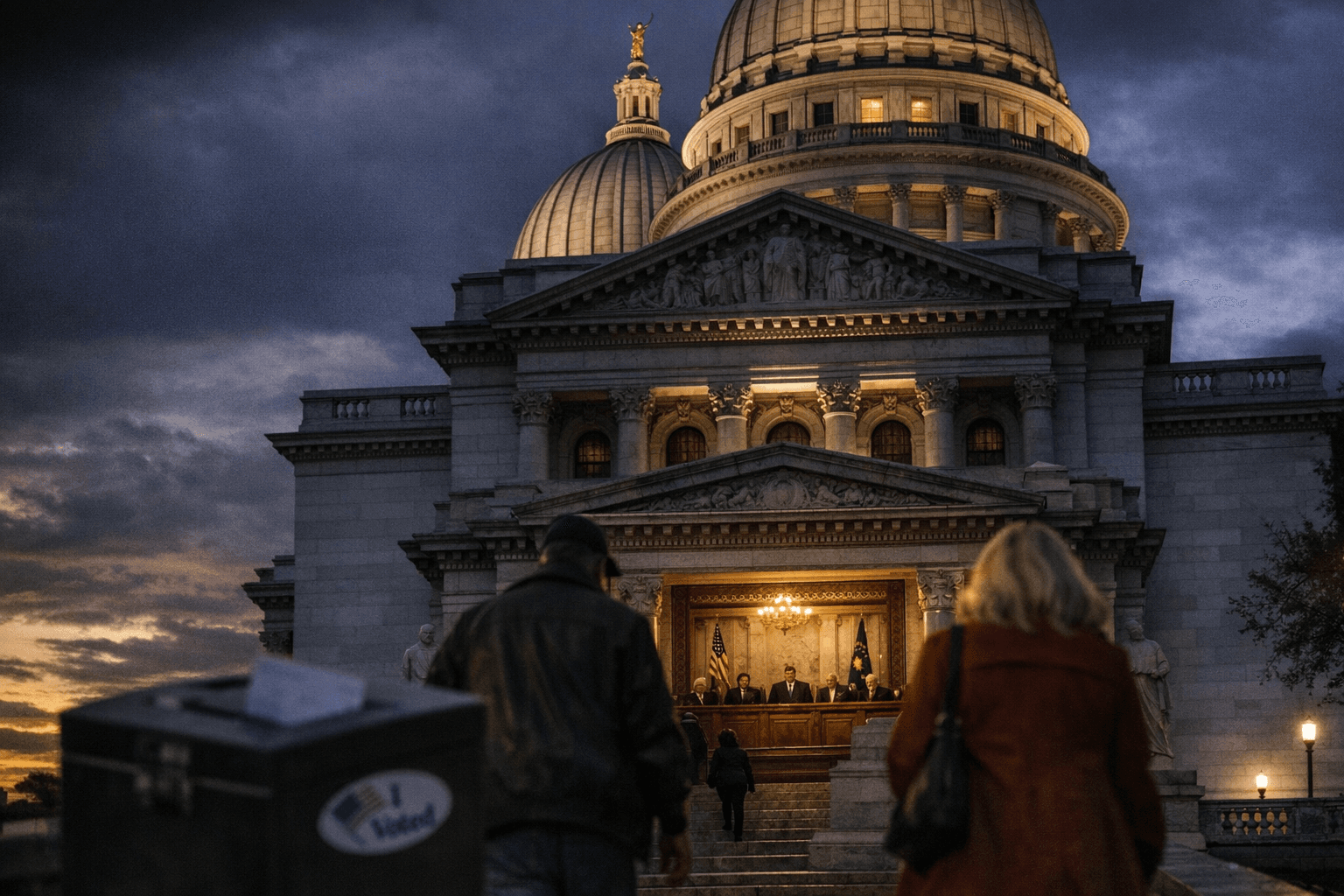
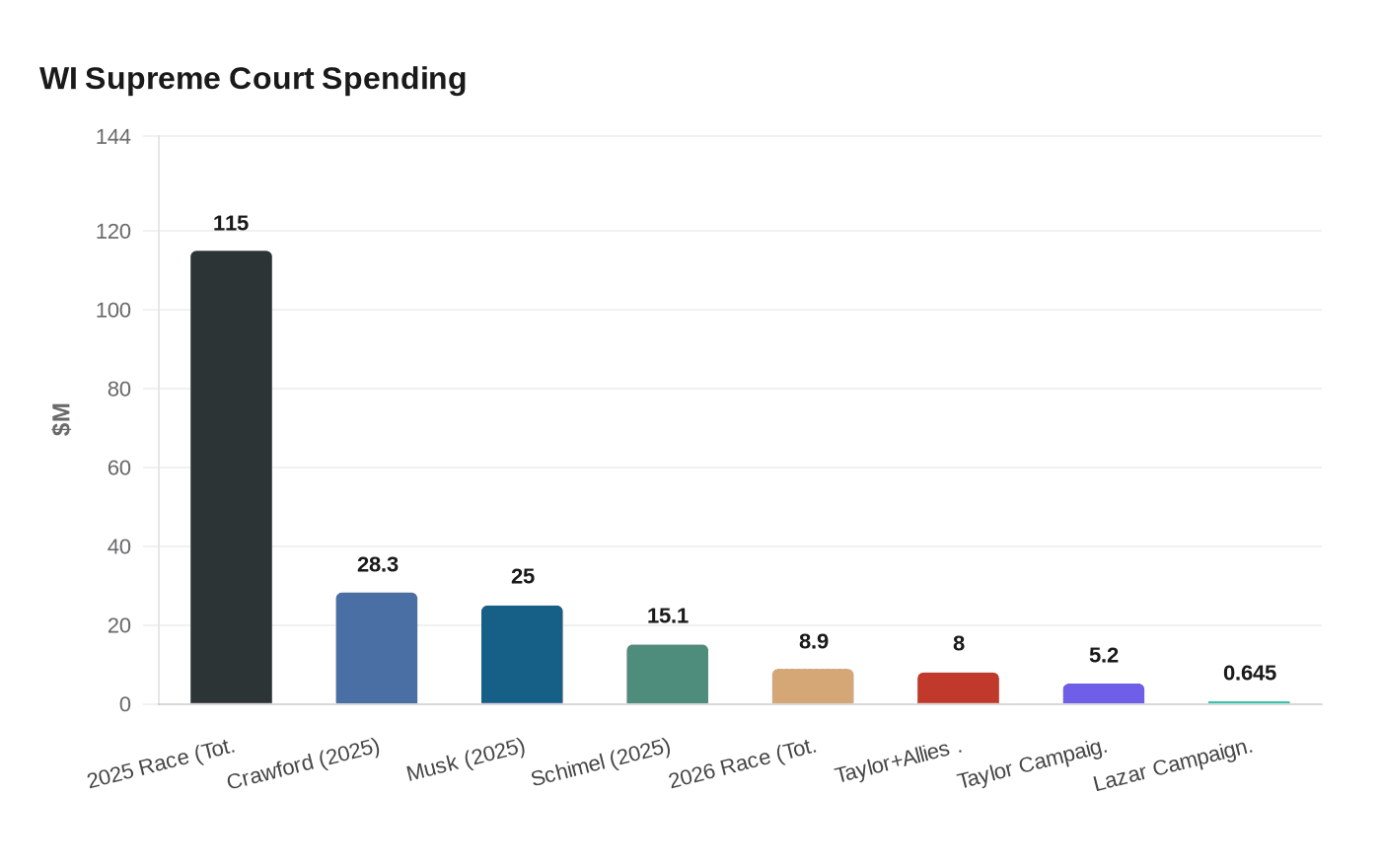
The spending gap in the race was stark. Taylor's campaign spent over $5.2 million, with total Taylor-backing efforts reaching nearly $8 million through March 31, 2026. Lazar spent approximately $645,000 over the same period. Taylor and her allies outspent Lazar and her supporters nearly 9-to-1, with the Brennan Center for Justice estimating Lazar's ad spending alone at roughly $332,000.
Even so, the overall financial scale of the 2026 race stood in sharp contrast to what Wisconsin had just witnessed. Combined spending by both candidates and their backers reached nearly $8.9 million through March 31, a fraction of the $115 million spent in the April 2025 race, which set a record as the most expensive judicial election in United States history.
That 2025 contest captivated the country. Billionaire Elon Musk spent more than $25 million backing conservative Brad Schimel, while liberal Susan Crawford, a Dane County Circuit Court judge, defeated Schimel by 10 percentage points to preserve the court's 4-3 liberal majority. Crawford's campaign raised more than $28.3 million; Schimel raised over $15.1 million. With ideological control of the court no longer directly at stake in 2026, national donors and media attention retreated sharply.
The debate between Taylor and Lazar touched on consequential constitutional questions. Lazar stated that birthright citizenship is not absolute and that Congress and the president can interpret its scope, while Taylor affirmed the 14th Amendment's citizenship protections for all those born in the United States. The candidates also clashed on PFAS regulations and transgender athletes in sports.
Politico described the 2026 race as one that "tilts Democrats' way," consistent with Taylor's overwhelming fundraising advantage and the pattern of recent Wisconsin judicial contests. Still, the state's history serves as a reminder that even heavily favored candidates face real risk in low-turnout spring elections. In 2019, just 6,000 votes decided a Wisconsin Supreme Court seat, while three in four eligible Wisconsin voters stayed home that year.
The winner will serve a term running through 2036, shaping the court's rulings on redistricting, abortion access, labor law, and a range of other high-stakes legal questions that have made the Wisconsin Supreme Court one of the most watched state courts in the nation.
Sources:
Know something we missed? Have a correction or additional information?
Submit a Tip