Wizz Air urges passengers to arrive three hours early amid queue delays
Wizz Air is telling travellers to build in three hours at the airport as queues push some passengers to miss homebound and connecting flights.
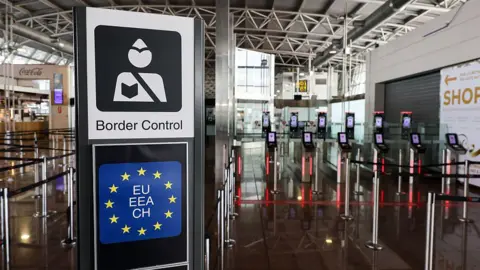
Passengers are being told to treat a long airport queue as part of the journey, not an exception. Wizz Air says some customers have missed return or connecting flights home because delays at bag drop, security and border control stretched too far, reinforcing advice that international departures often need at least three hours at busy airports.
The warning lands at a moment when congestion is no longer confined to one terminal or one airline. The UK Civil Aviation Authority tells passengers who miss flights because of airport queues to check rebooking options, travel insurance and compensation rights, underscoring how delays at the front end of the trip are now spilling into the rest of the travel chain. For British travellers heading into the Schengen area, the problem may get worse still, as new EU entry-exit and biometric border checks add another layer of processing that travel experts say could lengthen queues at some European airports.
Wizz Air’s own expansion makes the advice more significant. On March 31, 2026, the airline said it had unveiled its largest ever UK summer schedule. On May 15, 2026, it said it was launching its biggest-ever network from the UK, with a particular focus on Luton. That growth is a sign of demand, but it also raises the stakes when airports, border posts and ground operations fail to keep pace. Yvonne Moynihan, who has been managing director of Wizz Air UK since August 2021, is now steering the carrier through a period in which the scale of the operation and the fragility of the journey are colliding.

The airline has also been trying to reset its relationship with passengers. In 2025, Wizz Air launched its £12 billion Customer First Compass, then said the plan was centred on Product, Price, Service and Communication, with improved reliability and customer support built in. That effort reflects a broader reality: low-cost carriers depend on high aircraft utilisation and tight turnaround times, so any disruption at security, bag drop or border checks can cascade quickly through a network.
Operational pressure is not limited to airports. Reuters reported in July 2025 that Wizz Air had grounded an average of 44 aircraft because of Pratt & Whitney engine issues, a hit that helped make flying times and schedules less predictable. Wizz Air said in 2026 that it had 257 aircraft with an average age of 4.5 years, and its investor-relations page put year-to-date fiscal 2026 passenger numbers at 54.0 million. The message for travellers is clear: three hours early is no longer just cautious advice. For international travel, it is becoming the new baseline.
This article was produced by Prism’s automated news system from verified source data, official records, and press releases, then run through automated quality and moderation checks before publishing. The system is built and supervised by the people who set the standards it runs under. Read our full AI policy.
Did this article answer your question?