Woodturner documents lathe mishap with poplar burl and resin, shows repair
A woodturner documented a lathe mishap while turning a poplar burl and epoxy resin blank and then demonstrated how they repaired and finished the piece, offering a useful learning moment for turners.
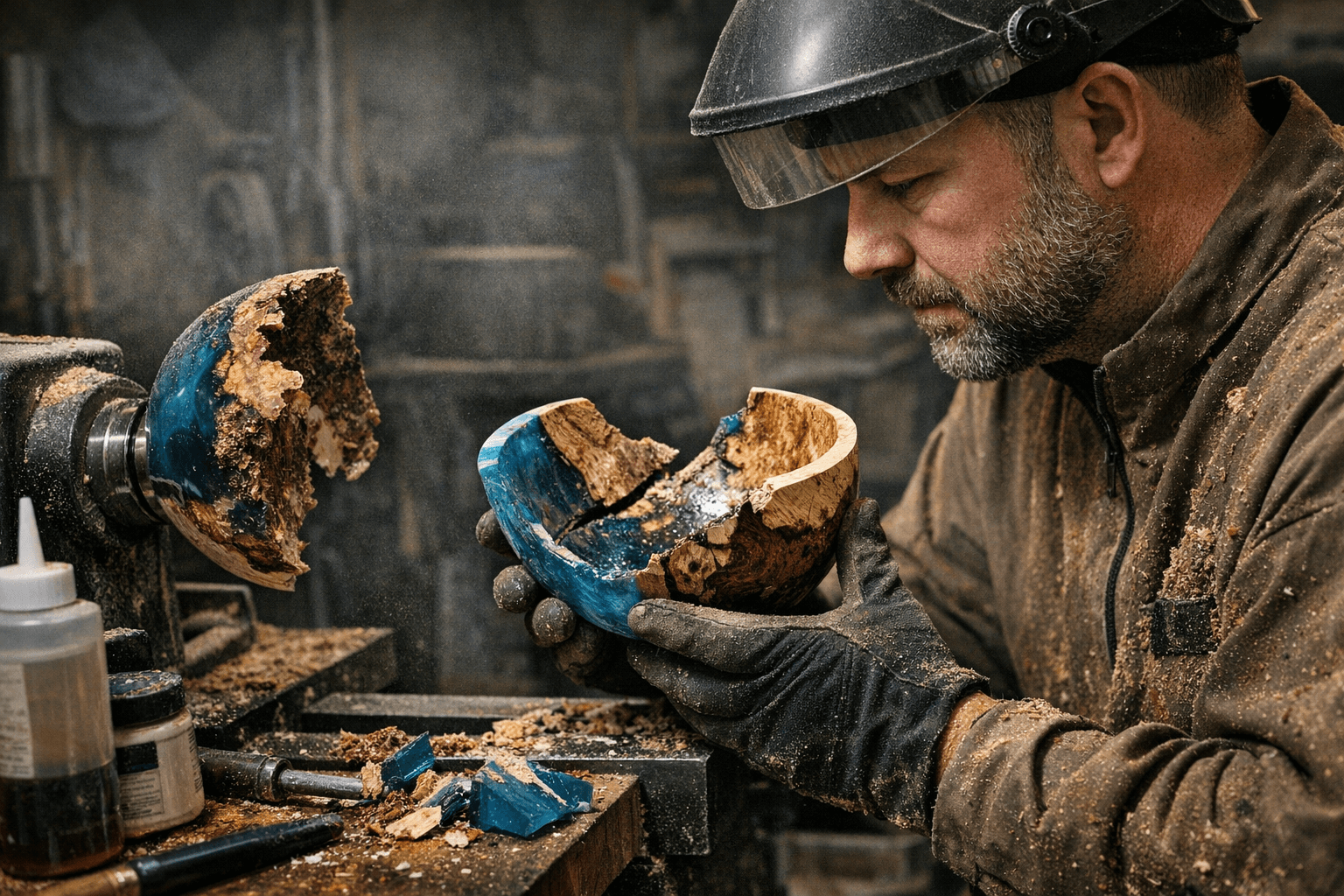
A short video posted February 6, 2026 captured a turning session that did not go according to plan: a blank made from poplar burl and epoxy resin suffered a mishap on the lathe, and the creator narrated the incident while walking viewers through the recovery and repair. The clip is concise but valuable because it shows how mixed-media blanks behave under rotation and how to salvage a project after a catch or failure.
The piece in question was a decorative blank combining the irregular grain of poplar burl with poured epoxy resin. Those materials are popular for striking visual effects, but they also introduce challenges. Burl sections often contain voids and unstable grain, and epoxy pockets change density and balance. When a blank like this is mounted and turned at speed, an imbalance or hidden void can produce a catch, tearout, or separation that throws the work out of round. The video makes that practical danger plain while demonstrating that a mishap does not necessarily mean total loss.
After the incident, the creator documented methodical recovery steps. Viewers see the damaged areas inspected, loose fragments removed, and the work stabilized for safe reworking. The clip emphasizes taking time to re-secure the blank, working at reduced lathe speed, and using controlled cuts to remove damaged fiber before refining the shape. The repair sequence concludes with surface preparation and finishing to integrate resin fills and wood, restoring the piece’s visual appeal.
This footage matters to the woodturning community because it combines a cautionary example with hands-on troubleshooting. Turning mixed-media blanks is increasingly common, and this clip highlights three practical takeaways: verify that epoxy is fully cured and voids are identified before turning, check balance and secure mounting before running at higher speeds, and approach repair as a stepwise process rather than an emergency rush. The video also reinforces shop safety basics—wearing a face shield, standing to the side when first spinning a new blank, and reducing speed when the diameter is large or the blank looks uneven.
For turners who work with burls and resins, the incident is both a warning and a how-to lesson. Salvage often starts with patience and careful removal of compromised material, followed by stabilization and gradual re-turning. The community benefits when makers share missteps as well as finished pieces; seeing the recovery process helps others avoid needless scrap and sharpens techniques for mixed-media work. Expect more creators to document both problems and fixes, which helps everyone learn safer, smarter approaches to turning complex blanks.
Know something we missed? Have a correction or additional information?
Submit a Tip