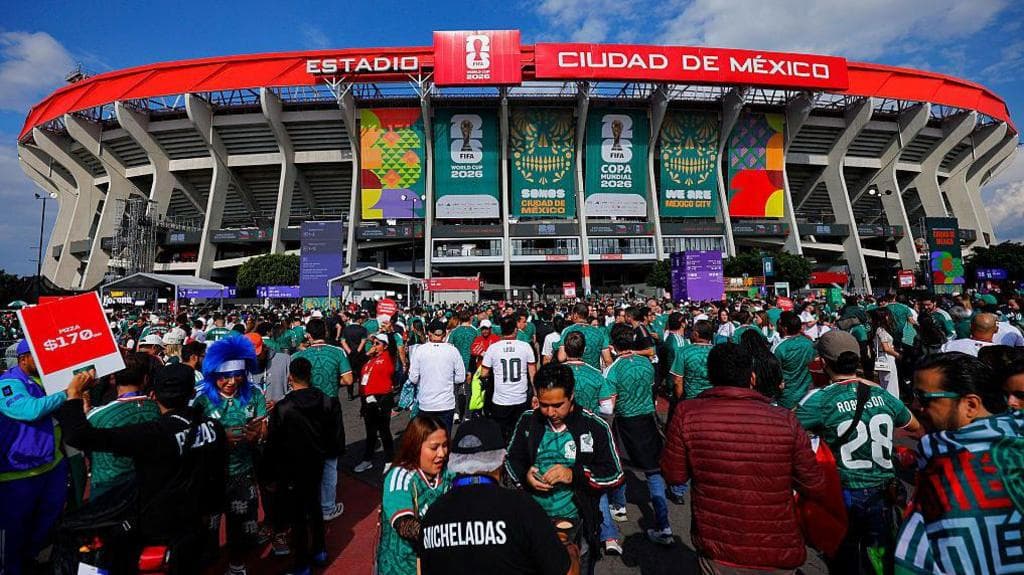
World Cup balls evolved from leather to connected technology
The World Cup ball has gone from stitched leather and split halves to connected technology that can shape officiating in seconds. Its design now affects speed, control and controversy.
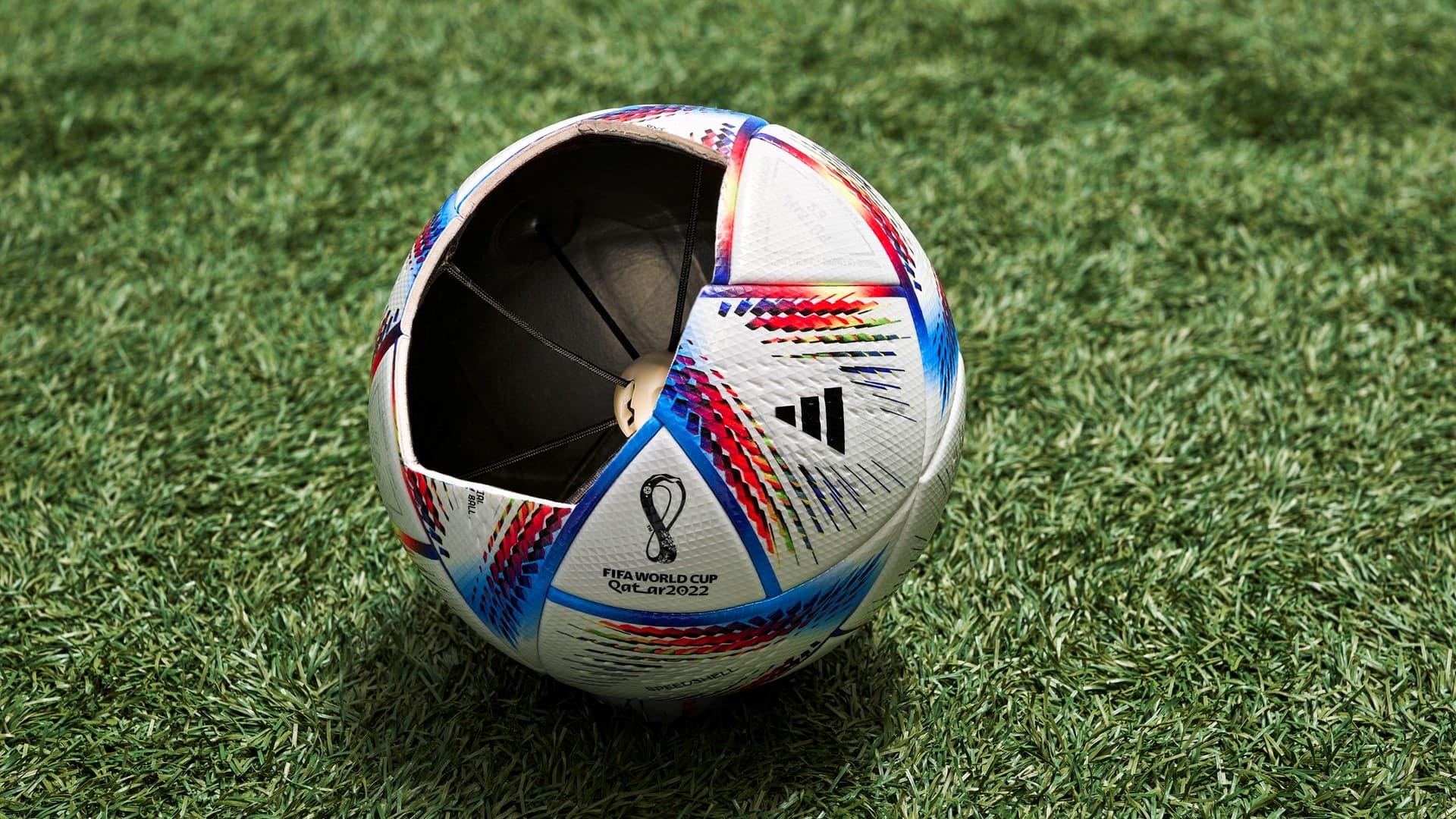
The World Cup ball has never been just equipment. Over 96 years, it has moved from hand-stitched leather that soaked up water to a connected device built to feed data to officials, and each redesign has changed the way the tournament looks and feels on the field. The result is a small object with an outsized impact on speed, control, scoring and the arguments that follow every major tournament.
From a patchwork of balls to one global standard
The first men’s World Cup in 1930 had no single official match ball for the entire tournament. FIFA says several different leather balls were used, including the T-model, Tiento, Federale 102, Globe and Zig-Zag, a reminder that the early game was still organized around local manufacturing rather than global standardization. The T-model, named for its eleven T-shaped strips of hand-stitched leather, became the first World Cup ball, although it appeared for only 45 minutes of the final.
That final, in Uruguay, produced one of the most unusual equipment decisions in World Cup history. Referee John Langenus could not get the Argentina and Uruguay captains to agree on one ball, so the teams used different balls in each half. Argentina led 2-1 at halftime, but Uruguay came back to win 4-2, a result that underlines how even in the sport’s earliest global showcase, equipment could sit close to the center of the story.
FIFA says that from 1934 through 1966, World Cup match balls were made in the host country. That system kept the tournament rooted in local production, but it also meant there was no single industrial standard driving the ball’s design from one edition to the next. The modern era began in 1970, when adidas became the official ball supplier for the men’s World Cup and set the stage for a more consistent, internationally recognizable product.
Television changed what a ball had to do
The ball’s next great leap was visual, not just technical. adidas says the early brown leather balls were difficult to see on black-and-white television, which meant the ball had to be redesigned for the broadcast age as much as for the player’s foot. The 1970 Telstar was built to stand out on screen, and its black-and-white pattern became the model that many people still associate with the classic soccer ball.
That shift mattered because the World Cup was no longer only a live event in stadiums. It had become a television product watched by millions, and the ball needed to be visible enough for viewers to follow flight, spin and bounce across a screen. In that sense, the Telstar did more than improve aesthetics: it helped define the visual language of modern soccer.
The designs that followed kept pushing the same balance between tradition and innovation. adidas points to the leather-era balls such as the Tango and Tango España as part of the evolution toward materials and construction that delivered more predictable performance. By the time the game reached the 1986 Azteca, the ball had crossed a major threshold.
Synthetic materials changed performance as well as appearance
According to adidas, the Azteca was the first fully synthetic World Cup ball. That mattered because the new material reduced water absorption, solving a long-standing problem with leather balls that could become heavier and harder to manage in wet conditions. The change did not just make the ball more durable; it also made the game faster and more consistent across different weather conditions.

The Azteca also showed that World Cup balls could carry cultural meaning. adidas says the design was inspired by Mexican culture, which reflects another long-running pattern in tournament equipment: the ball is often asked to do two jobs at once. It must perform on the pitch, but it also serves as a symbol of the host nation and of the tournament’s identity at that moment in time.
That dual role helps explain why ball design has remained a live issue long after the shift from leather to synthetic materials. Each redesign can alter flight, first touch, pace and the way players judge a shot or pass. In a sport where the margins are narrow, small changes in surface texture, panel shape and seam construction can have real consequences.
TRIONDA brings the connected-ball era
For the 2026 World Cup, FIFA has named TRIONDA as the official match ball. adidas says it uses a brand-new four-panel construction and connected-ball technology, a combination designed to support faster in-game officiating decisions and offer more insight into gameplay. That places the ball inside the tournament’s data infrastructure, not just on the turf.
The timing matters because the 2026 tournament will be the first World Cup with 48 teams, 104 matches and three host countries: Canada, Mexico and the United States. In a larger event with more games and more pressure on officials, the ball’s internal technology becomes part of the tournament’s operational backbone. The same object that once simply had to be visible on black-and-white television is now expected to help officials work faster and with more precision.
TRIONDA also continues a pattern that started in 1970, when the World Cup ball became a showcase for what the sport’s equipment could do next. If Telstar made the ball easier to see, TRIONDA is meant to make it easier to understand in real time. That shift shows how the ball has become both a piece of sporting hardware and a source of information.
Why every redesign still matters
Andy Harland of Loughborough University, a world-leading expert in sports equipment design, manufacture and testing, says there is no perfect ball flight and that every new ball behaves differently. That is why World Cup balls still draw scrutiny from players, referees and engineers alike. A design that improves one aspect of the game can change another, and the debate begins again.
Seen over nearly a century, the history of the World Cup ball is really a history of how soccer itself has changed. The game moved from local leather, to a television-friendly icon, to a synthetic surface built for consistency, and now to a connected device aimed at speeding officiating and deepening analysis. The ball has not just followed the sport’s evolution; it has helped define the modern version viewers see on the field.
This article was produced by Prism’s automated news system from verified source data, official records, and press releases, then run through automated quality and moderation checks before publishing. The system is built and supervised by the people who set the standards it runs under. Read our full AI policy.
Did this article answer your question?