World Cup Golden Boot history points to 2026 scoring contenders
Golden Boot winners usually come from strong teams, penalty duty and deep runs, not pure hype. That formula puts Harry Kane and Kylian Mbappé at the center of 2026.
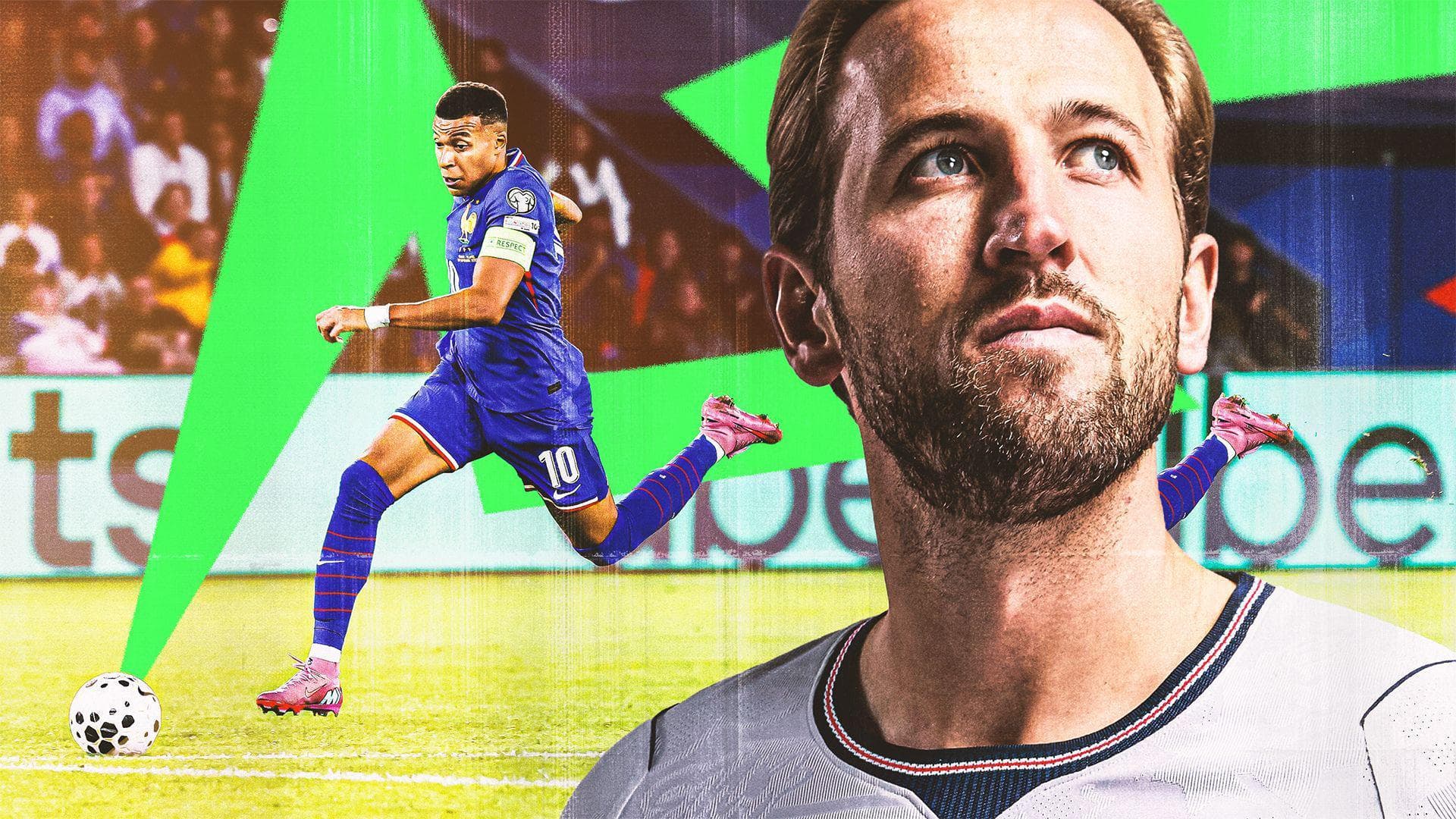
Golden Boot races are usually won by structure before swagger. The most productive forwards tend to play for teams that go deep, stay on the ball long enough to create shot volume, and survive the award’s tiebreakers, which start with assists and then move to minutes played.
How the Golden Boot is actually decided
The adidas Golden Boot was first awarded in 1982 as the Golden Shoe and renamed the Golden Boot in 2010. It goes to the player who scores the most goals in the final tournament, while runners-up receive the Silver Boot and Bronze Boot. If players finish level on goals, assists decide the winner first, and if they are still tied, the player with fewer minutes played comes out ahead.
That matters because the award rewards more than finishing. Penalty shootout goals do not count toward the total, so a player can shine in a knockout tie and still leave with no statistical boost from the shootout itself. Thomas Müller’s 2010 win is the clearest reminder that the assists rule can break a tie even when the goal total is the same.
What history says about the kind of scorer who wins
The all-time men’s World Cup record still belongs to Just Fontaine, who scored 13 goals in 1958. That number is so far ahead of the field that it still feels almost mythical, but the modern race is usually shaped by more practical forces: team quality, the number of matches available, and how efficiently a forward uses each minute.
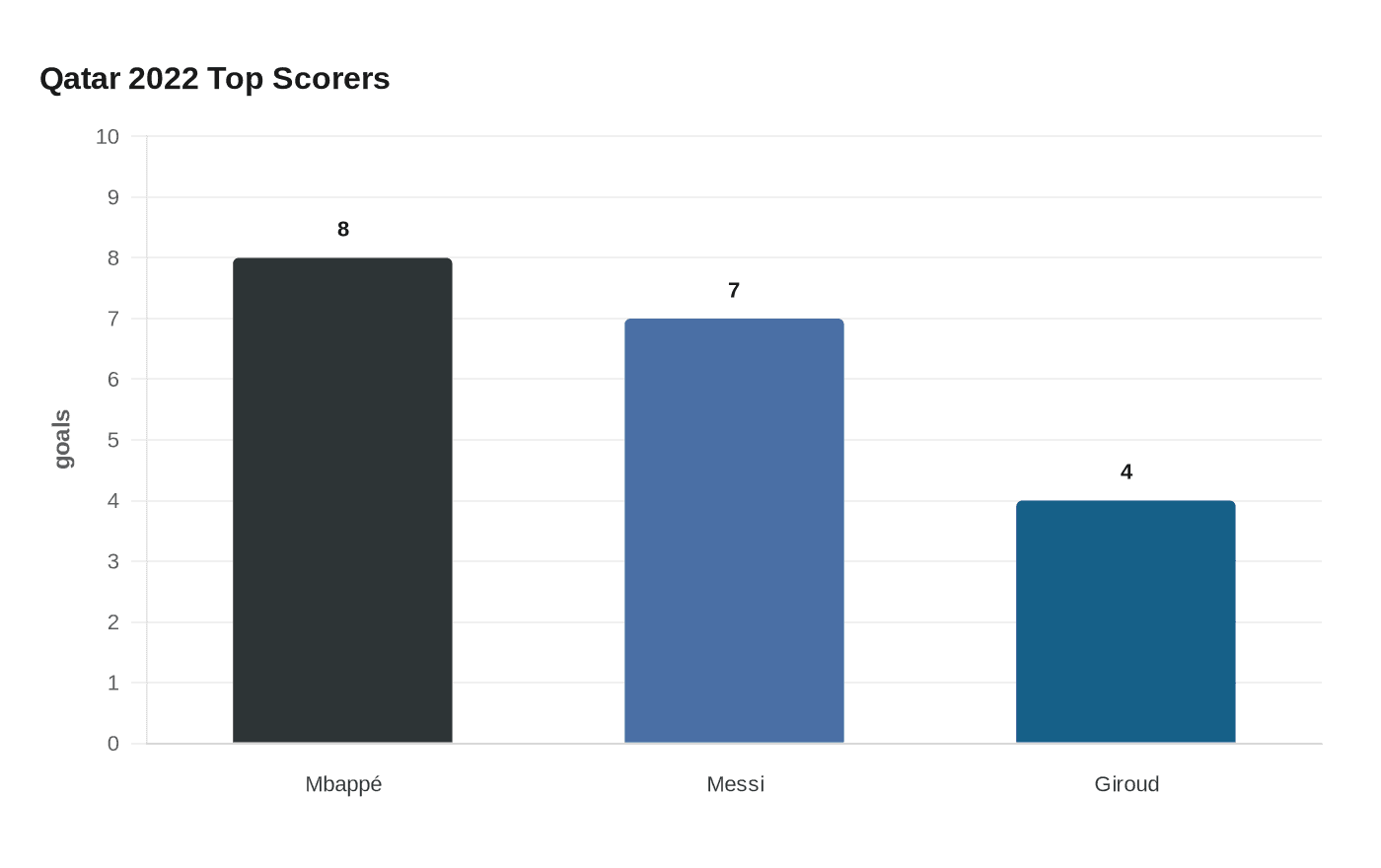
Kylian Mbappé’s Qatar 2022 run shows how that formula works. He won the Golden Boot with eight goals, added two assists, and played 597 minutes. Lionel Messi finished second with seven goals, three assists, and 690 minutes, while Olivier Giroud finished third with four goals. Mbappé’s total was also striking because he became only the second player since 1974 to score more than six goals at a men’s World Cup, and he did it with three goals in the group stage and five more in the knockout rounds, including a hat-trick in the final France lost on penalties.
That tournament also showed how narrow the margins can be. Mbappé finished one goal ahead of Messi, and the difference in assists and minutes reinforces a simple lesson: raw totals matter, but so does how often a player is involved and how much time he gets to keep scoring. A player who stays on the field longer is not always the better bet; the cleaner bet is often the one producing goals and assists at a higher rate.
The traits that keep showing up
Three patterns keep appearing in Golden Boot races. First, the winner usually comes from a team strong enough to create enough matches and enough chances. Second, penalty duty can tilt the race, because spot-kick goals count even when open play gets tight. Third, the best scorers tend to keep shooting into the knockout rounds, where one extra match can change the entire award.
The 2022 tournament is a good example of all three forces at work. France reached the final, giving Mbappé the extra platform to build a lead, and his knockout scoring kept the pressure on Messi right to the end. The award was not just about star quality; it was about a path through the bracket that created repeated scoring chances.
Harry Kane has the clearest statistical case for 2026
Harry Kane
FIFA has put Harry Kane at the center of its 2026 Golden Boot preview for a reason. He has 78 international goals in 112 appearances, along with eight goals in 11 World Cup matches, and FIFA asked whether he could become the first man in history to win the Golden Boot twice. That kind of track record matters because the award usually goes to the striker whose national team can keep feeding him in meaningful games.
England’s route into the tournament also strengthens the case. They became the first European side to qualify after beating Latvia 5-0 on October 14, 2025, and Kane said the squad is “as good as we’ve ever had.” He also framed his disappointment after the Euro 2024 final as “fire in my belly” for the 2026 World Cup, which gives the scoring race a rare emotional edge without changing the underlying numbers.
Kane fits the historical pattern because he is both central and proven. If England play deep into July, he should have the volume that Golden Boot winners usually need, and his World Cup scoring rate already shows he can convert the tournament’s biggest stage into output.
Kylian Mbappé
Mbappé remains the reigning benchmark. He already owns the most recent Golden Boot, and his Qatar total was built the way these awards often are, with a strong team, knockout goals, and enough time on the pitch to turn chances into a lead. At 597 minutes, he was highly efficient, and his eight-goal haul still stands as the reference point for anyone trying to predict the next winner.
France also enter 2026 as one of the major contenders, which is crucial because the Golden Boot often follows the team most likely to stay alive longest. ESPN has framed Mbappé and Erling Haaland as the marquee superstar rivalry to watch, but the trophy will still reward the player whose path offers the most shots, the most minutes, and the most high-value matches. Mbappé already proved that a final can be both a scoring showcase and a title heartbreak, and that combination is exactly why he cannot be ignored.
The Haaland factor, and why narrative alone is not enough
Erling Haaland belongs in the conversation because the individual rivalry is real, and because name recognition often drives public expectations. But the Golden Boot has never been awarded for celebrity alone. The competition always comes back to the same test: which forward gets the team support, the tactical role, and the tournament path that produce the most goals before the final whistle on July 19.
Why the expanded tournament could reshape the race
The 2026 World Cup will be the 23rd edition of the tournament, the first to feature 48 teams, and the first staged across three host countries, Canada, Mexico, and the United States. FIFA has scheduled 104 matches from June 11 to July 19, 2026, and says qualifying produced more than 2,500 goals across 899 matches, with a record 48 nations heading to the finals.
That scale could widen the Golden Boot race in two directions at once. More teams can mean more mismatches and more high-scoring group games, which creates more chances for a single star to stack goals early. At the same time, a bigger field can also spread the scoring around, so the winner may still be the player tied to the strongest team and the cleanest route to the knockouts.
The safest forecast, then, is not a flashy one. The Golden Boot usually belongs to the forward whose team is good enough to keep him on the field, whose role gives him repeated chances, and whose production survives the tiebreakers. By that standard, Kane and Mbappé are the clearest tests of the pattern, and the 2026 tournament will show whether history still rewards the same formula.
This article was produced by Prism’s automated news system from verified source data, official records, and press releases, then run through automated quality and moderation checks before publishing. The system is built and supervised by the people who set the standards it runs under. Read our full AI policy.
Did this article answer your question?
.jpg&w=1920&q=75)