World Cup kickoff times raise sleep-loss warning for Australian fans
Australia’s west-coast World Cup kickoffs will push many fans into the night. A sleep-smart plan can help you watch, recover and still function the next day.

The Socceroos’ World Cup path comes with a hard reality for Australian fans: the football is set for Vancouver, Seattle and Santa Clara, and those kickoffs can turn into a long night at home. FIFA’s 2026 tournament spans 48 teams, 104 matches and 16 host cities across Canada, Mexico and the United States, while SBS says it will show the whole event live and free in Australia.
That makes sleep part of the viewing strategy, not an afterthought. Healthdirect says sleep is essential for physical and emotional health and wellbeing, the NHS warns that longer stretches of bad sleep can hurt physical and mental health, and the Sleep Foundation says all-nighters can damage wellbeing and cognition. For fans trying to follow the tournament without wrecking the next day, the goal is simple: watch smart, sleep strategically and recover quickly.
Why these kickoffs are different
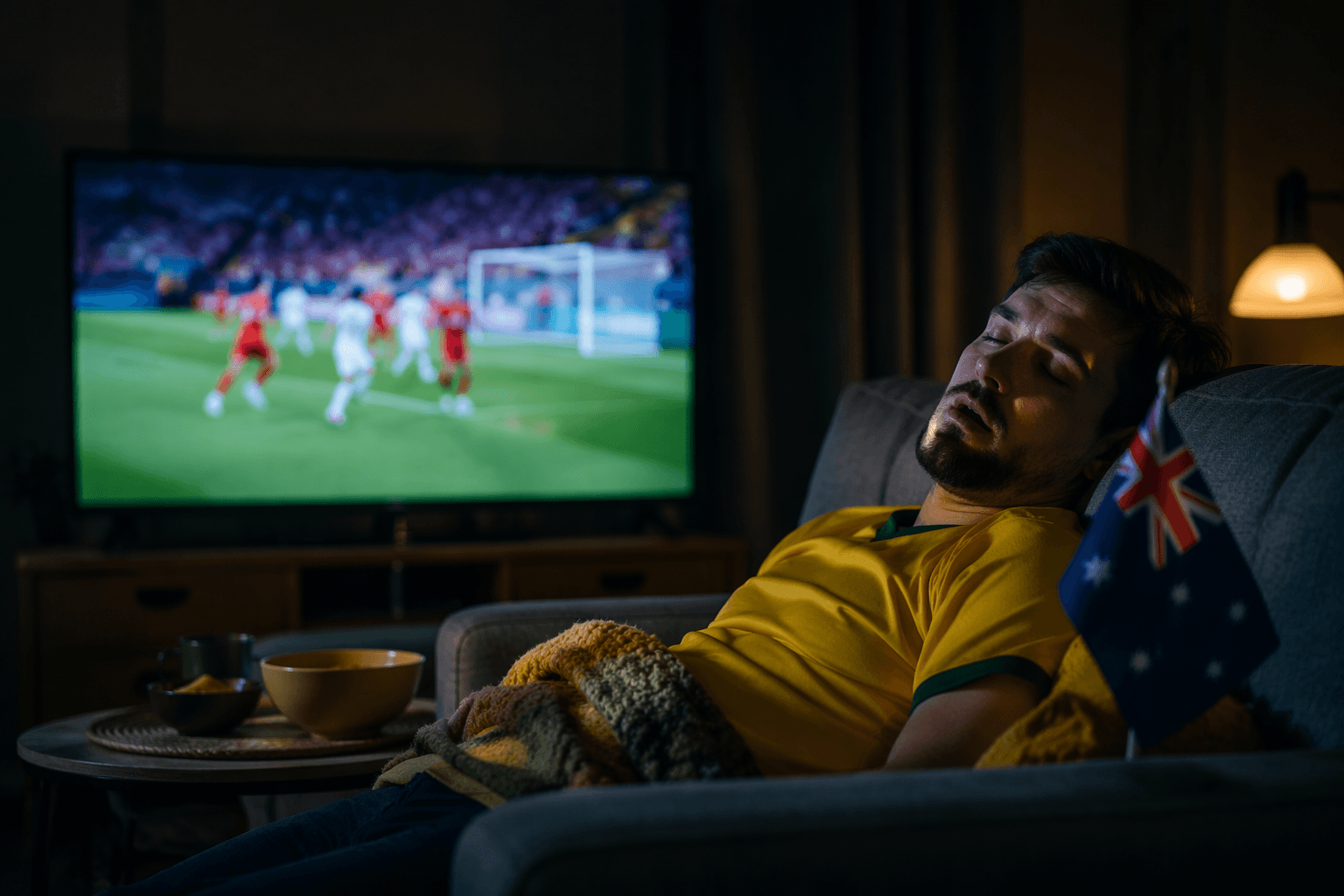
Australia’s first listed World Cup match is against Türkiye in Vancouver, and the full group-stage schedule puts Australia’s games on the North American west coast. That matters because west-coast matches still land hours after bedtime in Australia, especially once extra time, penalties or post-match coverage are added.
This is not just about feeling groggy. Sleep loss can affect attention, memory, reaction time and mood, which is why a late-night match can spill into work, study, parenting and driving the next morning. The health warning here is broader than football fandom: if the schedule pushes you into repeated overnight viewing, the cumulative effect can be harder than one bad night.
Set up your sleep before the match starts
The most effective way to survive an overnight game is to protect sleep in advance. If you know a kick-off will run late, try to bank a solid stretch of rest the night before, rather than assuming you can make it up afterward. A shorter afternoon nap can help too, as long as it does not leave you too alert when the match begins.
A practical pre-game plan looks like this:
- Keep the hours before kick-off quieter than usual, so your body is not already depleted.
- Avoid starting the night tired from a late dinner, a long screen session or an intense workout.
- If the game begins close to your usual bedtime, consider whether a planned sleep block is better than trying to stay awake from dinner through dawn.
If you live with others, talk through the schedule early. Shared homes can reduce accidental noise, light and interruptions, which matters when one person is going to sleep while another is staying up for football.
Use caffeine with precision, not panic
Caffeine can help you stay awake for a specific match, but it works best when it is treated like a measured tool. The trick is to use the smallest amount that keeps you alert, then stop early enough that it does not leave you wired when you finally want to sleep.
A few practical rules help:
- Start with one caffeinated drink, not a constant stream of coffee, energy drinks or pre-workout products.
- Take it before the drowsiest part of the night, not after you are already fighting to keep your eyes open.
- Avoid stacking caffeine late into the viewing window if you still want to sleep after the final whistle.
If you are sensitive to caffeine, the safest approach is even more conservative. A late-night match can tempt you to overdo it, but too much caffeine can turn a one-night sleep disruption into a much longer problem.
Tame the screen so your brain can wind down
Watching live football means screen time is unavoidable, but you can limit how much it works against sleep. Bright light and constant stimulation can make it harder to feel ready for bed, especially if you go straight from celebration or disappointment into trying to sleep.
The simplest move is to lower the intensity of the room and the screen when the match is done. Keep the main lights dim, avoid switching immediately into another bright device, and give yourself a short wind-down before bed. If you are following the match on a phone or tablet, reducing brightness can help reduce the sense that your body is still in “daytime” mode.
This matters most after a tense game. Extra time, shootouts and social media reactions can keep your nervous system switched on long after the final whistle, so a brief reset can make the difference between lying awake and actually sleeping.
Hydrate, but do it sensibly
Hydration helps you feel better the next day, but it should not turn into a midnight flood of water that keeps sending you to the bathroom. Sip steadily through the evening and match your intake to what you are eating and drinking, rather than trying to compensate all at once after the game ends.
If you are combining caffeine with late-night snacks, aim for balance. Salty food can leave you feeling thirsty, while too much alcohol is likely to make sleep quality worse even if it makes you feel sleepy at first. The safer recovery choice is plain water and a light snack if you need one before bed.
Recover the next day, not just the next morning
After an overnight match, the next day is about damage control. If your sleep was cut short, try to get back to a normal schedule rather than letting the disruption stretch on for several days. A brief nap can help, but long daytime sleep can make it harder to fall asleep the following night.
The next-day recovery plan should be simple:
- Get daylight exposure soon after waking, which helps reset your body clock.
- Keep the first half of the day as routine as possible, especially if you need to work or study.
- Skip driving long distances if you are badly sleep-deprived, because tiredness can impair judgment and reaction time.
- Go back to your usual bedtime that night, even if the match left you feeling out of sync.
Families and shift workers may need extra flexibility, because late-night football can collide with school runs, early starts and commuting. That is where the public-health side of this story becomes real: sleep deprivation is not just a private inconvenience, it can ripple through households, workplaces and communities.
Know when to choose sleep over the full watch
Not every match needs to become an all-nighter. With 104 games spread across 16 host cities, the tournament will offer enough football that some fans may be better off picking the matches that matter most and protecting sleep on the rest. That is especially true if you have an early shift, a medical condition, young children or a history of struggling with sleep.
The broader lesson is that World Cup excitement does not cancel the body’s need for rest. FIFA has built the tournament for teams and fans across three countries, but the recovery still happens in Australian bedrooms, early-morning kitchens and school drop-offs. The smartest fans will plan for that reality before the whistle blows.
This article was produced by Prism’s automated news system from verified source data, official records, and press releases, then run through automated quality and moderation checks before publishing. The system is built and supervised by the people who set the standards it runs under. Read our full AI policy.
Did this article answer your question?