Worn Again launches Winterthur Accelerator to validate polycotton recycling at scale
Worn Again has started operations at a modular Textile-to-Fibre Accelerator in Winterthur that recovers spinnable polyester from post-consumer polycotton and claims more than 95% solvent recovery.
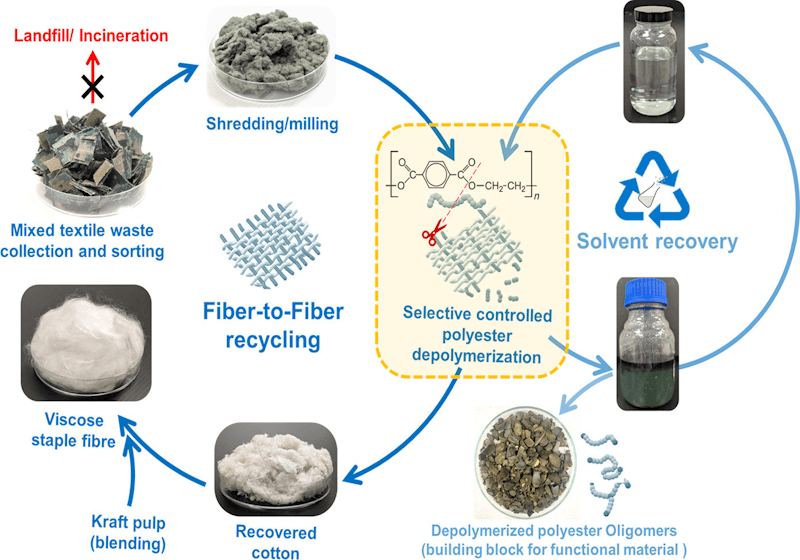
Worn Again Technologies has started operations at a modular Textile-to-Fibre Accelerator in Winterthur, Switzerland to demonstrate chemical recycling of post-consumer polycotton at demonstration or near-industrial scale. Toby Moss, Chief Commercial Officer, called the facility “a critical asset for building towards our first commercial plant,” signaling the company is moving from lab milestones toward a production-ready blueprint.
The plant uses a multi-solvent system designed to separate polyester and cellulose from blended garments while addressing dyes and elastane. Worn Again and reporting on the startup say the company recovers and reuses about 95 percent or more of the solvents in the process, a figure the firm highlights as central to its engineering improvements. Chief Executive Officer Michael Weiss framed the problem bluntly: “Blended polycottons were long considered extremely difficult to recycle efficiently,” and he added, “Our process separates these materials so the polyester and cellulose can be reused while maintaining their value.”
Installation has been staged: the Accelerator was delivered in modules with the first module focused on recovering spinnable polyester and later module(s) planned to produce next-generation cellulosic fibres and other advanced cellulosic materials. Worn Again, which operates out of Winterthur and Nottingham and is headquartered through Worn Again Switzerland AG in Zurich, points to a prior technical milestone: since 2024 the company has successfully spun fibres from recovered materials, demonstrating the outputs can meet textile production requirements.
Commercially the Accelerator is open to partner companies to test feedstocks and validate the process across diverse textile streams. Worn Again says it has gathered a network of strategic partners who will receive priority access to the plant and its circular products, and interested parties can contact Toby Moss via the company website contact form. Swiss industry coverage reports test runs have been completed and that the firm is now seeking an industrial practice partner to commercialize the process.
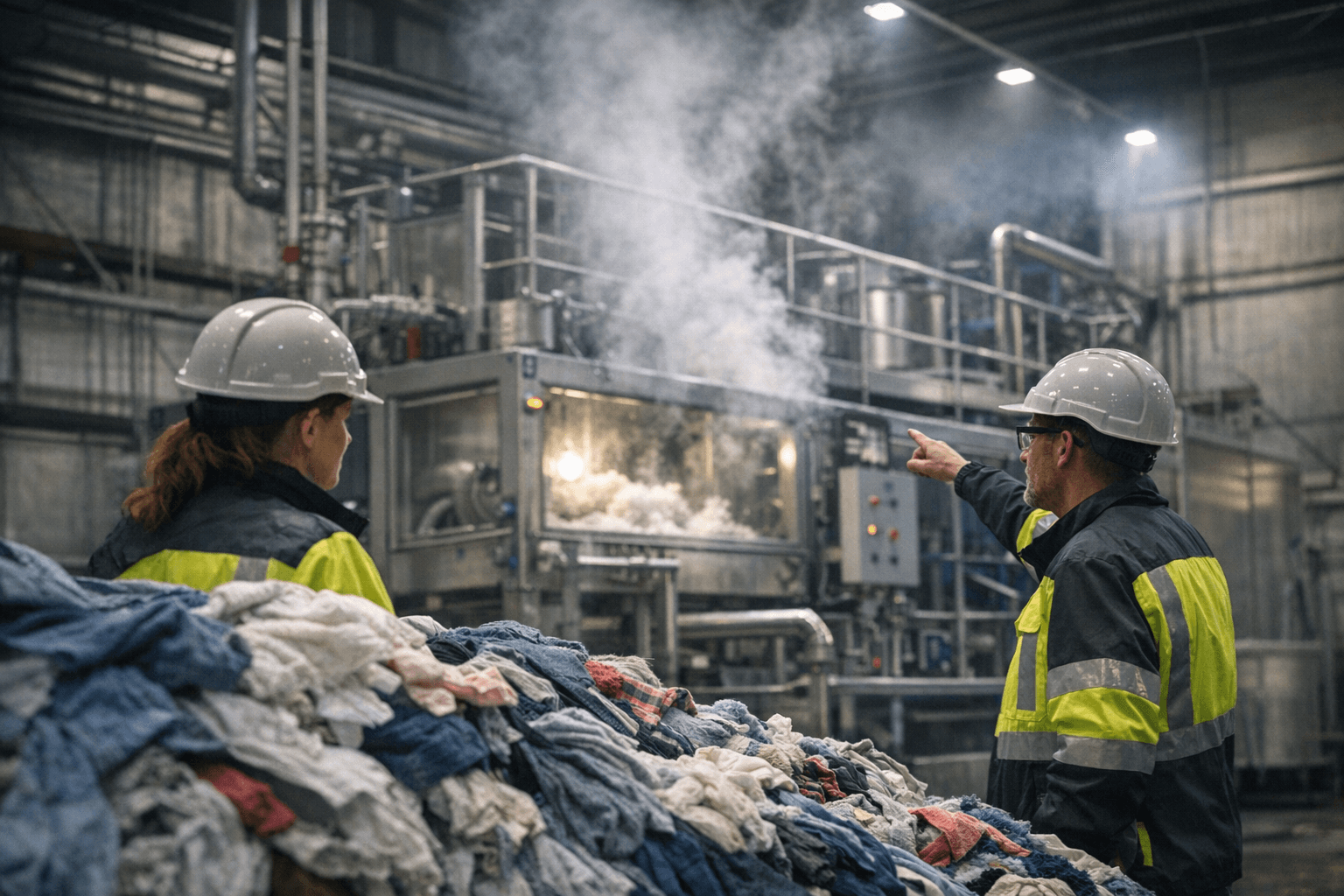
This launch lands against stark numbers: global textile production has topped 120 million tonnes per year while, Worn Again notes, “Globally, less than 1% of clothes are currently recycled into new clothes.” That gap is why polycotton—the workhorse blend of polyester and cotton—matters: it is abundant and historically unrecoverable with conventional recycling. The Winterthur site is positioned as the bridge from a problem statement to a supply of high-purity, ready-to-use raw materials for brands and manufacturers.
Not everyone is sold. LinkedIn reactions include technical questions and critiques: Brett Mathews asked how the process handles reactive dyes on cellulosics when producing “next gen” cellulosics, and Bill Trienekens questioned solvent hazards and microfiber shedding while advocating biodegradable polyester alternatives like Ciclo-based PET. Those threads point to the due diligence ahead: solvent chemistry, dye handling, fibre purity and lifecycle performance will need independent validation as Worn Again moves toward a first commercial plant.
The Accelerator is a visible, modular step toward scaling polycotton recycling; it converts a well-known industry headache into testable feedstocks, spinnable polyester and a roadmap for cellulosic outputs, and, as Toby Moss put it, provides the critical asset to build toward commercial deployment. If the Winterthur results translate to signed supply and offtake agreements and verified environmental performance, polycotton could shift from waste to raw material at scale.
Know something we missed? Have a correction or additional information?
Submit a Tip