xAI Loses Entire Founding Team as Internal Tensions Fracture Musk's AI Lab
All 11 of xAI's original co-founders have exited Musk's AI lab, with the final two departing days after SpaceX's $250 billion acquisition.
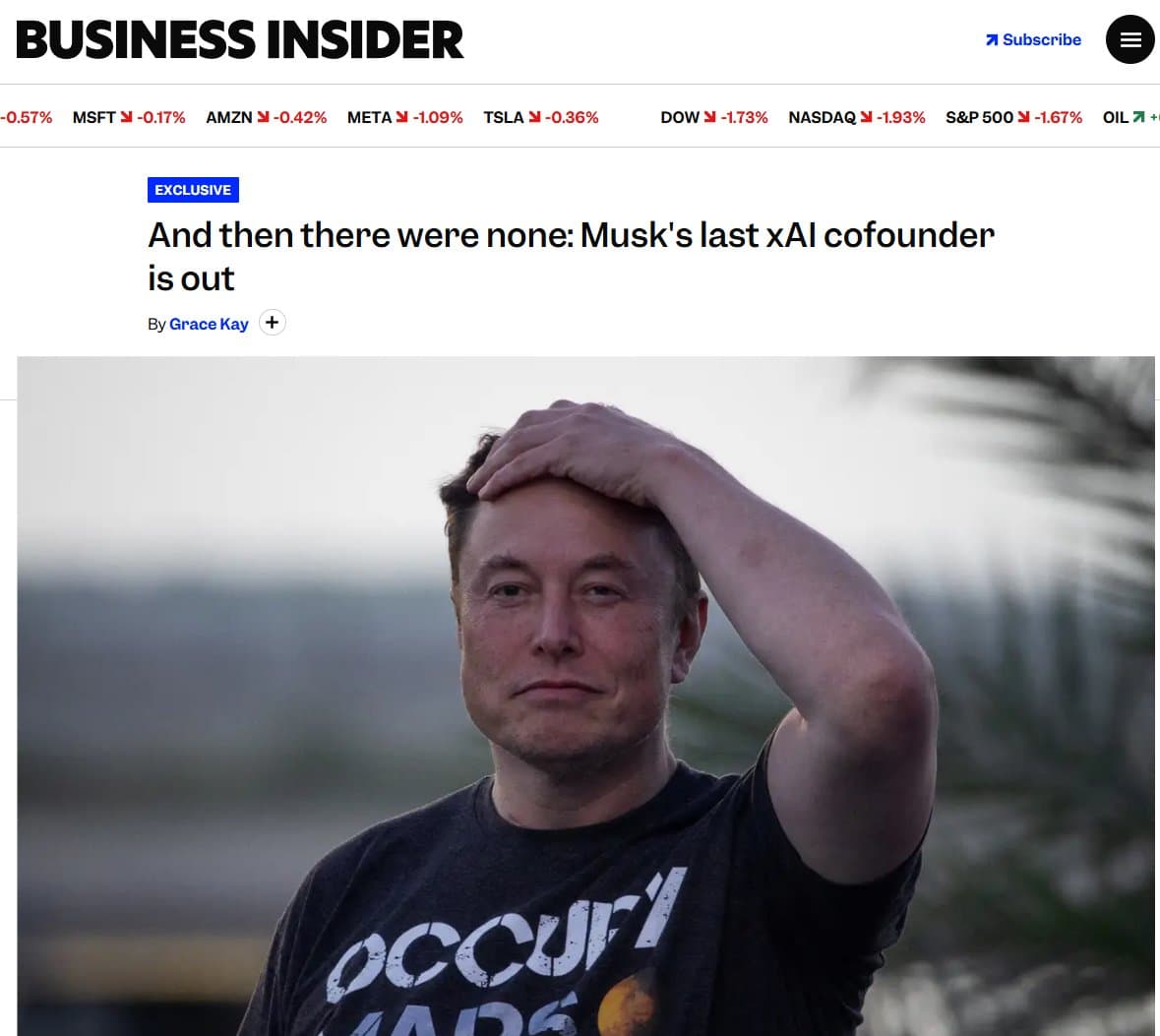
Musk valued xAI at $250 billion when SpaceX absorbed it in February. Three weeks later, he told the world it "was not built right the first time around." The founding team, it turned out, had already reached the same conclusion with their feet.
Ross Nordeen, described by Business Insider as Musk's "right-hand operator" inside xAI, left the company on March 27. Manuel Kroiss, who led the pretraining team responsible for xAI's core model development, had informed colleagues of his departure days earlier. Their exits completed a sweep that began in earnest on February 10, when Tony Wu, one of the most operationally central of the original founders, announced he was leaving. Jimmy Ba resigned within 24 hours. All 11 of the co-founders who helped Musk launch xAI in July 2023 have now gone.
The cascade unfolded against the backdrop of SpaceX's all-stock acquisition of xAI, a deal that valued the AI unit at $250 billion and the combined entity at roughly $1.25 trillion. Within days of that announcement, Musk posted that xAI had undergone a reorganization "to improve speed of execution," a phrasing that blurred the line between voluntary departures and managed exits. He declined to specify who was shown the door and who chose to leave.
The talent lost represents more than headcount. Ba co-authored foundational research that shaped Grok's model architecture; Kroiss oversaw the pretraining work that determines how capable a model becomes before any fine-tuning begins. "You can't just transplant top-tier pretraining talent overnight," one industry analyst told reporters covering the story. Replacing that institutional knowledge while simultaneously integrating into SpaceX's corporate structure is a task without a clean playbook.

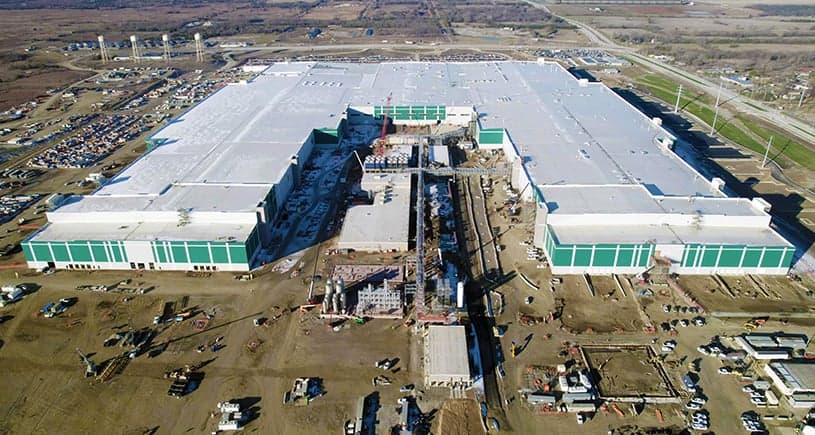
The departures also trace a longer pattern of cultural friction. Christian Szegedy exited in early 2025. Igor Babuschkin and Greg Yang followed. By the time Nordeen cleared his desk last Friday, xAI had cycled through virtually every senior researcher who built its earliest models. What remains is the Colossus supercomputer, the Grok product line and X's user base as a distribution channel. What is missing is the research continuity that typically anchors multi-year model development programs.
For investors eyeing a SpaceX IPO expected later this year, that discontinuity carries concrete risk. Kroiss's departure removes the person most responsible for xAI's near-term training pipeline. Nordeen's exit strips away the operational layer that connected Musk's directives to day-to-day execution. Neither role is easily backfilled, and rivals including OpenAI, Anthropic and Google DeepMind are well-positioned to recruit from the newly available talent pool.
The broader signal for the AI industry is harder to ignore: even a $250 billion valuation and direct access to Musk's resources could not hold a founding research team together once the company's mission shifted beneath them. Governance gaps and mission drift, not funding shortfalls, are emerging as the primary threat to AI lab continuity, and xAI has now provided the starkest case study yet.
This article was produced by Prism’s automated news system from verified source data, official records, and press releases, then run through automated quality and moderation checks before publishing. The system is built and supervised by the people who set the standards it runs under. Read our full AI policy.
Did this article answer your question?