Yale panel says university helped erode public trust, urges sweeping reforms
Yale’s trust panel said the university helped fuel public skepticism, then laid out 20 reforms on aid, admissions, grading and speech.
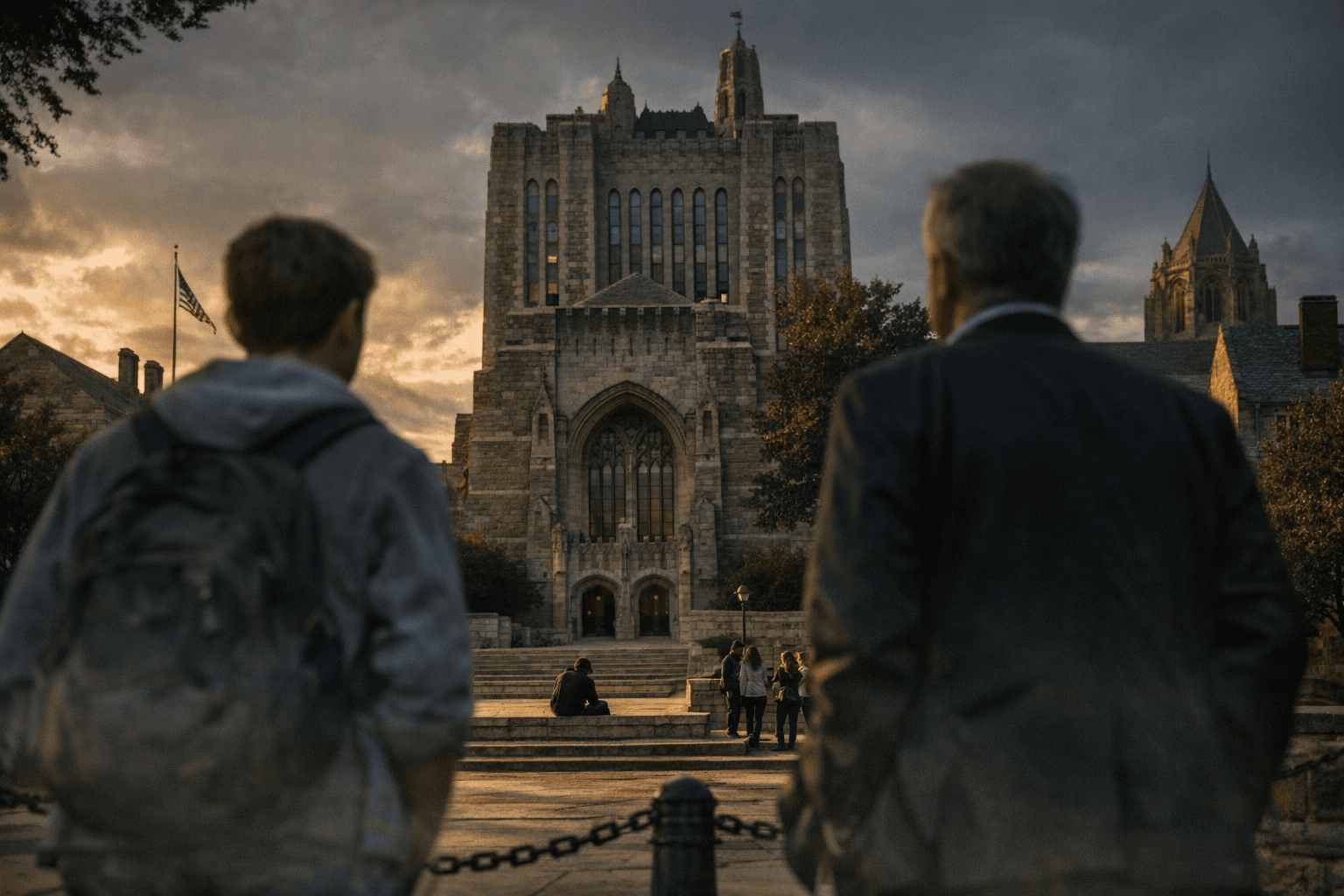
Yale’s new trust panel delivered a blunt indictment of the university and the wider elite-college model, saying the erosion of public confidence “did not come out of nowhere” and that Yale was “certainly more than mere bystanders.” The 58-page report urged the university to treat falling trust as a failure it helped create, not just a reputational problem to manage.
Maurie McInnis formed the 10-member Committee on Trust in Higher Education in April 2025, during her second semester as Yale president. After about a year of work, the panel submitted its report on April 10, 2026, with 20 recommendations aimed at affordability and access, admissions, grading, intellectual pluralism, self-censorship and support for New Haven. Yale said the committee interviewed dozens of critics and supporters, held events across campus, engaged in hundreds of conversations with members of the Yale community and assembled a bibliography of more than 300 sources.
The committee was co-chaired by Julia Adams, a sociology professor, and Beverly Gage, the John Lewis Gaddis Professor of History and a Yale College alumna. Other members included Anton Bennett, Marijeta Bozovic, David Bromwich, Judith Chevalier, Jason Hockenberry, Anthony Leiserowitz, Priyamvada Natarajan and Sarath Sanga. Together, they were asked to confront a question that has become central to higher education’s future: whether institutions like Yale have drifted from the public good through rising costs, layers of bureaucracy and a culture that many Americans no longer trust.
Some of the proposed fixes go straight to the heart of those complaints. Yale said the panel called for reconsidering financial aid, clarifying admissions policies, promoting more intellectual diversity, restricting some classroom technology and addressing grade inflation. Yale Daily News reported that one discussion point floated a Yale College average GPA around 3.0, a sign of how far the committee was willing to push on academic standards and student expectations.
The report lands amid a larger national slump in confidence. When Yale announced the committee in April 2025, it cited Gallup data showing a third of U.S. adults had little or no confidence in higher education and more than two-thirds believed it was headed in the wrong direction. Gallup-Lumina polling released in July 2025 found 42% of Americans had a great deal or quite a lot of confidence, while 23% said they had little or no confidence. Gallup said confidence was 57% in 2015, when it first asked the question.
Pew Research Center added to the pressure in October 2025, finding that 70% of Americans said the higher education system was going in the wrong direction, up from 56% in 2020. The split was not partisan only in degree, not direction: 77% of Republicans and Republican-leaning independents said so, along with 65% of Democrats and Democratic leaners. For Yale, the report suggests the answer is not to deflect the criticism, but to accept that elite universities helped build the conditions for it.
This article was produced by Prism’s automated news system from verified source data, official records, and press releases, then run through automated quality and moderation checks before publishing. The system is built and supervised by the people who set the standards it runs under. Read our full AI policy.
Did this article answer your question?

