Yale Power Back Josh Pitsenberger Brings Run-Game Punch to 2026 Draft
Yale power back Josh Pitsenberger finished with 3,435 rushing yards and 41 TDs, entering the 2026 draft as a between-the-tackles runner NFL teams will evaluate closely.

Josh Pitsenberger closed out a decorated Yale tenure as one of the Ivy League’s most productive backs, leaving the Bulldogs with 3,435 rushing yards, 41 rushing touchdowns and a resume that includes Ivy League Offensive Player of the Year honors in 2025. Pitsenberger’s body of work also features Ivy Rookie of the Year recognition, four All‑Ivy selections and a key role in Yale’s first FCS Playoff win, credentials that put him squarely on draft radars despite the small-school label.
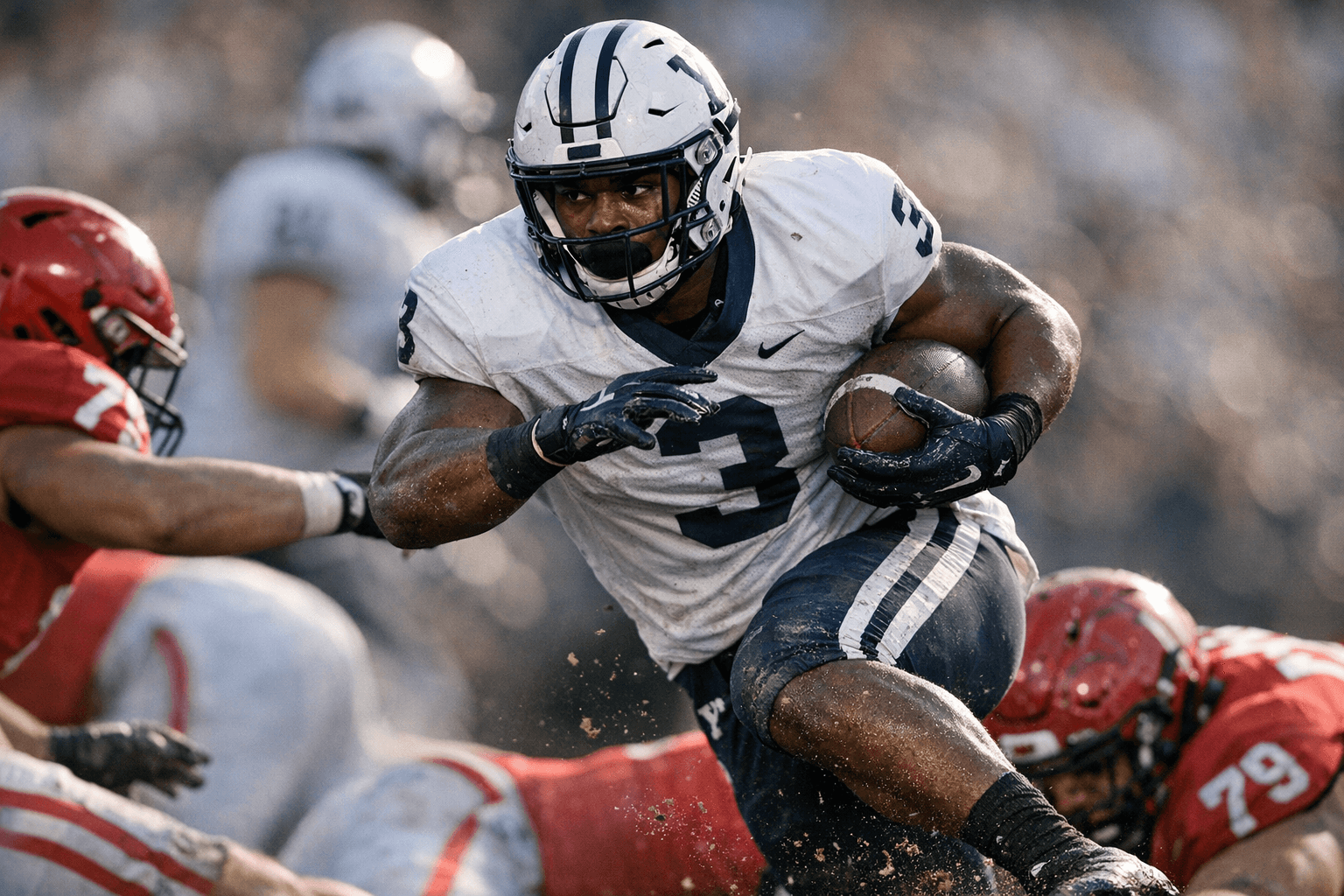
The scouting picture is straightforward. FCS Football Central described him as, “a powerfully built, downhill running back with good size and a frame built for running in between the tackles.” That assessment is borne out by counting stats: 684 carries across 37 games, 39 receptions for 286 yards and four receiving touchdowns, and repeated use in short-yardage and scoring situations. FCS Football Central added that “his lower-body strength and good contact balance allow him to withstand hits and churn out yardage,” and noted his finishing ability at the end of runs.
That physical profile creates a clear NFL role projection. Pitsenberger is a collision-type runner whose strengths are leverage, contact balance and a willingness to deliver and absorb hits at the line of scrimmage. The same scouting report tempers the praise with measurable caveats: “His burst and acceleration are average, and it takes him a while to reach top speed,” and “on top of his average acceleration, he lacks the top-end speed to separate from defenders.” Evaluators will weigh those traits against his production and instincts when envisioning him as a goal-line package back, third-down blocker or rotational inside runner.
Pre-draft metrics in public listings are mixed and underscore the work left to do. DraftScout’s entries list Pitsenberger at 5-11 and 220 pounds with a reported 40-yard dash range of 4.53 to 4.64 (4.58 typical) in updates posted on 11/15/25 and 11/29/25. By contrast, 247Sports’s capture lists him as 6-0 and 200 pounds and gives Bethesda, Maryland as his hometown. Those discrepancies mean pro day or combine measurements will be decisive for his stock and fit across schemes.
The draft context is notable for Yale and Ivy League history: if selected, Pitsenberger would be the first Yale running back taken since Shane Bannon in 2011. He has drawn attention on small-school watchlists and draft forums, appearing on community lists that track potentially draftable backs and niche prospects. With DraftScout’s “Projected Round” and “Stock” fields blank in the captured listings, Pitsenberger projects as a late-round candidate or priority undrafted free agent, unless testing or positional demand elevates him.
For NFL personnel, the immediate questions are confirmation of measurables and pass-proficiency on tape. For Yale fans and draft observers, Pitsenberger’s combination of volume production, scoring chops and physical style makes him one of the most compelling FCS-to-NFL prospects in the 2026 class. The next stop for that judgment will be pro day numbers and deeper tape study, which could define whether his power translates to a sustainable role at the next level.
Know something we missed? Have a correction or additional information?
Submit a Tip