Year-end rush for rooftop solar strains Buncombe contractors and supply lines
A Jan. 15 report shows Western North Carolina saw a year-end surge in solar and efficiency upgrades as federal tax credits were cut; locals faced delays and higher net costs.

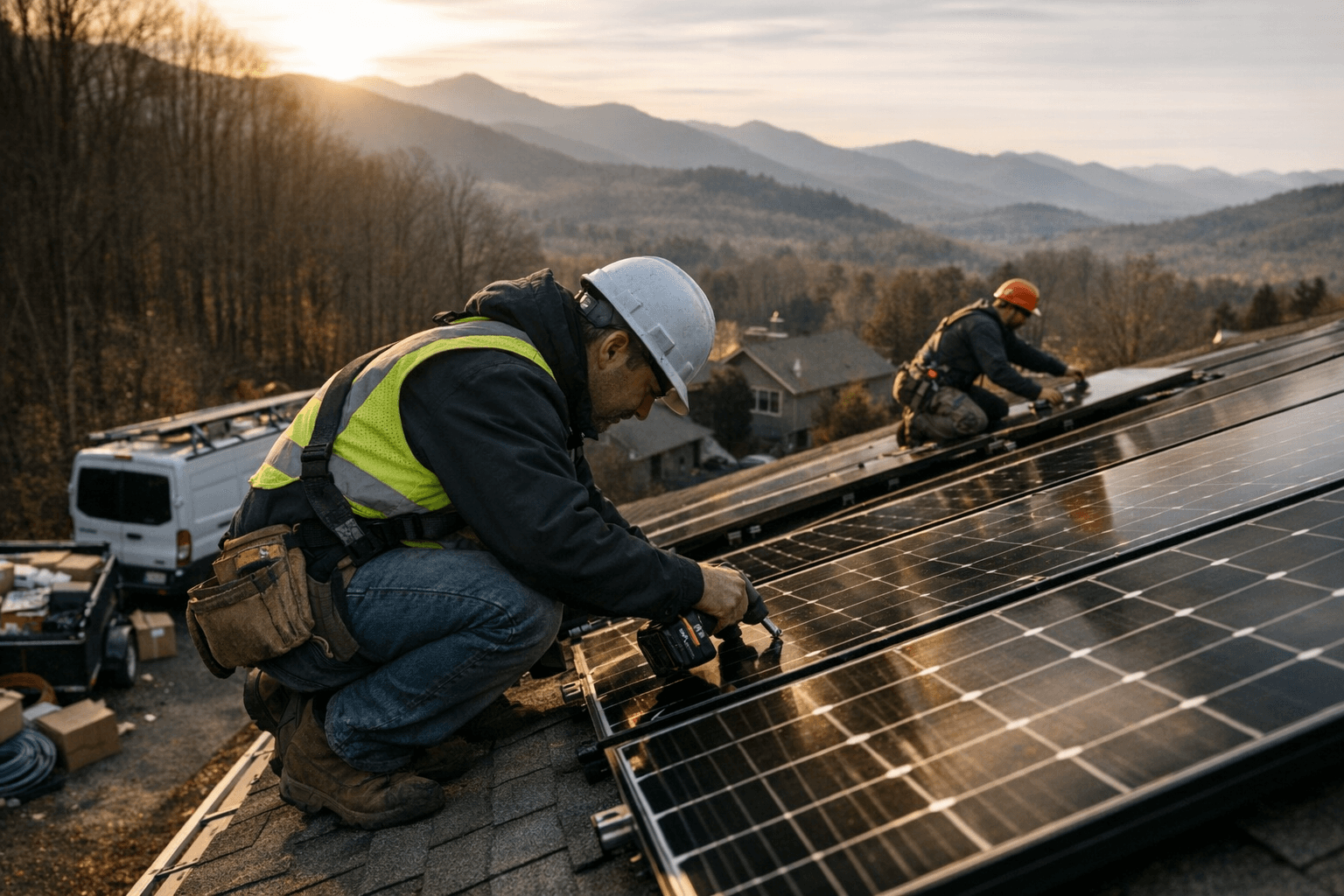
A flurry of installations and upgrades swept through Buncombe County late last year as homeowners and public entities raced to claim more generous federal tax credits before reductions took effect at the end of 2025. The investigative report published Jan. 15, 2026, documents a broad year-end surge across Western North Carolina for rooftop solar, heat pumps, insulation and other home-energy measures that left contractors and suppliers scrambling to keep up.
For local residents the immediate consequence was longer waits and tighter contractor schedules. Installers in Asheville and surrounding towns pushed crews into overtime and rearranged calendars to finish permitted projects before the cutoff. Supply-chain bottlenecks for panels, inverters and heat-pump components amplified the pressure, with some vendors shifting shipment priorities to jobs that could be completed before year-end. Municipal and public buildings in the region similarly accelerated projects to lock in higher credits, creating additional demand that squeezed private customers.
The underlying policy change is simple: federal tax credits for certain residential green investments were reduced at the end of 2025, lowering the dollar value or availability of incentives that had been a major driver of household investment in energy upgrades. That change altered the calculus for homeowners who had planned upgrades in 2026 or later. When generous credits were available, typical payback estimates for solar and major efficiency retrofits shrank, making projects financially attractive for a wider range of households. With smaller credits going forward, net costs rise, and payback periods lengthen, shifting who can justify upgrades on strictly financial grounds.
Market implications are already visible locally. Short-term, the surge lifted revenues for contractors and created a backlog of permitted but not yet completed work. Medium-term, homeowners who missed the deadline will face higher out-of-pocket costs or will need to rely more heavily on financing, utility rebate programs or community-solar options. The reduction in credits may also slow new construction choices that favor electrification, since builders often factor incentives into upfront design and equipment decisions.
For Buncombe County this means a period of adjustment. Homeowners weighing projects should get updated quotes that show the net cost after the new credit rules and account for current lead times. Property owners and nonprofits considering public building upgrades will need to reassess budgets and timelines now that federal support is smaller.
Longer term, the episode highlights two persistent trends: policy uncertainty can create sharp, short-term demand spikes that strain local markets, and local capacity for installers and suppliers matters for equitable access to energy upgrades. What comes next will depend on state and local incentives, contractor hiring and inventory decisions, and whether financing solutions emerge to bridge the gap created by reduced federal credits. For Buncombe residents, that means planning sooner, getting clear net-cost estimates, and factoring tighter schedules into any home-energy projects.
Sources:
Know something we missed? Have a correction or additional information?
Submit a Tip