Yosemite crowds surge as timed entry reservations end in 2026
Yosemite dropped timed entry for 2026 as visitation topped 4.28 million, raising fears that traffic, parking and resource strain will only deepen.

Yosemite National Park said it would no longer use a timed reservation system in 2026 after reviewing 2025 traffic patterns, parking availability and visitor use. The shift came as the park logged 4,285,729 recreation visits in 2024, up from 4,057,237 in 2023, keeping pressure on one of the country’s busiest public lands.
The park’s scale helps explain the stakes. Yosemite spans 759,620 acres, or 1,187 square miles, including 704,624 acres of designated wilderness, and it was first protected in 1864 under the Yosemite Grant Act. That combination of heavy use and protected terrain has made access management a recurring fight between the park’s mission to preserve nature and its role as a destination that millions want to reach by car.
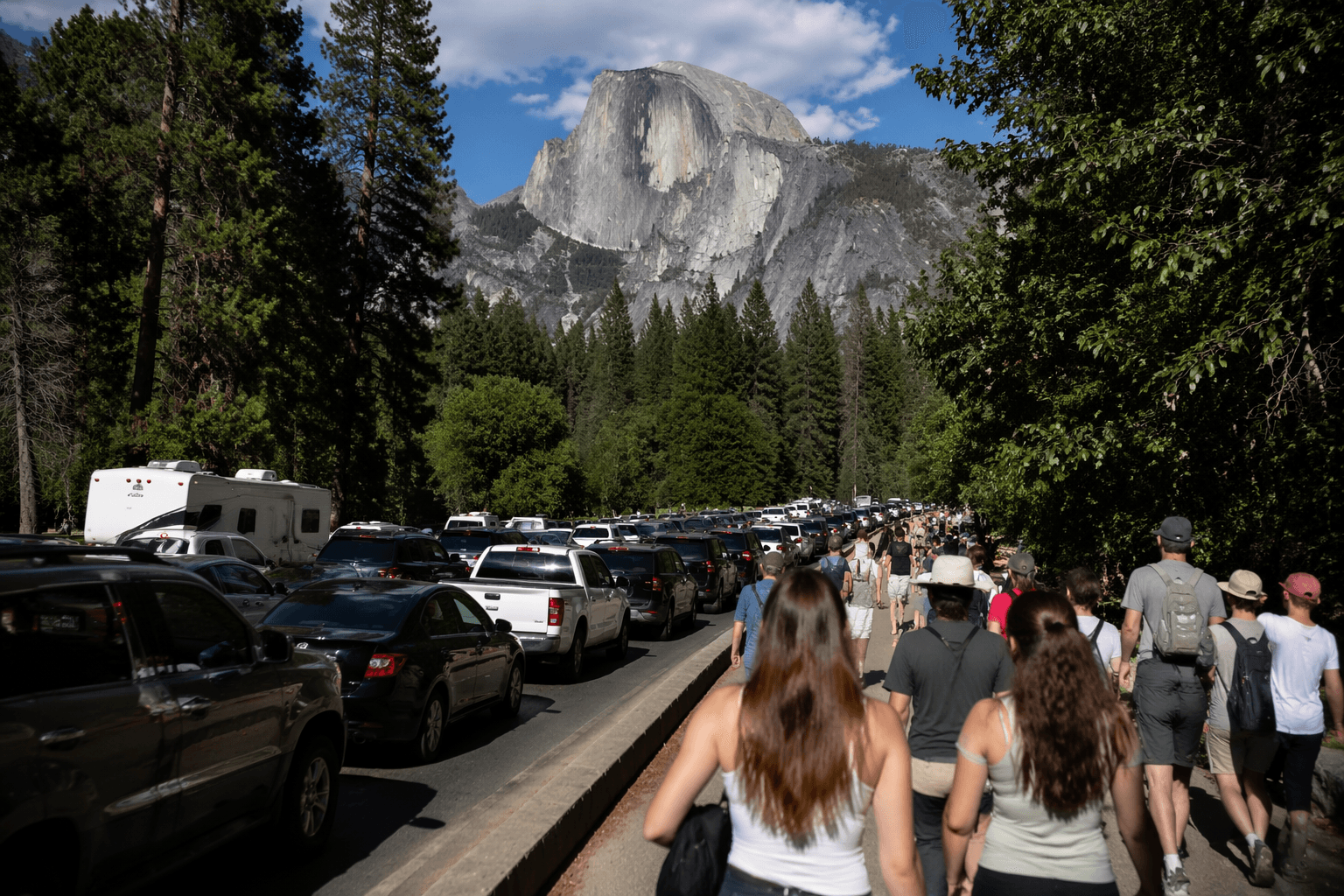
Yosemite has tried timed entry before. The park used temporary vehicle reservation systems in 2020, 2021 and 2022, then returned to one in 2024 with its “Peak Hours Plus” pilot. That schedule required reservations on weekends from April 13 to June 30, every day from July 1 to Aug. 16, and on weekends again from Aug. 17 to Oct. 27. Park managers said they used lessons from those systems to address crowding, congestion, resource impacts and visitor experience.
The latest management decision does not erase the consequences of overcrowding. Park planning documents warn that non-designated parking has damaged vegetation, while human waste has been left along roads and in parking lots. Yosemite’s 2024 visitor-use statistics also recorded 194 search-and-rescue operations, 389 motor vehicle accidents and 17 fatalities, a reminder that congestion is not just an inconvenience but a safety problem for visitors and staff alike.
Critics and conservation groups say dropping reservations will bring back longer traffic jams and parking shortages, and some elected officials have urged Yosemite to restore timed entry. Under acting superintendent Ray McPadden, the park has kept other controls in place: lodging and campground reservations are still required when applicable, and Half Dome day hikers need permits seven days a week when the cables are up. Yosemite says those permits help protect wilderness character, reduce crowding, protect natural and cultural resources and improve safety, but without timed entry the park is once again betting that the rest of its management tools can absorb the crush.
This article was produced by Prism’s automated news system from verified source data, official records, and press releases, then run through automated quality and moderation checks before publishing. The system is built and supervised by the people who set the standards it runs under. Read our full AI policy.
Did this article answer your question?