YouTube is flooded with pirated audiobooks as AI voice clones spread
YouTube’s audiobook piracy problem is scaling with the market itself, as 35% of listeners now say they use the platform and most go there for free, pirated copies.

Pirated audiobooks are spreading across YouTube with a speed that exposes a new enforcement gap in digital publishing. Illegal, synthetically narrated copies of The Hunger Games and self-help books are turning up alongside mainstream titles, helped by AI voice clones that can mimic a human narrator and by a platform built for easy streaming of long-form audio.
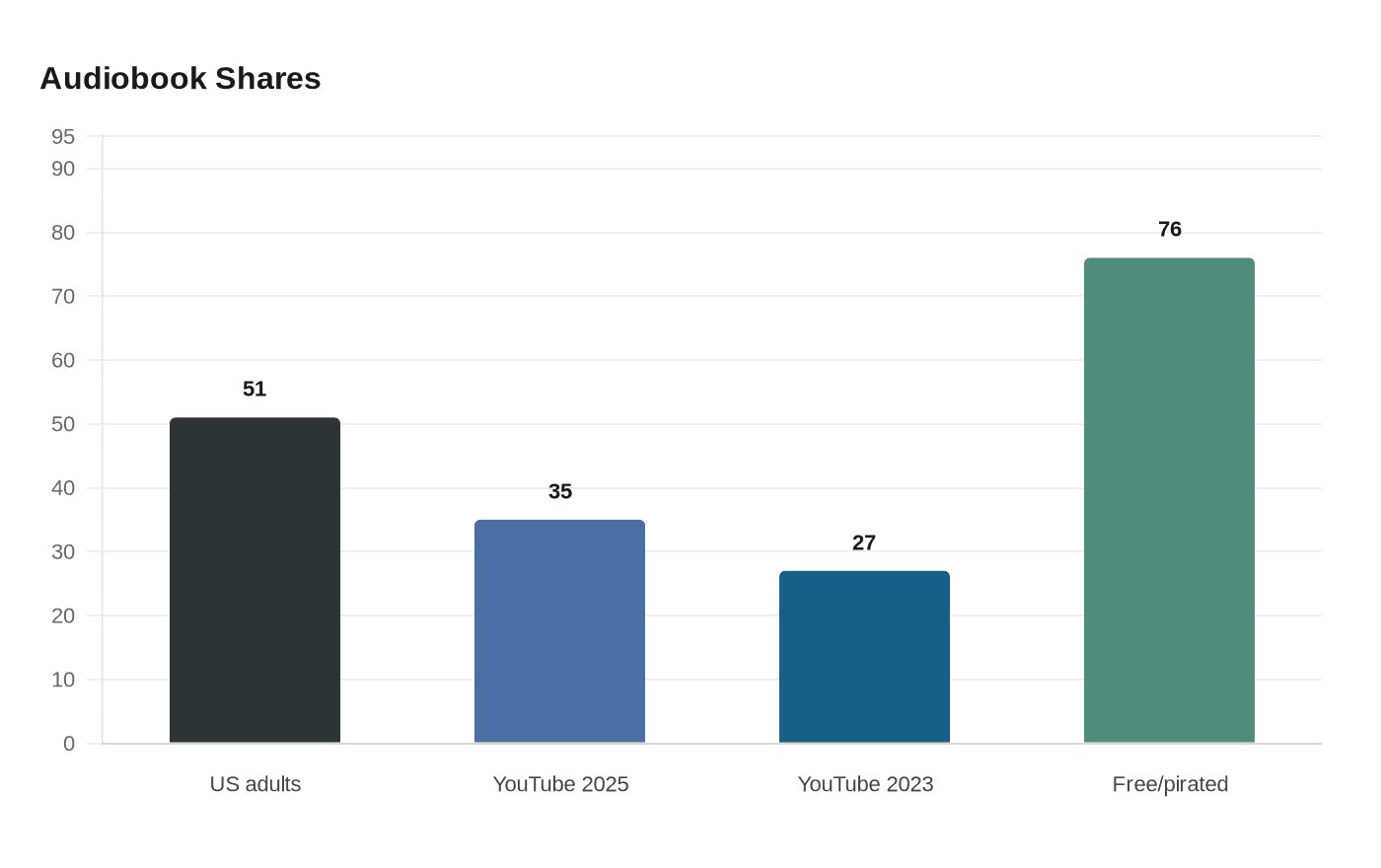
The scale of the underlying market helps explain why the problem matters. The Audio Publishers Association says 51% of Americans age 18 and older, about 134 million people, have ever listened to an audiobook. Audiobook revenue also rose 9% in 2023 to $2 billion, underscoring how much money now moves through a format that used to be a niche corner of publishing.

That growth has made YouTube a more attractive piracy hub. In the association’s 2025 consumer survey, 35% of audiobook listeners said they had listened to an audiobook on YouTube, up from 27% in 2023. Among those users, 76% said they were there because the content was free and largely pirated. That is not a marginal leakage problem. It points to a shadow distribution channel that reaches a broad audience at the exact moment audiobook demand is rising.
Publishers say YouTube is harder to police than older forms of book piracy because the platform makes it simple to stream hours of audio without downloading large files. That lowers the barrier for infringing uploads and helps them circulate quickly. Rights holders are then pushed back onto manual notice-and-takedown requests under section 512 of the Copyright Act, the framework the U.S. Copyright Office identifies as the main legal tool for removing infringing material online. YouTube does have copyright claim systems, but publishers say those tools have not stopped audiobook bootlegs at scale.
The rise of generative AI makes the problem more dangerous. The Copyright Office has said generative AI can produce audio that emulates a human voice, while also stressing that human authorship remains essential for copyrightability. That combination creates a fresh enforcement challenge: a pirated audiobook may no longer be a crude recording of a printed book, but a convincing synthetic performance that can be generated quickly, uploaded repeatedly, and kept one step ahead of takedowns.
For publishers, the stakes are financial and structural. Every unauthorized listen on YouTube can divert demand from licensed sales, subscriptions, and legitimate audio platforms, especially when the copy sounds polished enough to compete with professional narration. As audiobook listening expands, the platform scale that once helped creators find audiences is increasingly helping pirates build a mass-market counterfeit library.
This article was produced by Prism’s automated news system from verified source data, official records, and press releases, then run through automated quality and moderation checks before publishing. The system is built and supervised by the people who set the standards it runs under. Read our full AI policy.
Did this article answer your question?