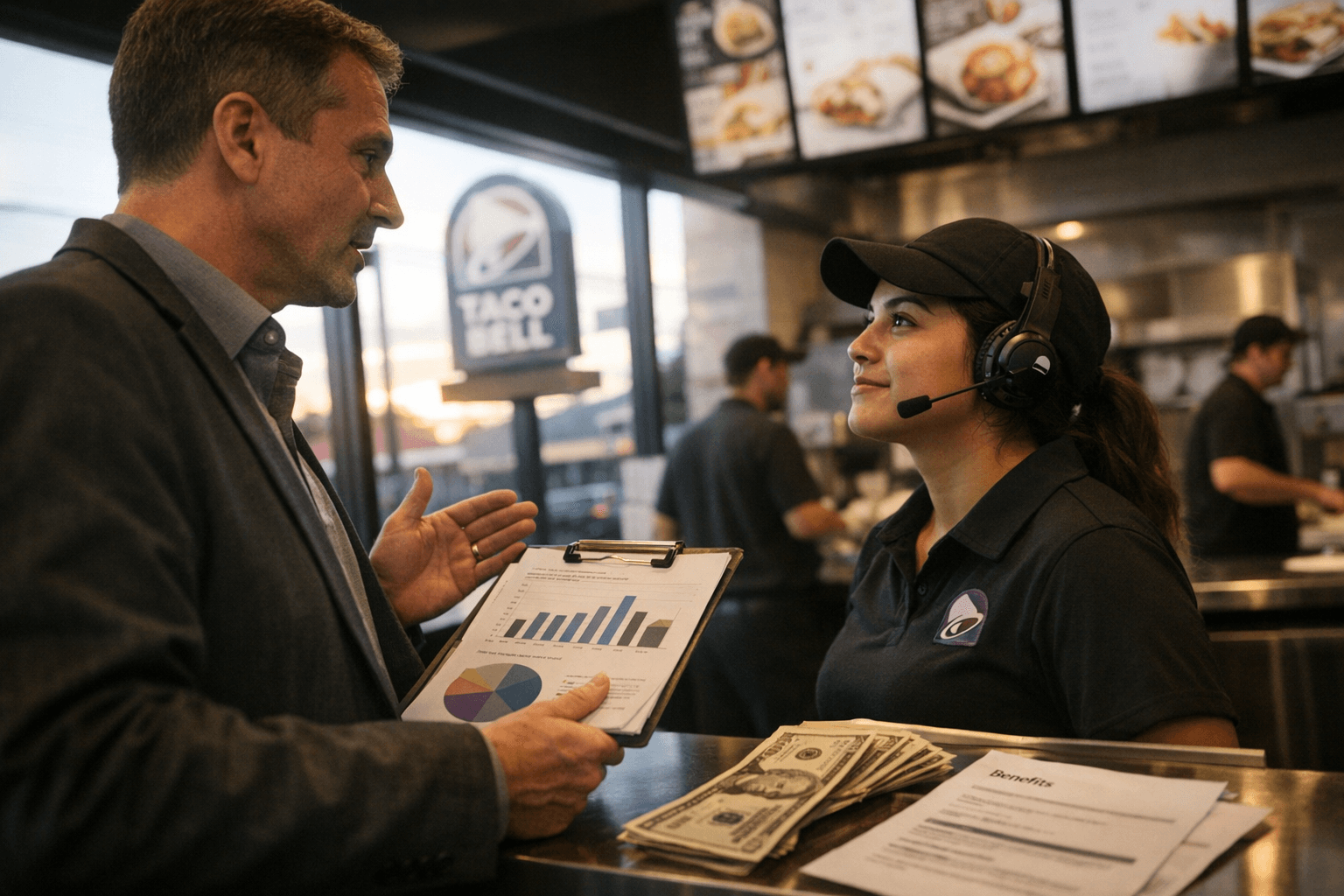
Yum! Brands' franchise-led model shifts Taco Bell staffing and responsibilities to franchisees
Approximately 98% of Yum! Brands’ more than 61,000 restaurants are franchised, so staffing and day-to-day management at most Taco Bell locations fall to franchisees.
With roughly 98% of its more than 61,000 restaurants operated by independent franchisees, Yum! Brands runs a franchise-led, asset-light system that places hiring, scheduling and other day-to-day restaurant responsibilities for Taco Bell largely under franchisee control, Matrixbcg and Vizologi report. That division means corporate decisions about brand, supply chain and technology do not automatically determine employment terms at most Taco Bell units.
Matrixbcg’s analysis highlights scale and recent performance: in 2024 Yum! Brands achieved more than $30 billion in digital sales, with digital channels accounting for over 50% of system sales, and the company recorded 9% core operating profit growth in 2024. These financial shifts accompany aggressive global expansion and a strategy that prioritizes Taco Bell U.S. as a core growth engine alongside KFC International.
The operational split is explicit across sources. Matrixbcg and Portersfiveforce list franchisee responsibilities as day-to-day operations, staffing, local marketing and adherence to brand standards, while Yum! corporate concentrates on brand development, supply chain management, strategic growth, technology platforms and franchisee support. Yum’s own materials say “The Yum! Franchise Office is dedicated to supporting and expanding Yum! Brands' global franchise network,” and the company points to the Yum! Global Center for Franchise Excellence as a vehicle for sharing best practices and leadership development.
Corporate governance documents underscore the limits of Yum!’s direct employer role. Yum!’s Code of Conduct states, “Though this Code does not apply directly to franchisees and their employees, Yum! expects franchisees to establish and enforce their own standards and practices to ensure integrity in their operations and a consistent customer experience.” The Code further requires Yum! corporate employees to certify adherence, avoid conflicts of interest, and “speak up if you see a colleague,” citing examples such as influencing a Yum! supplier decision or using Yum! time or equipment for another employer.
Technology and digital transformation add another layer. Matrixbcg notes significant investment in AI and technology, including “implementing AI for inventory management and staffing to reduce costs and improve performance.” With more than half of system sales coming through digital channels in 2024, franchisees face shifting labor demands for front-line, delivery and digital-service roles even as they retain staffing authority at the store level.
Revenue mechanics reflect the franchise model: Portersfiveforce describes a revenue mix driven by initial franchise fees, ongoing royalties and rent, supplemented by income from a smaller fleet of company-owned stores. Yum! provides supply chain services, quality assurance functions and operations guidance, but public materials and analysts flag open questions for verification—confirming the current store count, the 2024 digital sales figure and details on how corporate enforces brand and food-safety standards at franchised Taco Bell locations remain reporting priorities.
Know something we missed? Have a correction or additional information?
Submit a Tip