Zuma India visit reignites anger over Gupta corruption scandal
Zuma’s meeting with Ajay Gupta in Haridwar reopened South Africa’s state-capture wounds and triggered a probe into diplomat Anil Sooklal.

Photographs and video from Haridwar, India, showed Jacob Zuma at a temple prayer meeting with Ajay Gupta, South Africa’s High Commissioner to India Anil Sooklal, and Swami Kailashanand Giri at the Sidipeeth Shri Dakshin Kali Temple in late June. The scene brought back the family name that became shorthand for state capture under Zuma’s presidency, and it landed at a moment when South Africa is still struggling to close that chapter politically and legally.
Minister in the Presidency Khumbudzo Ntshavheni said Zuma was “showing the middle finger” to South Africans and argued that the visit undermined the country’s foreign policy and criminal justice system. International Relations and Cooperation Minister Ronald Lamola ordered an internal investigation into Sooklal’s role after his appearance at the event, while the Democratic Alliance questioned why a senior diplomat appeared to help facilitate the meeting and called the trip an “insult” to South Africans.
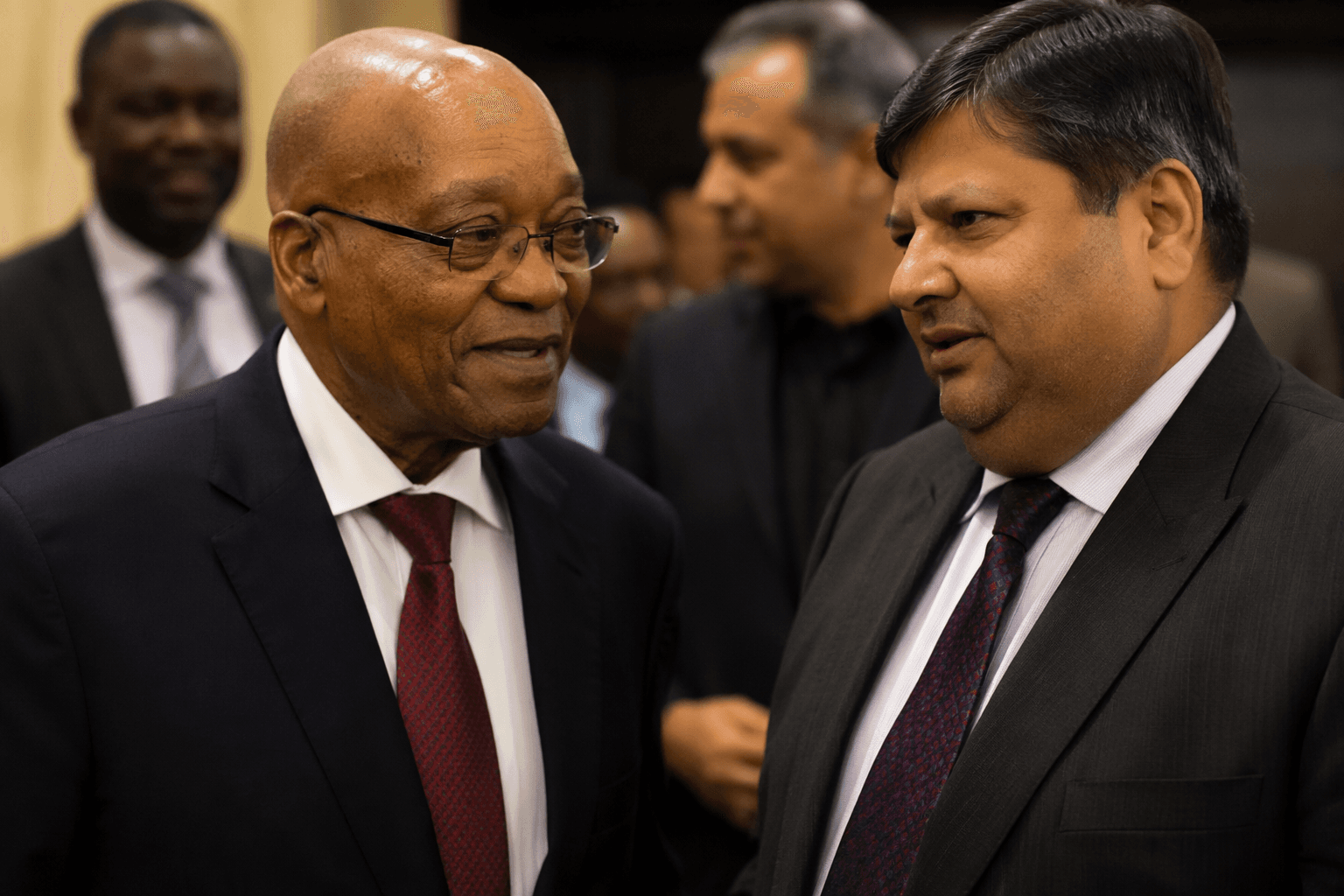
The backlash was sharpened by Zuma’s own words. New clips from the visit showed him, garlanded with rose petals, saying he had come to India to visit his “brother and friend” Ajay Gupta, who had been forced to leave South Africa. Zuma now leads the uMkhonto weSizwe Party, giving the encounter immediate political weight as the country heads toward local elections and opposition parties look for fresh evidence that the old order remains unrepentant.
That matters because the Gupta brothers, Ajay, Atul and Rajesh, became inseparable from the state-capture scandal that engulfed Zuma’s years in power. South Africa’s state-capture commission found Gupta-linked enterprises were paid tens of billions of rand in government-linked contracts, and the family fled South Africa in 2018 after Zuma resigned. Since then, authorities have kept trying to bring family members back to face the law, but earlier extradition efforts stalled on procedural grounds, leaving the underlying cases unresolved.
The Haridwar images now do more than revive an old scandal. They show how little distance South African politics has managed to place between Zuma, the Gupta name and the question of accountability, even after years of inquiries, resignations and failed extradition attempts.
This article was produced by Prism’s automated news system from verified source data, official records, and press releases, then run through automated quality and moderation checks before publishing. The system is built and supervised by the people who set the standards it runs under. Read our full AI policy.
Did this article answer your question?