Calder Cup symbolizes AHL excellence, Hershey leads all-time titles
Hershey owns the Calder Cup lead with 13 titles, but the trophy really tracks which AHL clubs turn prospects into NHL-ready winners.
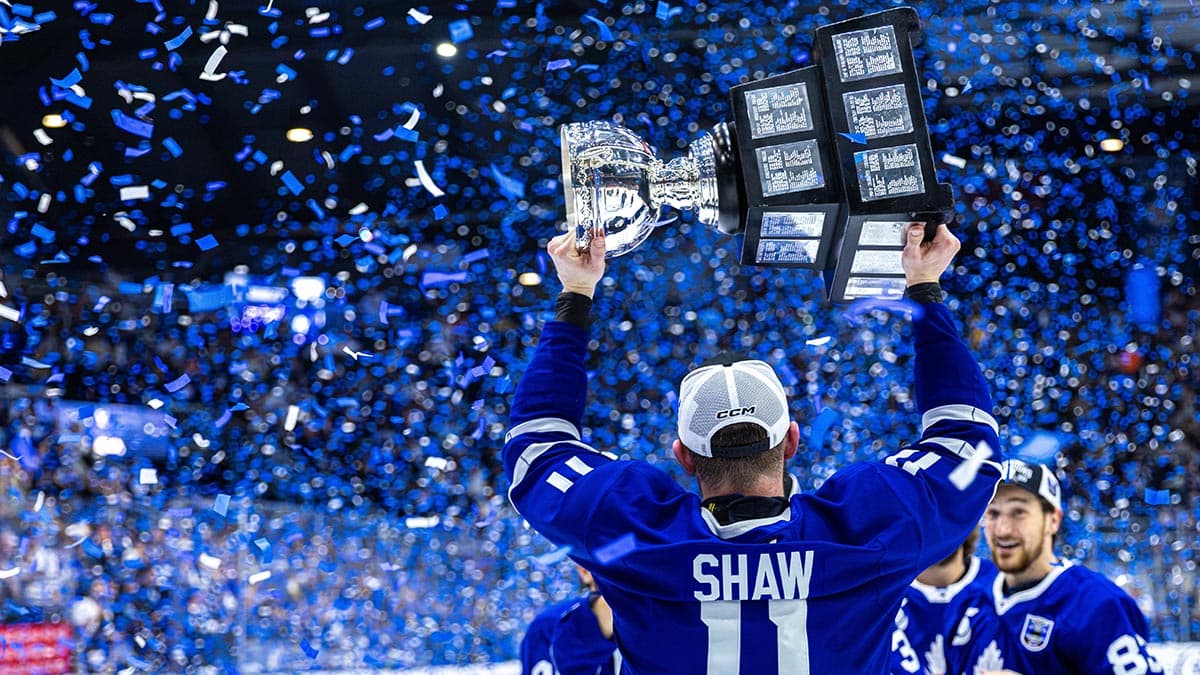
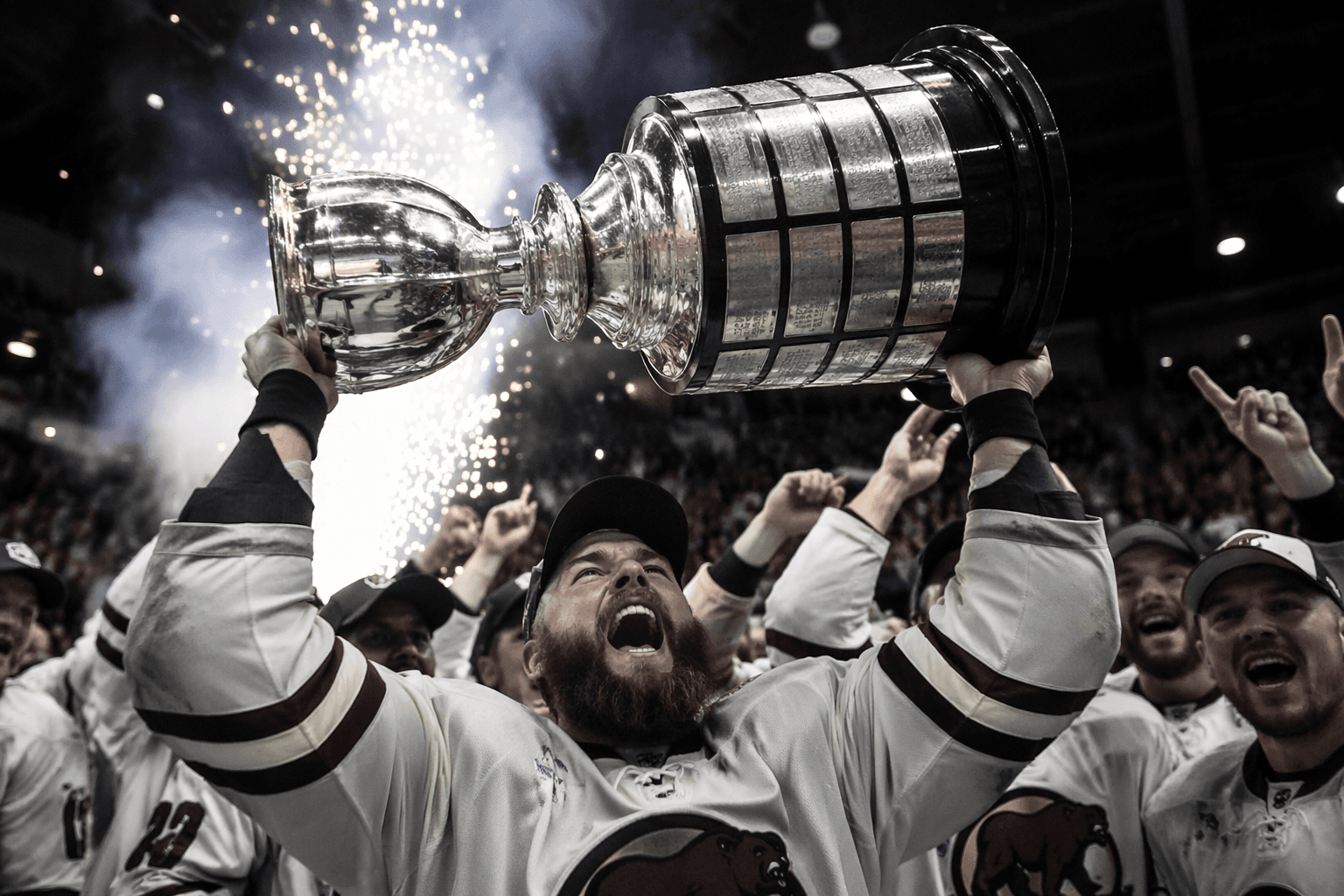
The Calder Cup is the AHL’s cleanest proof that development and winning can live in the same room. Hershey sits on top with 13 championships, Cleveland has 10, and the trophy’s trail runs through the league’s best hockey cities, best coaches, and best alumni.
A trophy built into the league’s history
The Calder Cup is named for Frank Calder, the NHL’s first president and one of the figures who helped shape the AHL in the mid-1930s. The league traces its formation to Cleveland on October 4, 1936, when the International Hockey League and the Canadian-American Hockey League merged into the International-American Hockey League, and its first season opened on November 7, 1936. The first league title went to the Syracuse Stars, and the first Calder Cup champion was the Providence Reds in 1937-38.
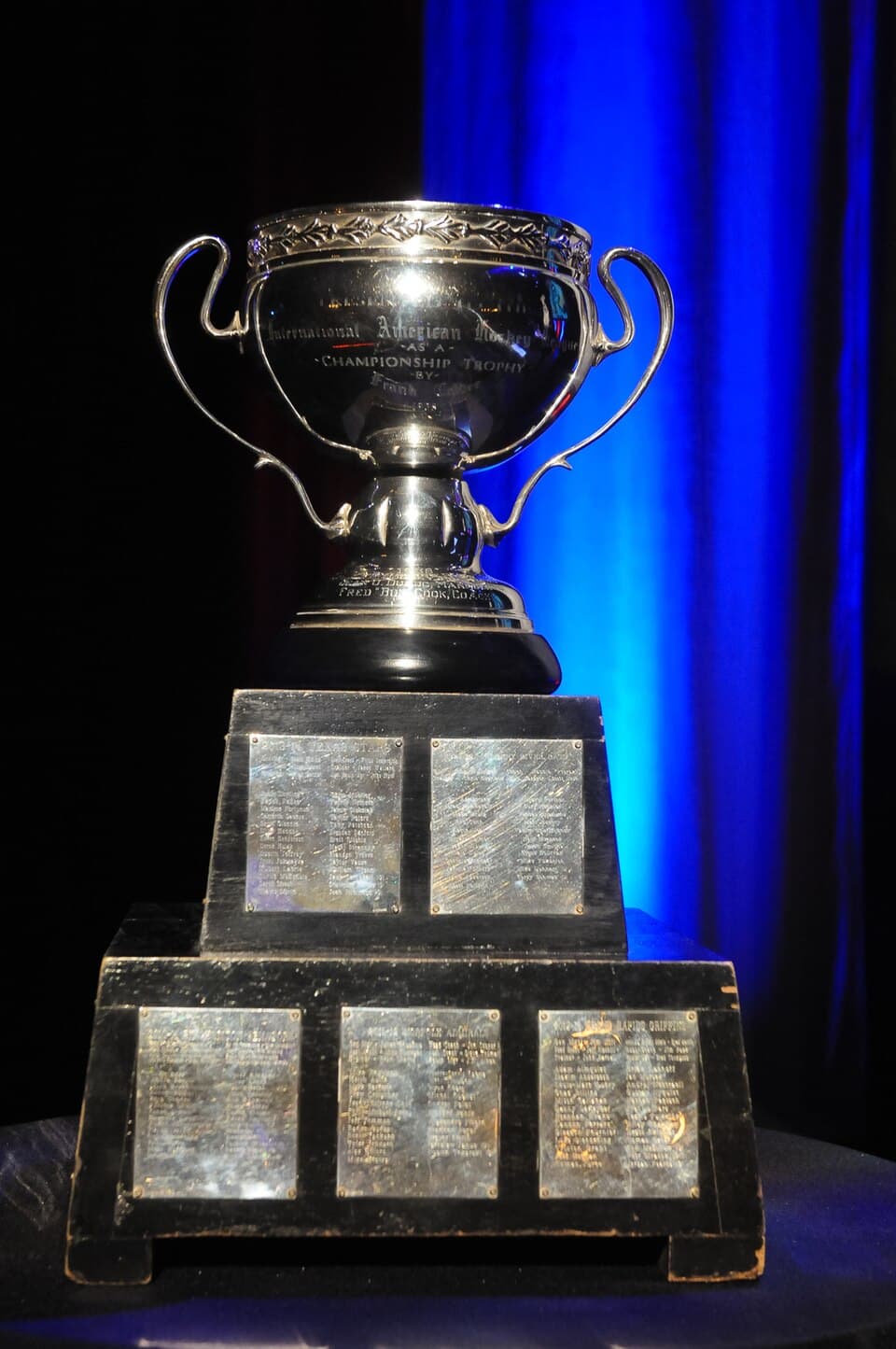
The trophy itself is as recognizable as the name. The current version dates to 2001 and stands 24 inches tall, weighs 25 pounds, and features a sterling-silver bowl that is 12 inches high and eight inches in diameter on a Brazilian mahogany base. Recent champions are engraved on the base, while earlier winners are commemorated at the Hockey Hall of Fame in Toronto, which is exactly how the Cup bridges eras instead of freezing one of them in place.
The cities that learned how to win
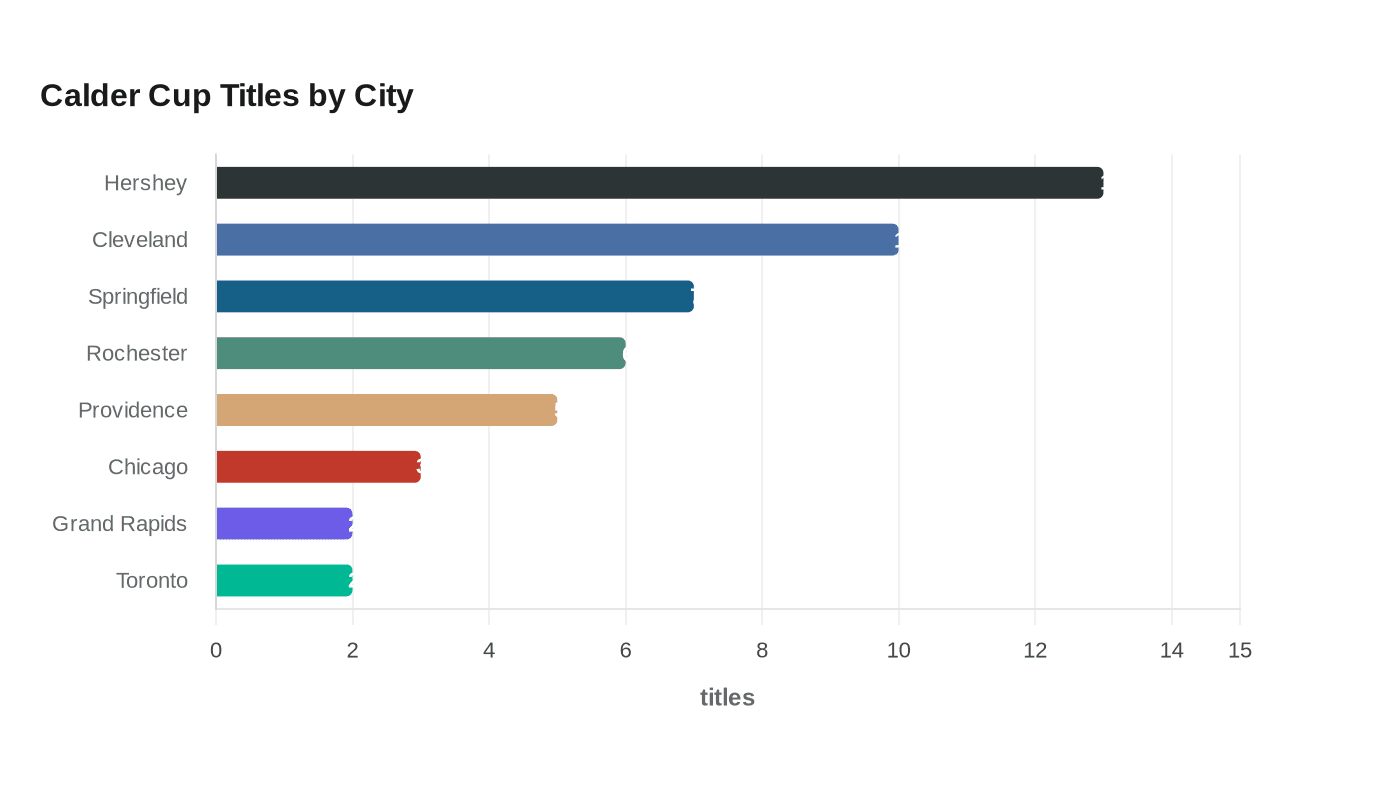
A total of 33 different cities have had an AHL member club win the Calder Cup, and the concentration at the top says plenty about organizational culture. Hershey leads all AHL clubs with 13 titles, Cleveland follows with 10, then Springfield with seven, Rochester with six, Providence with five, Chicago with three, and Grand Rapids and Toronto with two each. That is not random distribution. It is a map of which franchises kept building teams that could survive four rounds, not just collect regular-season points.
Hershey’s case is especially strong because the Bears have not only won the most, they have stayed in the fight year after year. The AHL’s team records page lists 68 playoff appearances, 23 trips to the finals, and 336 playoff wins, which is the kind of accumulation that comes from a franchise knowing how to reset, reload, and stay relevant across different NHL parent-club cycles. Springfield’s place in the history book is different but just as sharp: the Springfield Indians remain the only team to win three straight Calder Cups, doing it from 1960-61-62.
That matters because the Calder Cup is not a one-off prize with a short memory. The clubs at the top keep showing that a stable AHL program can outlast roster churn, NHL call-ups, coaching changes, and market pressure. When a city shows up in the title column over and over, it usually means the organization has figured out how to make the league’s chaos work for it.
Why the Calder Cup doubles as a development chart
The AHL says it is the top development league for all 32 NHL teams, and the numbers back up the claim. Nearly 90 percent of today’s NHL players are AHL graduates, and on 2025-26 opening-day active rosters the league counted 596 AHL graduates, more than 82 percent of the NHL’s initial player pool. That is the real reason the Calder Cup matters beyond the trophy case: winning in the AHL is often the last stop before players are asked to do it in the NHL.
The alumni list tells the same story in a different language. The AHL says more than 100 honored members of the Hockey Hall of Fame spent time in the league, and 29 Hockey Hall of Famers won the Calder Cup during their careers. Johnny Bower, Terry Sawchuk, Larry Robinson, Patrick Roy, and Fred Shero all connect the trophy to a much larger hockey lineage, one that spans era after era without losing its development function.
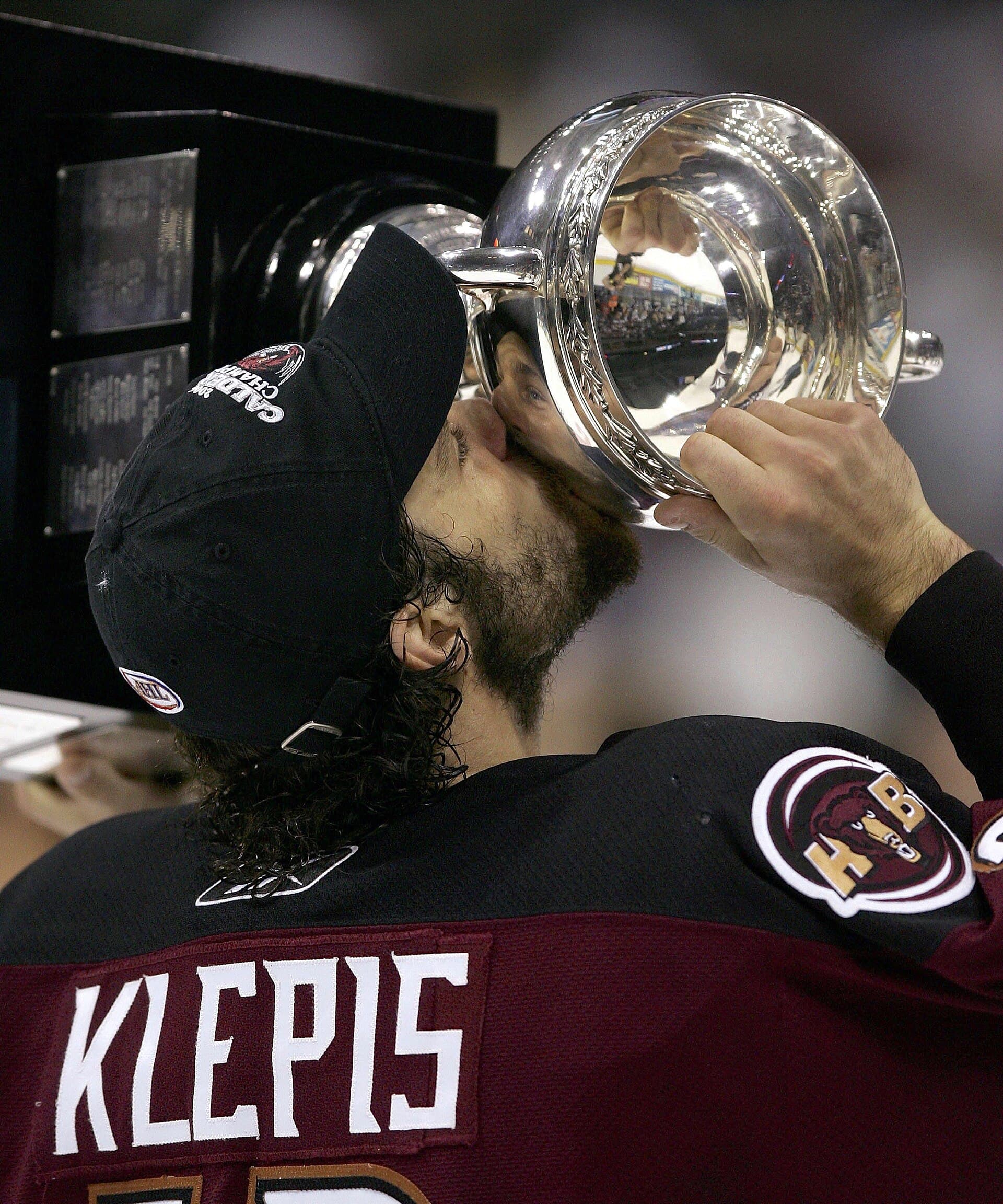
That is why AHL championships are such good shorthand for an organization’s real quality. A team can draft well, spend well, and still fail if it cannot teach players how to win shifts, series, and pressure games. Calder Cup banners often belong to the clubs that solve those smaller problems before their prospects reach the NHL spotlight.
The coaching tree is just as revealing
If the player pipeline is deep, the coaching lineage is even easier to read. Hall of Famer Fred “Bun” Cook won seven Calder Cups as a head coach, the most by anyone in league history, and the AHL says no other head coach has won more than three. Cook’s record is not just longevity, it is repetition at a level nobody else has matched, with titles coming across his work with Providence and Cleveland.
John Tortorella adds another layer to the story. In 2004, he became just the fourth coach ever to win both the Stanley Cup and the Calder Cup, and the AHL says nine coaches have now won both trophies. That matters because it ties AHL success directly to NHL success, not as theory, but as career evidence.
The current NHL coaching list makes the connection hard to miss. Peter Laviolette, Jon Cooper, Jeff Blashill, Jared Bednar, Sheldon Keefe, Ryan Warsofsky, and Manny Malhotra all own Calder Cup titles. When that many active NHL coaches share an AHL championship background, the Calder Cup stops looking like a minor league crown and starts looking like a qualification exam for the sport’s next level.
What the trophy says about the league
The Calder Cup is the strongest possible symbol for what the AHL does best. It preserves the league’s origin story from 1936, honors the old names in Toronto, measures the best franchises by title count, and exposes the organizations that repeatedly turn prospects into professionals. Hershey’s 13 titles are the headline, but the real story is the pattern behind them: in the AHL, championships are usually a sign that the next NHL player, and often the next NHL coach, is being built the right way.
This article was produced by Prism’s automated news system from verified source data, official records, and press releases, then run through automated quality and moderation checks before publishing. The system is built and supervised by the people who set the standards it runs under. Read our full AI policy.
Know something we missed? Have a correction or additional information?
Submit a Tip