Cleveland Monsters eye home-ice edge as third straight playoff run begins
Cleveland’s third straight playoff trip is about more than a bracket spot. With a packed home building, a hardened core, and a series win already in hand, the Monsters look built to matter in spring.
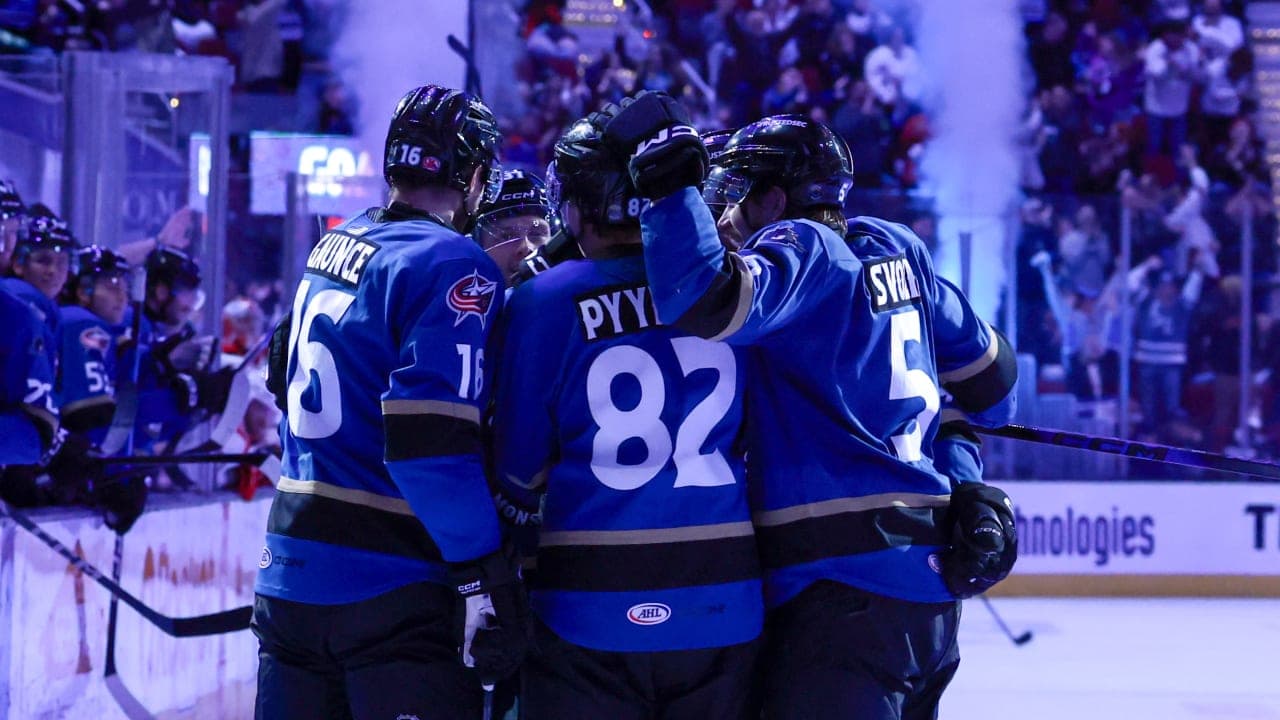
Cleveland’s spring identity is already established
The Cleveland Monsters are not arriving in the postseason as a surprise anymore. They clinched a berth in the 2026 Calder Cup Playoffs with a 6-3 win over Milwaukee on April 3, then carried that momentum into a third consecutive playoff appearance, a run that began with their trip to the Eastern Conference Finals in 2024.
That consistency is what makes this stretch dangerous for opponents. In a league where 23 teams qualify and five rounds separate the field from the Calder Cup, every edge matters, and Cleveland has spent several seasons turning itself into a club that knows the weight of April hockey.
Why home ice in Cleveland feels different
The Monsters finished third in the AHL North Division and earned a first-round bye, which gave them time to settle in before opening their division semifinal against Syracuse. That break matters, but so does the building they play in, because Rocket Mortgage FieldHouse has become part of the team’s competitive identity.
Cleveland’s home support is not a marketing note, it is a real playoff factor. The Monsters led the AHL in attendance in 2023-24 with 10,264 fans per game, the highest average by any AHL team in 25 years, and they led the league again in 2024-25. Even a single playoff night draws a stage-like atmosphere, as shown by the 8,984 fans who filled the building for Game 1 of the 2025-26 series against Toronto.
That kind of backdrop changes the way a series feels. In a format built on short bursts and tight margins, the Monsters are playing in front of a crowd that has already shown it will treat spring hockey like an event, not a curiosity.
The series has already shown how fast momentum can swing
Cleveland opened the North Division semifinal with a 3-2 win over Syracuse on April 25, scoring three first-period goals and hanging on from there. That is the kind of start that tells you a team is comfortable in its own skin, especially after a bye that could have dulled the edge.
Game 2 quickly reminded everyone how fragile that edge can be. Syracuse answered with four first-period goals and tied the series with a 4-1 win on April 26, sending the matchup to Syracuse and forcing Cleveland to reset its home-ice advantage in real time. For the Monsters, the lesson is simple: the margin is already thin, and every early shift now matters.
That is why the home crowd feels so important. The Monsters have already shown they can seize a night at Rocket Mortgage FieldHouse; now they have to prove that advantage can survive the road swing and still shape the series.
A roster built for both development and pressure
This is still a Blue Jackets affiliate, which means every playoff night carries a second layer of significance. Luca Del Bel Belluz, James Malatesta, Corson Ceulemans, Stanislav Svozil, Zach Aston-Reese, Brendan Gaunce, Hudson Fasching, Ivan Fedotov, Evan Gardner and Zach Sawchenko all sit in the ecosystem that Columbus fans follow closely, because Cleveland is where prospect development meets a real playoff test.
That blend matters. The Monsters are not relying only on young talent, but on a roster that mixes future-facing pieces with players who understand how to manage postseason stress. That balance is one reason the team has been able to survive the jump from regular-season rhythm to spring pressure.
Goaltending has also been central to the franchise’s recent playoff identity. AHL coverage during Cleveland’s 2024 run described the Monsters as a team one win away from the conference finals and pointed to Jet Greaves as a key reason the push had gotten that far. That kind of anchor matters in any playoff run, and it reinforces the idea that Cleveland’s best spring teams are usually built on more than scoring bursts.
Trent Vogelhuber knows what this stage demands
Head coach Trent Vogelhuber is not trying to guess what postseason hockey looks like in Cleveland. He played on the franchise’s 2016 championship team, when the club was still known as the Lake Erie Monsters and brought the Calder Cup Finals back to Cleveland for the first time in 50 years.
That history gives the current group a standard to measure itself against. Vogelhuber has pointed to that 2016 team as a bridge to what followed, noting that the run helped propel players such as Zach Werenski, Oliver Bjorkstrand, Josh Anderson, Sonny Milano, Anton Forsberg and Joonas Korpisalo into NHL careers. In other words, Cleveland’s playoff identity has never been only about surviving a series. It has also been about building the next layer of a franchise.
He has also said the current group responded to late-season adversity by digging in under pressure, which is exactly the kind of trait that shows up in playoff hockey before it shows up anywhere else. That is the thread connecting the current roster, the 2024 conference-final push and the championship history from 2016.
Why Cleveland matters beyond Cleveland
The Monsters’ postseason run lands in a part of the hockey calendar where organization matters as much as talent. A club that can pack its home building, lean on a steady developmental pipeline and carry recent playoff experience into a series is not just another entry in the bracket.
For Columbus fans, Cleveland is also a live preview of what is next. Each playoff shift offers a look at how the Blue Jackets’ system is translating under pressure, which names might be ready sooner than expected, and which players can handle the pace that separates good prospects from real NHL options. The Monsters have now spent enough springs proving they belong here that the rest of the field has to plan for them accordingly.
That is what makes this run different from a one-off appearance. Cleveland has a title in its history, a conference-final run in its recent past, a building that regularly behaves like a playoff weapon and a roster shaped for both development and pressure. In the AHL, that combination is how a team becomes one of the spring opponents nobody wants to see for long.
This article was produced by Prism’s automated news system from verified source data, official records, and press releases, then run through automated quality and moderation checks before publishing. The system is built and supervised by the people who set the standards it runs under. Read our full AI policy.
Did this article answer your question?