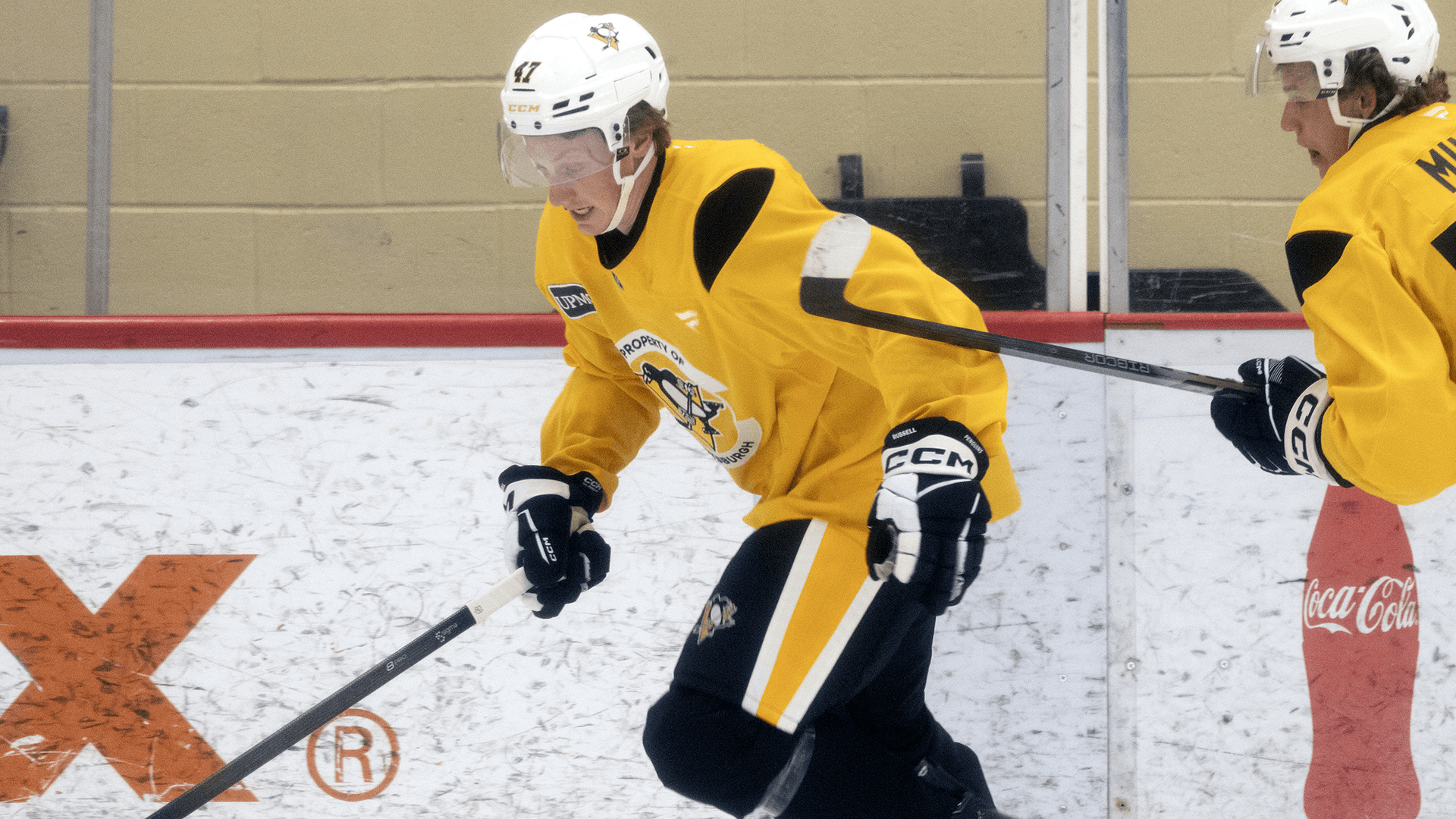
Czech Center Holinka Joins Marlies After Dominant 80-Point WHL Season
A fifth-round pick who nearly doubled his WHL point total, Holinka joins the Marlies with 80 points in 59 games — and a translation gap he now has to close.

Here's the verdict before any box score gets cited: Miroslav Holinka's assignment to the Toronto Marlies is not a reward for a dominant junior career. It's an entrance exam with a grade that won't be posted until September.
The 20-year-old Czech center finished the 2025-26 WHL regular season with 80 points (37 goals, 43 assists) in 59 games for the Edmonton Oil Kings, led his team in playoff goals with seven, scored the overtime winner in Game 6 against the Saskatoon Blades, won WHL Player of the Week honours, and then watched his season end in Game 7. That resume earned a three-year entry-level contract signed last July at $918,333 annually and reset his prospect ceiling from fifth-round depth piece to something the Toronto Maple Leafs actually need to think about. Now comes the test that the WHL has never simulated.
Start with a number worth sharing: the WHL-to-AHL translation factor in standard hockey analytics equivalency models sits at approximately 0.62. Run Holinka's 1.36 points-per-game WHL rate through that filter and the projection lands at roughly 0.84 AHL points-per-game. That would rank among the better rookie forward outputs in the league. Here is the catch that every team with a WHL graduate knows from painful experience: virtually no first-year player actually reaches the translated projection. The gap between the model and reality isn't a flaw in the math. It's friction, specifically the physical friction of a 20-year-old absorbing NHL-caliber checking in the neutral zone, competing for faceoffs against veterans who have been doing this for a decade, and processing a 200-foot defensive structure that the WHL's open ice rarely demands. Holinka's first 10 Marlies games will not answer whether he is good. They will answer which parts of his game are already pro-ready and which ones need a full AHL season to develop.
The checklist to track starts with faceoffs. Holinka is a center, which means his first professional measurement isn't on the scoresheet; it's at the dot. WHL faceoff habits transfer poorly because the speed of the draw, the grip technique, and the strength differential all change at once when a player turns pro. A 20-year-old posting 45 percent in his first 10 AHL games would signal genuine faceoff instincts rather than a system dependency. Below that number suggests he enters 2026-27 with remedial work at a position where the Leafs already have organizational depth.
Minutes and special teams usage will tell a secondary story. If the Marlies deploy Holinka on the power play during this brief stint, even in limited situations, it signals that the coaching staff sees his WHL offensive reads as transferable to pro structure. If he draws penalty kill time, it means his defensive awareness and compete level cleared a bar that many offensive forwards never reach. If he plays straight even-strength minutes in sheltered usage, that is fine too, and probably realistic for three games at the end of a regular season, but it leaves the deeper questions unanswered until the fall.
On Toronto's prospect depth chart, Holinka arrives in an interesting position. Easton Cowan, loaned to the Marlies at the trade deadline for their playoff run, sits at the top of the organizational pyramid after posting nine goals and 16 assists across 60 NHL games this season. Below that tier, the picture gets genuinely competitive. Jacob Quillan, Luke Haymes, Ryan Tverberg, and William Villeneuve are all on Leafs NHL loan to the Marlies roster. Tyler Hopkins and Harry Nansi, both 2025 Maple Leafs picks, joined this month on ATO agreements after being eliminated from their OHL playoffs. College signees Brandon Buhr, Vinny Borgesi, and Hayes Hundley all begin NHL contracts next season. Holinka is not the most decorated player in that group on paper. He is the one with the most interesting upside argument.
The comparable that gives his trajectory the clearest shape is Pontus Holmberg. Selected 156th overall by Toronto in 2018, five spots deeper in the draft than Holinka and a full round later, Holmberg arrived in the organization as a two-way center with an offensive ceiling most draft analysts did not take seriously. He became a regular NHL forward. That arc is not a guarantee of anything for Holinka, but it is the most useful organizational template available: a late-round pick with two-way instincts, drafted on character and defensive reliability, who needed patience at the AHL level before the offensive game fully translated. The Leafs Nation's description of Holinka as a potential "viable bottom-six option for the Leafs in the next couple of seasons" is, in that context, not a ceiling. It is a floor with Holmberg's career as proof of concept.
The difference worth noting: Holmberg arrived at the Marlies as a 23-year-old who had already played professional hockey in the SHL. Holinka is making his pro debut at 20 directly from junior. The adjustment window is longer, and the expectations should reflect that. His first full professional season is projected for 2026-27. Toronto is not asking him to be a bottom-six NHL option by October. They are watching whether his instincts are pro-ready now, so they can calibrate the workload they hand him twelve months from now.
That recalibration of his profile started at the 2025 World Junior Championship, where his performance generated prospect buzz that scouts credited with pushing him well beyond his fifth-round draft standing. His 80-point WHL season, second on the Oil Kings only to Lukas Sawchyn's 88 points, confirmed that the WJC wasn't noise. The playoff run against Saskatoon, where Holinka led the Oil Kings with seven goals in seven games before Edmonton fell in Game 7, added the leadership dimension that teams drafting late-round picks are always hoping to eventually discover.
Three Marlies regular-season games remain before the AHL playoffs begin. Holinka will not solve the translation question in that window. But three games of pro hockey create a baseline. Coaching staff gets a first look. The player gets a first feel for what pro checking actually means when there is no return to junior hockey waiting on the other side. His three-year ELC is not a patience clause. It is a three-year window to become what the model projects, which means the translation test started the moment his Edmonton playoff run ended.
This article was produced by Prism’s automated news system from verified source data, official records, and press releases, then run through automated quality and moderation checks before publishing. The system is built and supervised by the people who set the standards it runs under. Read our full AI policy.
Did this article answer your question?