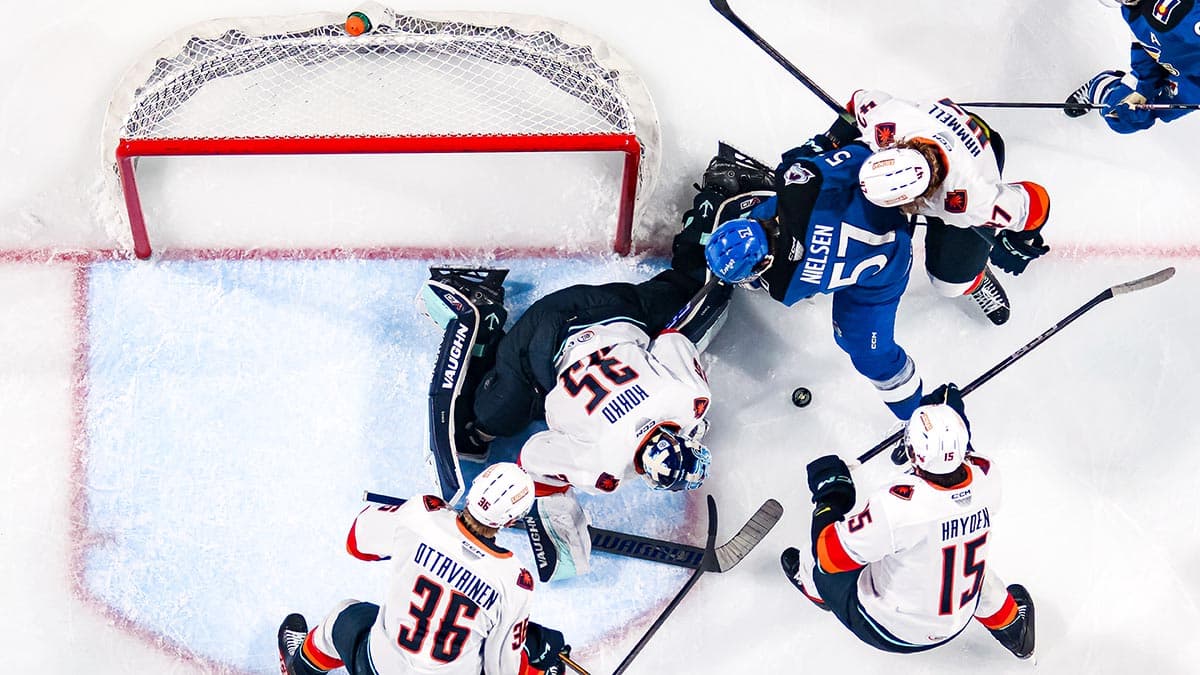
Eagles aim to end playoff frustration after years of early exits
Colorado has been a model of consistency, but the spring résumé still has dents. Trent Miner and a deeper core are trying to turn that into a real Calder Cup run.
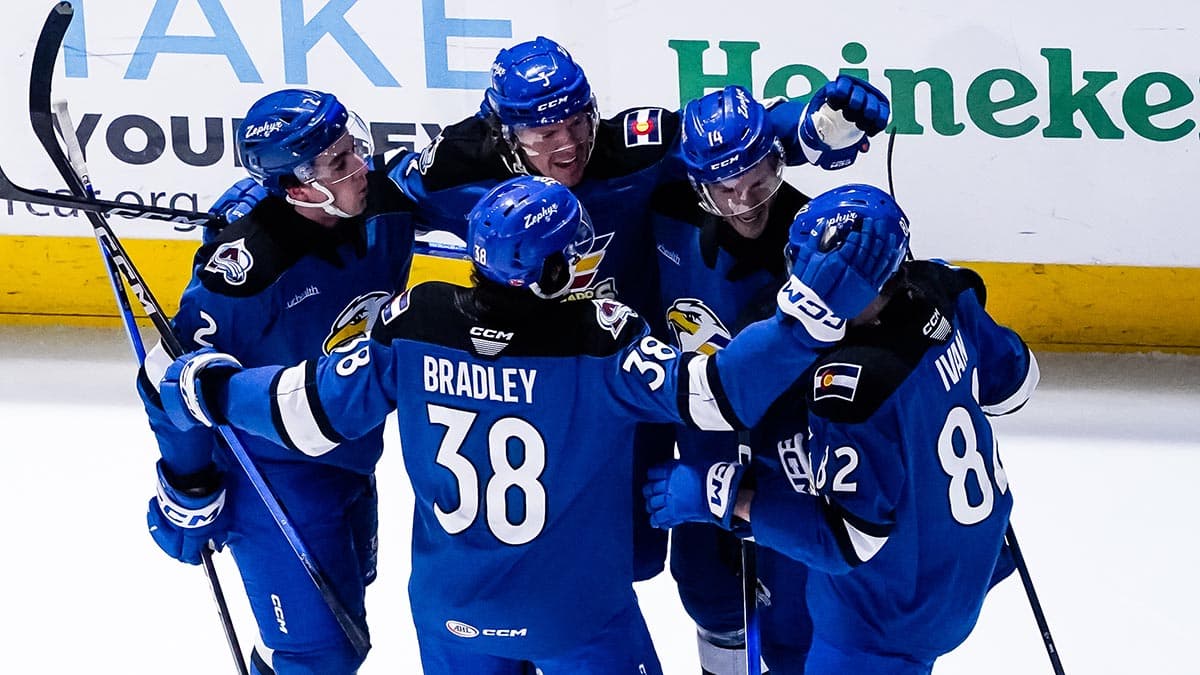
The bruise behind the consistency
Colorado keeps showing up in the postseason, and that is exactly why the pressure is so heavy now. Since entering the AHL in 2018-19, the Eagles have not missed the Calder Cup Playoffs, but the spring results have not matched the regular-season standard, and that gap is the whole story.
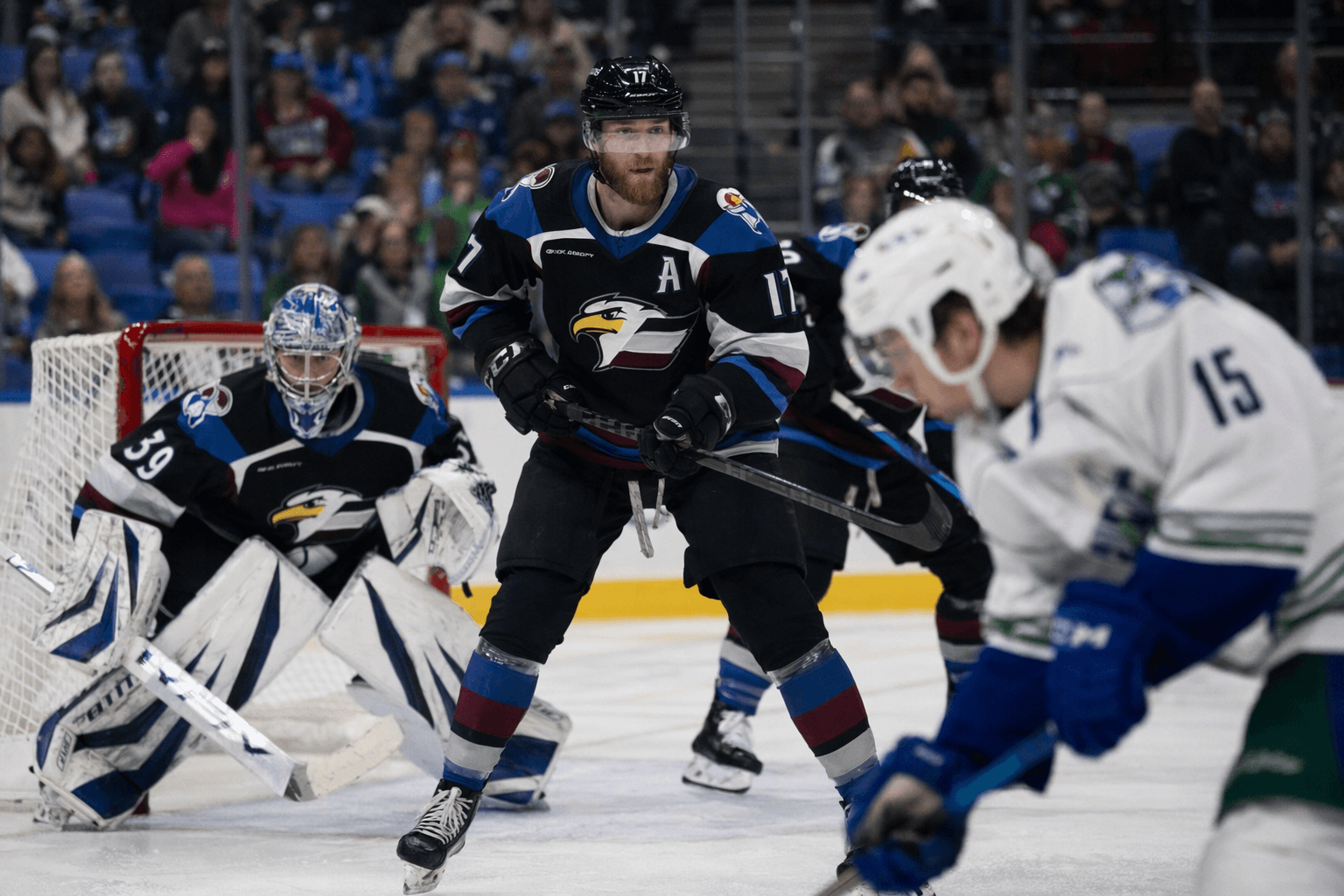
That tension is what makes this run matter. The Eagles are no longer trying to prove they belong in the league. They are trying to prove they can survive it when the games get tighter, the margins shrink and the roster starts to bend under playoff pressure.
How the Eagles got here
The franchise was approved as an AHL expansion team for the 2018-19 season and immediately became the Colorado Avalanche’s primary development affiliate. Colorado played its first AHL regular-season game on Oct. 5, 2018, at the Budweiser Events Center in Loveland, and the team still calls that same building home, now known as Blue Arena.
That continuity matters because the location is part of the organization’s identity. Blue Arena sits in Loveland, has 7,200 seats and opened in September 2003, which gives the Eagles a stable base even as the roster changes around them. The Avalanche have leaned into that relationship too, describing the affiliate as being “up the hockey highway,” a shorthand for how close and active the pipeline really is.
That proximity helps with player movement, but it also creates a simple truth: Colorado has been built to absorb turnover. The test has never been whether the Eagles can stock the shelf. It has been whether they can keep winning once the shelf keeps getting raided.
Why the spring scar tissue is real
The playoff trail has left some ugly marks. Last year ended with a winner-take-all home loss to Abbotsford, and two years ago Colorado was eliminated by the Abbotsford Canucks in overtime. Three years ago, another winner-take-all game went sideways in a 5-0 loss to Coachella Valley. Go back to 2022 and the picture gets even harsher: Stockton shut out Colorado three times in a four-game series, with Dustin Wolf standing in the way.
That is not bad luck. That is a pattern.
For a franchise that has built a reputation on consistency, those exits expose the one thing regular-season numbers can hide: the difference between being good and being dangerous in May. The Eagles have been reliable enough to reach the dance every year. They just have not always looked like a team ready to keep dancing after the first hard punch.
What is different this time
The strongest argument for this group is not hype, it is production. Colorado won seven of its first nine playoff games in the current postseason, and the two statement series-clinchers were loud: a 6-1 win over San Diego and a 6-2 win over Henderson. That kind of separation is important because it suggests the Eagles are not just surviving, they are dictating.
The Pacific Division path also gives the run real weight. In the AHL’s current playoff format, 23 teams qualify, as many as seven Pacific Division clubs can reach the field, and home ice is awarded by regular-season points. That means the path is crowded, the matchups are unforgiving and every point from the winter matters when the bracket tightens in the spring.
Colorado’s current run has already pushed it into the Pacific Division finals against Coachella Valley, a best-of-five series that had the Eagles leading 2-1 entering Game 4. That is the exact type of stage where this franchise has stumbled before, which is why the result here says so much more than a hot start in the first round.
Trent Miner has changed the math
If there is one reason this postseason feels different, it is Trent Miner. He has four shutouts and a microscopic 1.18 goals-against average in the run described here, and those numbers are not empty bragging rights. They are the engine behind Colorado’s ability to play on top of teams instead of always playing from behind.
Miner’s start has also entered rare air. In the current playoffs, he was described as the first AHL goaltender since Rochester’s Mika Noronen in 2000 to open a postseason with three shutouts in five starts. That is the kind of stat that does not just show good form, it signals command.
And command matters in the playoffs more than almost anything else. A team can survive a weak shift or a bad bounce. It cannot survive being ordinary in goal when series start turning into coin flips. Miner has given Colorado the kind of goalie performance that lets the rest of the roster play with conviction instead of caution.
Depth is no longer a theory
Colorado’s roster churn should have been a problem by now. Jack Ahcan’s recall to the Avalanche and Alex Gagne’s back-and-forth travel between Loveland and Denver are the kind of transactions that usually expose a team’s depth. Instead, the Eagles have kept rolling.
Gagne is the clearest example of why. He played 58 regular-season games for Colorado in 2025-26 and had two goals in eight playoff games at the time of the cited AHL player page. That is not just a prospect getting a look; that is a young defender being asked to hold real weight in a postseason environment.
The point is not that Colorado has avoided turnover. It is that the club has built a structure sturdy enough to survive it. When the Avalanche need help, the Eagles provide it. When the Eagles need a response, the next man in has to know his job immediately. That level of organizational trust is part of why Colorado remains in the conversation every year.
The hurdle that still defines this team
The Eagles do not need another regular season to prove they are a model organization. They need a cleaner ending in the playoffs. That is the hurdle now, and it is bigger than one round or one series.
The real challenge is closing the gap between dominance and proof. Colorado has already shown it can win enough games to get in, enough series to matter and enough nights to look like a contender. What it still has to show, after all these early exits, is that it can keep its edge when the bracket gets mean, the goaltending duel tightens and the series turns into a test of nerve.
That is where this team finally looks interesting. Not because the Eagles are trying to repeat the script, but because the numbers, the goalie, and the depth suggest they may actually be writing a different ending.
Know something we missed? Have a correction or additional information?
Submit a Tip