Goaltending has taken over the Calder Cup playoffs
Goaltending has turned the Calder Cup bracket into a one-goal war. Springfield and Wilkes-Barre/Scranton show why the next round will hinge on the crease.

The Calder Cup playoffs have become a test of endurance where the smallest crease mistake can tilt an entire series. Through 53 games, teams were averaging just 2.62 goals per game, and 23 of those contests were decided by one goal, the kind of numbers that turn every rebound, screen, and loose puck into a playoff lever.
The playoff race has narrowed to the goalie battle
That low-scoring backdrop is exactly why the 2026 bracket feels different. The current AHL playoff format began in 2022 after three seasons without a normal Calder Cup postseason because of COVID-19 disruption, and the league’s 23-team field only gets to the serious part after a best-of-three opening round trims it to 16. In a format that unforgiving, one bad night can end a season before it ever settles in.
Patrick Williams tied the current postseason to a familiar AHL pattern: the teams still alive are leaning on prospects and young veterans in net, just as previous Calder Cup runs were shaped by Kaapo Kähkönen, Chris Driedger, Hunter Shepard, and Alex Lyon. The message is not that goaltending is merely good right now. It is that goaltending has become the defining variable, the thing that can suppress an offense, rescue a tired team, and flip momentum in one period.
Springfield turned an 8-1 disaster into the defining comeback
No team illustrates that shift better than Springfield. The Thunderbirds became the first club in Calder Cup Playoff history to lose Game 1 by 8-1 and still win the series, a turnaround that instantly changed the way the bracket viewed them. After that opening loss to Charlotte, Springfield allowed only nine total goals across its next six playoff games, an absurdly tight stretch for a team that had already been written off once.
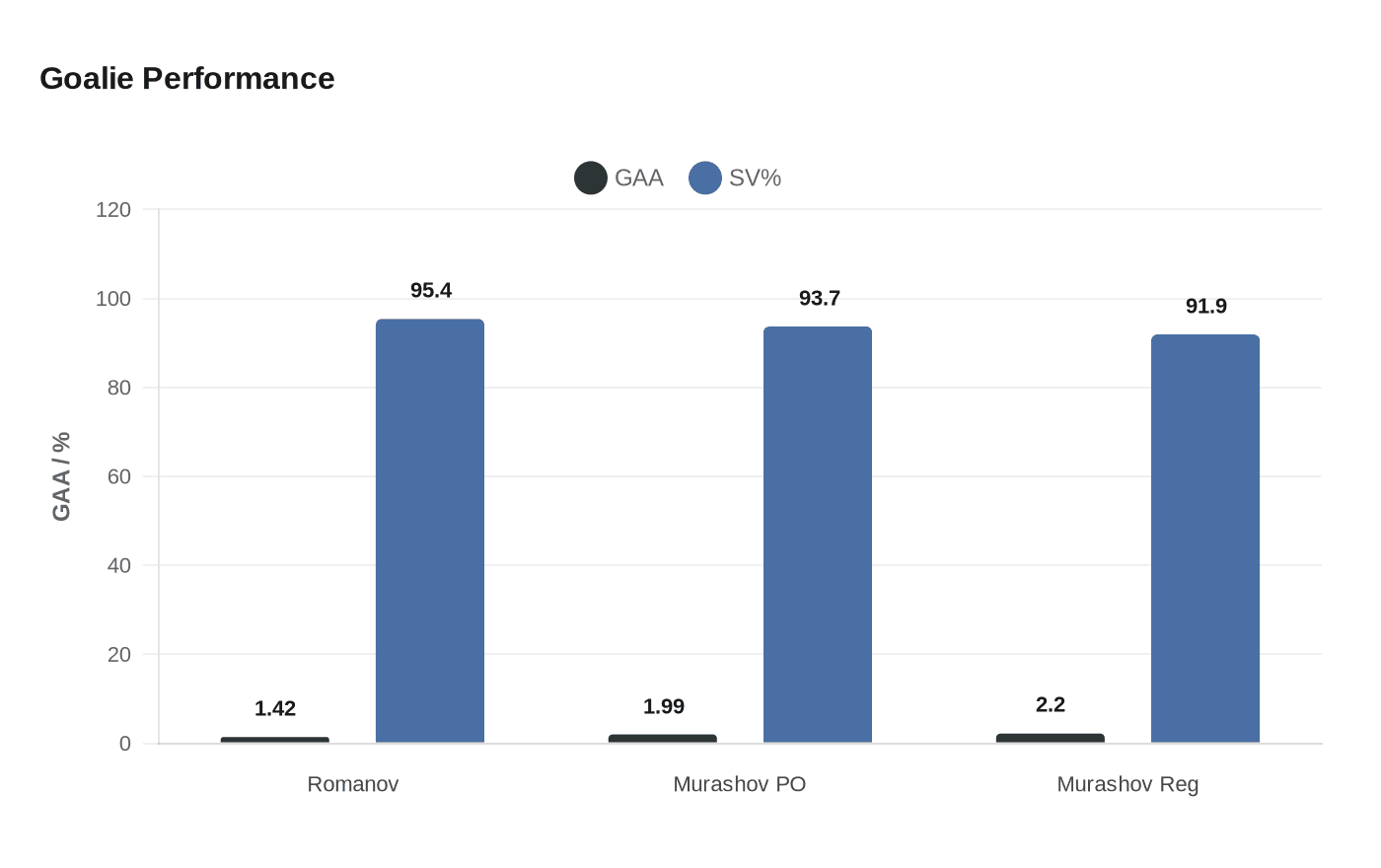
Georgi Romanov was the driver of that reversal. He finished that stretch at 5-1 with a 1.42 goals-against average and a .954 save percentage, and he punctuated the run by stopping 37 shots in the series-clinching win over Providence. When Steve Ott said, “When you have great goaltending, you give yourself a chance,” Springfield was the exact example he had in mind.
That kind of run changes what opponents must do. Charlotte’s 8-1 opener looked like a mismatch, but once Romanov settled in, Springfield forced every future opponent into a game of patience and frustration. The Thunderbirds were no longer surviving on offense. They were surviving because Romanov turned ordinary possession into dead ends.
Wilkes-Barre/Scranton has found a future through Sergei Murashov
Wilkes-Barre/Scranton gives the same story a different shape. Sergei Murashov entered the postseason with the profile of a high-end prospect and a real future Pittsburgh possibility, and his early playoff numbers have backed that up. He went 3-1 with a 1.99 GAA and a .937 save percentage in four playoff games, after a regular season in which he posted a 24-9-4 record with a 2.20 GAA and a .919 save rate.
Those numbers matter because they show sustainability, not just a hot week. Murashov has already been the kind of goaltender who can keep the Penguins’ affiliate on schedule even when the game gets messy, and that is often what separates a real Calder Cup contender from a team that merely survives the first round. In a field this compressed, a goalie with that level of consistency can make a series feel smaller than it is.
DiVincentiis, traffic, and the playoff rule that never changes
Manitoba’s Domenic DiVincentiis belongs in the same conversation for a different reason: the playoff language around him is all about rebounding through bodies and surviving chaos in front of the net. Mark Morrison said DiVincentiis “did a good job fighting through traffic and preventing second and third chances,” which is exactly the skill set that becomes priceless when scoring drops and every crease battle decides possession.
That description is not accidental. The postseason has been built on teams trying to manufacture ugly goals, and the goalies who are succeeding now are the ones who erase that plan by controlling traffic and killing second looks. DiVincentiis has become part of the broader theme the playoff table is showing, which is that the teams with the best netminders are the ones still controlling their fate.
The official goalie board shows where the pressure points are
The AHL’s playoff goalie table puts the trend in plain view. Colorado’s Trent Miner sits near the top at 1.10 GAA and a .953 save percentage, while Georgi Romanov is right there at 1.42 and .954, and Sergei Murashov is at 1.99 and .937. Those are not just strong lines on a stat sheet. They are a map of the teams most likely to keep dictating the terms of the next round.
The remaining bracket only sharpens the picture. Cleveland-Toronto, Grand Rapids-Chicago, and Colorado-Coachella Valley all carry the same underlying question: which team can get the better goaltending when the game becomes a grind? With eight teams left, the difference between a deep run and an early exit is no longer about who can generate the most looks. It is about who can deny the clean ones.
That is why the Calder Cup playoffs have turned into a goalie tournament. The offense is still there, but it is being forced into smaller and smaller spaces, and the netminders who can handle traffic, rebound chaos, and one-shot games are the ones deciding who moves on.
This article was produced by Prism’s automated news system from verified source data, official records, and press releases, then run through automated quality and moderation checks before publishing. The system is built and supervised by the people who set the standards it runs under. Read our full AI policy.
Did this article answer your question?