Malhotra’s Calder Cup run boosts NHL coaching stock in AHL pipeline
Malhotra’s Calder Cup run and Ott’s Springfield surge show why NHL teams keep raiding the AHL for coaches who can win, teach, and survive roster chaos.

The AHL keeps supplying NHL answers
The NHL coaching carousel always drags the conversation back to the AHL, because that is where clubs find out whether a coach can do more than draw up a power play. Heading into 2025-26, 21 of the NHL’s 32 head coaches had already worked as AHL bench bosses, and nine AHL head-coaching changes followed the previous season. That is not a coincidence. It is the league’s clearest stress test for the modern job: teach fast, adjust faster, and keep winning while the roster changes every week.

That is why Manny Malhotra and Steve Ott matter so much right now. Both have moved from “interesting name” territory into the part of the conversation that NHL teams actually care about, where player development, systems adaptability, and call-up chaos all sit in the same interview file.
Malhotra turned Abbotsford into a blueprint
Manny Malhotra got the Abbotsford Canucks job on May 27, 2024, after four seasons as an assistant with the Toronto Maple Leafs and a previous coaching run in Vancouver’s system as a development coach and assistant. At the time, the hiring made sense as an organizational fit. Now it looks like a much bigger thing: a coach with enough feel for development to stabilize a young roster and enough NHL background to speak the language of a front office that wants results, not just good intentions.
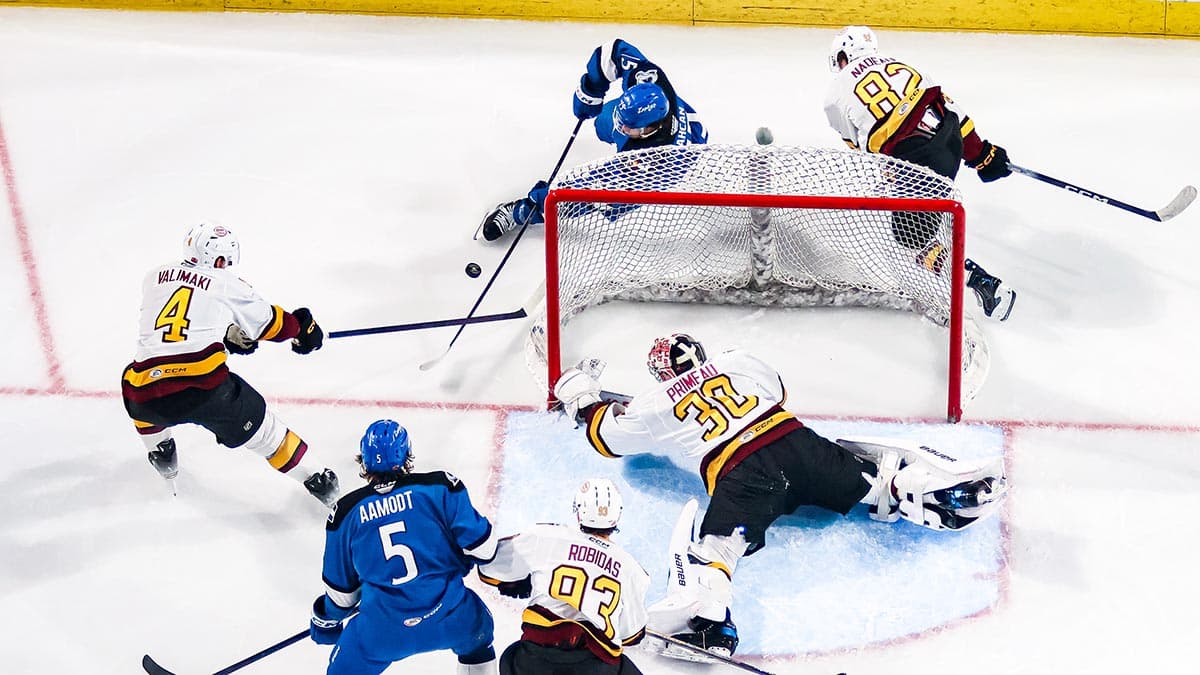
Abbotsford’s 2025 Calder Cup run is the real proof point. The Canucks beat Charlotte 4 games to 2 in the Finals on June 23, 2025, and in doing so delivered the first Calder Cup in franchise history and the first by a Vancouver affiliate. Malhotra became the first rookie head coach to win the Calder Cup since Jeff Blashill in 2013, which tells you how rare this kind of immediate success really is.
The run was more than a straight-line march. Abbotsford had to survive five playoff series, making it only the second team in AHL history to do that in one postseason. It also became the first Calder Cup champion from the Pacific Division since that division was formed in 2015. That kind of grind matters because NHL teams are not hiring AHL coaches to manage ideal conditions. They are hiring them to handle the messy ones.
What Malhotra proved that NHL teams crave
Malhotra’s stock is rising because his team could win in more than one way. The excerpt points to his ability to take on both run-and-gun games and structured defensive battles, and that flexibility is exactly what matters when an NHL roster changes overnight because of injuries, recalls, or cap math. A coach who can survive those swings without losing the room is worth far more than a systems purist.
There is also the championship layer. Malhotra had already won a Calder Cup as a player with the Hartford Wolf Pack in 2000, so he understands both sides of the development-to-winning equation. That matters in the AHL because players are not just trying to learn a system, they are trying to become reliable enough to be trusted in the NHL. Coaches who have lived that pressure can usually explain it better than coaches who only know it from a whiteboard.
For NHL decision-makers like Patrik Allvin, Ryan Johnson, Jeremy Colliton, and Doug Armstrong, the appeal is obvious. Malhotra has worked in the Leafs’ orbit, in Vancouver’s pipeline, and then turned Abbotsford into a title team under playoff pressure. That is a cleaner resume than most mid-cycle coaching candidates can offer.
Ott made Springfield look tougher than its record
Steve Ott’s rise follows a different path, but it leads to the same destination. Springfield named him head coach on January 19, 2026, after relieving Steve Konowalchuk, and he became the fifth head coach in Thunderbirds history. The assignment looked uphill from the start, because Springfield was sitting at 13-18-4-2 under Konowalchuk before the change. On paper, that is a rescue job. In practice, Ott turned it into a playoff run.
Ott brought instant NHL credibility. He played 848 regular-season NHL games and scored 288 points over a 14-year career, and the Blues credited him with helping during their 2019 Stanley Cup run as an assistant. That background matters because NHL organizations tend to trust coaches who have already lived through playoff pressure and know how to talk to veterans without losing younger players.
Springfield then did the thing that gets coaches noticed. It entered the 2025-26 playoffs as the final team to qualify in the Atlantic Division, then pushed all the way to the Atlantic Division Final. The Thunderbirds stunned Providence, and the AHL called that series the biggest upset in Calder Cup Playoffs history. Springfield won the series 3-1, sealing it with a Game 4 overtime victory. That is the kind of result that changes how a coach is viewed inside an organization.
The comeback that says more than a standings line
The most revealing moment in Springfield’s run was not the seeding, or the upset label, or even the overtime clincher. It was Game 2 against Wilkes-Barre/Scranton, when Springfield trailed 3-0 in the third period, rallied to force overtime, and won 4-3. That is a coach’s game. It tells you the bench still believed, the room still bought in, and the adjustments landed before the clock ran out.
That is the hidden value of AHL success. It is not just about wins. It is about whether a coach can keep a group together when the bottom is falling out. NHL teams notice that because their own benches are built on the same instability, only with faster pace and louder consequences.
Why the AHL remains the strongest coaching lab
Taken together, Malhotra and Ott show why the AHL is still the best proving ground for future NHL head coaches. It tests development and deployment at the same time. It forces constant adjustments because the roster is always in motion. And it rewards coaches who can make a team believe in the next shift after the previous one went wrong.
Malhotra’s Calder Cup run gave him a title, a historical marker, and proof that he can handle different game states without losing the plot. Ott’s Springfield turnaround showed that an experienced NHL hand can still translate fast when the room needs direction and the schedule gets ugly. Those are not separate stories. They are the same pipeline, just at different stages.
That is why the NHL keeps looking back to the AHL. The best candidates are not just surviving down there. They are showing, in real playoff conditions, that they can coach the kind of team the NHL now demands.
This article was produced by Prism’s automated news system from verified source data, official records, and press releases, then run through automated quality and moderation checks before publishing. The system is built and supervised by the people who set the standards it runs under. Read our full AI policy.
Know something we missed? Have a correction or additional information?
Submit a Tip