Manitoba Moose Forge Defensive Identity Despite Low Scoring, Strong Goals Against
Manitoba Moose have forged a defense-first identity, ranking near the bottom in AHL scoring while standing among the league's better clubs in fewest goals allowed.
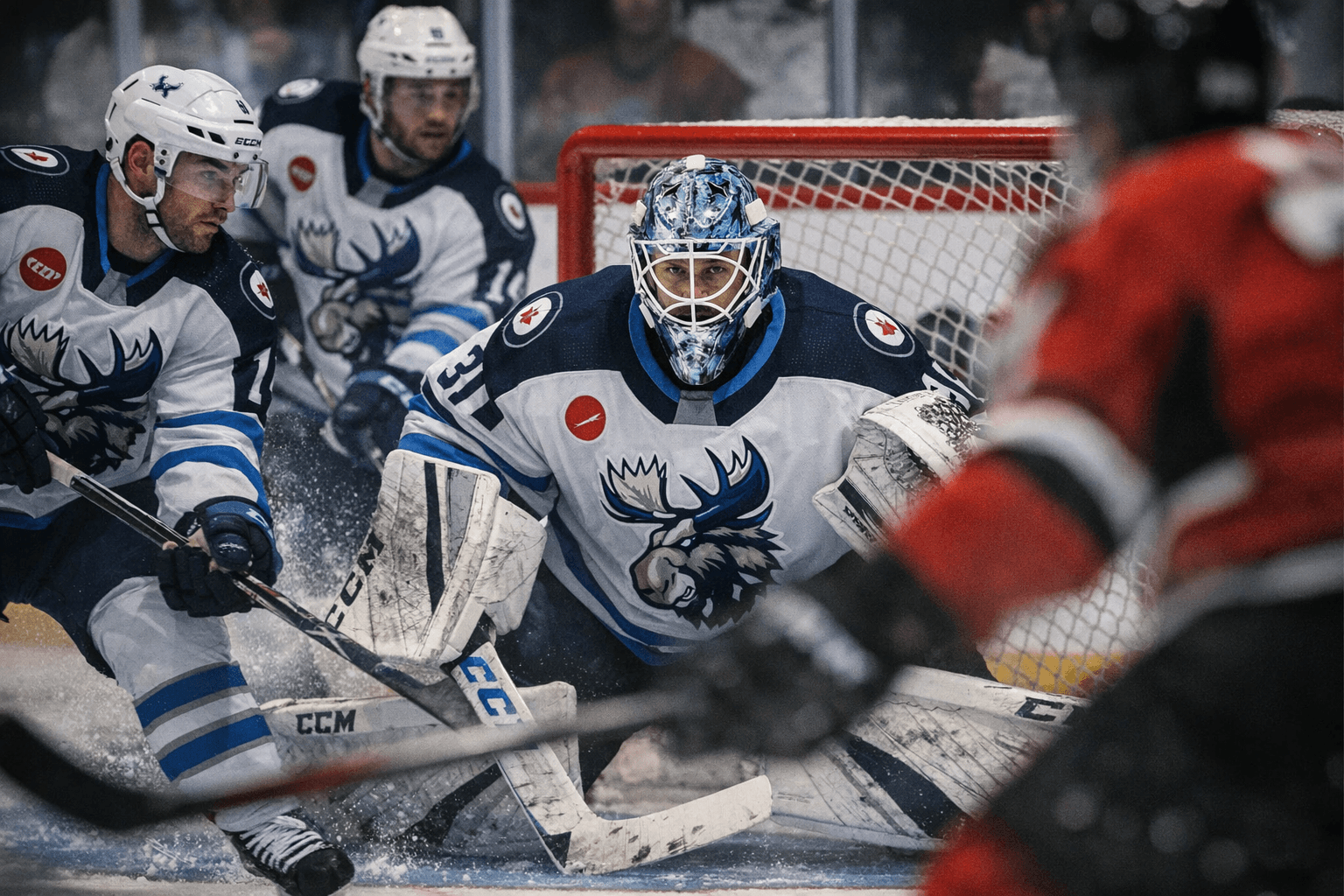
Manitoba Moose have built a season-long identity around defensive structure, a profile that shows up starkly in two competing metrics: the club sits near the bottom of the AHL in scoring but ranks among the better teams in goals allowed. That split is changing how games unfold in Winnipeg-area arenas and how opponents plan for the Moose.
As of February 15, 2026, that defensive-first profile was clear across the stat sheet and game footage. The Moose’s offense has lagged relative to the rest of the league, placing them near the bottom in goals scored, while their goals-against numbers place them on the stronger side of the AHL ledger. Coaches and staff have emphasized a forged defensive structure that prioritizes limiting high-danger chances and collapsing to the slot, and that emphasis is reflected in the club’s goals-against results.
On the ice, Manitoba’s identity has produced measurable in-game consequences. Low scoring has forced the Moose to play with narrower margins, increasing the value of goaltending and tight defensive zone coverage on late-period shifts. The club’s ability to limit opponents’ scoring chances has repeatedly turned one-goal margins into wins or single-point losses, a pattern that explains how a team with sparse offensive totals can still be competitive in matchups across the schedule.
Industry-wise, Manitoba’s approach highlights a trend in development-level pro hockey where structural discipline is prioritized over freewheeling offense. By forging a defensive identity, the Moose create a repeatable template for player evaluation: forwards are measured on defensive reads and support, defenders on gap control and zone exits, and goalies on consistency in seeing traffic in front of them. That value proposition alters roster construction decisions and shapes which players receive extended looks in pro minutes.
Culturally and socially, the Moose’s defensive identity reframes fan expectations in the market. Supporters tracking the club since the season began are now evaluating games through a goals-against lens rather than raw scoring totals, and local conversations have shifted toward appreciation for structure and low-event hockey. As the calendar moves past February 15, 2026, Manitoba’s experiment in trading offensive flash for defensive reliability will continue to test conventional ideas about winning at the AHL level and the kinds of players that development staffs prize.
This article was produced by Prism’s automated news system from verified source data, official records, and press releases, then run through automated quality and moderation checks before publishing. The system is built and supervised by the people who set the standards it runs under. Read our full AI policy.
Did this article answer your question?