Manny Malhotra’s AHL lessons shaped Vancouver coaching lens
Manny Malhotra’s Abbotsford run turned development into a winning model, and Vancouver is betting that AHL discipline can steady a last-place NHL club.
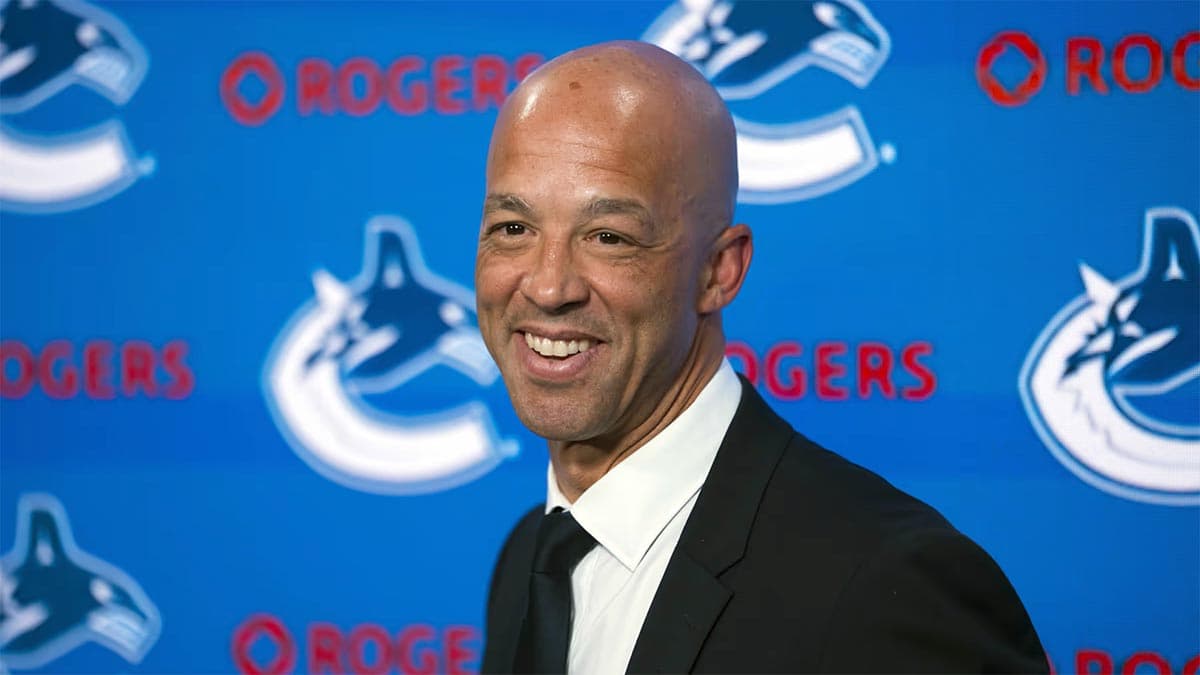
Manny Malhotra did not arrive in Vancouver as a nostalgic former player checking a box. He arrived as a coach who learned, in Abbotsford, how development and winning can reinforce each other instead of competing for attention. That matters because the Canucks are not just changing voices behind the bench. They are trying to rebuild the standards that keep young players ready for the NHL when the call comes.
What Vancouver is betting on
The Canucks named Malhotra their 23rd head coach on June 2, 2026, after firing Adam Foote on May 19 following a 25-49-8 season that left Vancouver last in the NHL. General manager Ryan Johnson’s language made the priority clear: he called Malhotra a “good teacher, leader, and quality person,” and stressed “connection, consistency” as the foundation for the next phase. This is a hire about culture as much as tactics, and it reflects a broader league trend: teams that struggle at the top often turn to coaches who can stabilize the middle, where prospects either become everyday NHL players or drift.
Vancouver had already signaled belief in Malhotra by picking up his option through the 2026-27 season. That detail matters because it shows the organization was not reacting to one hot month or a lucky playoff run. It was already willing to commit to the coach behind the AHL model before promoting him to the big club.
The Abbotsford lessons that changed his lens
Malhotra spent the last two seasons as head coach of the Abbotsford Canucks, and that is where the story of his NHL arrival really takes shape. In the AHL, he had to manage a roster that could change almost nightly, balance individual development with team results, and keep the room organized through injuries, callups, and role changes. That is a different kind of coaching pressure from the NHL, but it is also an ideal training ground for understanding what a pro team needs on Tuesday, not just what it needs in April.
The key lesson from Abbotsford was structure. Young players do not develop by accident, and Malhotra saw firsthand that they need clarity, repetition, and a daily standard that does not move every time the lineup does. He also learned the value of communication, because in the AHL, a coach is often explaining not just systems but expectations, role changes, and the reason behind every shift in ice time. That makes his hockey identity less about being the former seventh-overall pick and more about being the teacher who can translate experience into habits.
Winning and development were not separate tracks
Abbotsford’s 2024-25 season gave Malhotra’s approach tangible proof. The club went 44-24-2-2 in the regular season, then posted a 16-8 playoff record and won the 2025 Calder Cup, the first championship ever by a Vancouver affiliate. That is not a soft development story. It is a winning season built on the same fundamentals NHL clubs claim to want from their pipeline: accountability, consistency, and the ability to keep producing when the roster changes around you.
That championship also reinforced an industry truth that matters far beyond Abbotsford. The AHL is no longer just a holding pattern for prospects. It is the primary bridge between raw talent and the demands of an NHL schedule, and the best organizations treat it that way. Malhotra’s success showed that development does not have to mean surrendering the habit of winning. In fact, the two can strengthen each other when the staff keeps the room focused on details.
Why the Calder Cup story matters in Vancouver
The AHL title became part of the Canucks’ organizational identity, not just Abbotsford’s. The club celebrated the championship with a ring ceremony at Rogers Arena on Jan. 24, 2026, after a banner celebration earlier in the season and a victory celebration last June at the former Abbotsford Centre, now Rogers Forum. Those moments were more than ceremonial. They publicly connected the parent club to the affiliate and made the development pipeline visible to fans in both markets.
That connection has social and cultural value too. For players, it creates a clearer ladder: perform in Abbotsford, earn trust, then move to Vancouver without changing the entire language of the organization. For fans, it ties the future of the NHL club to a team that actually won while teaching. And for a market that just watched a last-place season, that continuity can feel like a necessary reset rather than another abstract promise.
From player pedigree to coaching identity
Malhotra’s path also explains why his perspective carries weight. He was drafted seventh overall by the New York Rangers in 1998, played 16 NHL seasons and 991 regular-season games, and finished with 295 points and 451 penalty minutes in official Canucks material. He also played in 35 Stanley Cup playoff games and was part of the 1999-2000 Hartford Wolf Pack Calder Cup championship team.
That history gives him both sides of the AHL experience. He knows the league as a player who won there, and as a coach who had to move a team through the grind while still preparing it for the NHL. That combination shapes his credibility in the room. Young players are more likely to trust a coach who understands the pressure of trying to stick, and veterans are more likely to respond to someone who knows what it takes to survive the long arc of a pro season.
What Canucks readers should expect to look different
If Malhotra’s Abbotsford lessons transfer the way Vancouver hopes, the changes will show up in the everyday details before they show up on the scoreboard. Expect a bench that emphasizes structure and communication. Expect younger players to be pushed toward a clearer standard, not just given latitude because the team is rebuilding. Expect the organization to value readiness, meaning prospects are judged on whether they can help the NHL club immediately, not simply on whether they have upside in theory.
The biggest effect may be cultural. Vancouver is signaling that it wants a coach who understands how to connect the AHL and NHL levels into one development system, where the affiliate is not separate from the big club but the engine that feeds it. Malhotra’s Abbotsford record, his championship run, and the trust already shown through his contract option make that more than a slogan.
For a franchise that finished last and needs more than a quick fix, that is the real significance of this hire. Malhotra is coming to Vancouver with an AHL education that taught him how to build habits under pressure, and the Canucks are asking him to turn those habits into a new standard at the NHL level.
This article was produced by Prism’s automated news system from verified source data, official records, and press releases, then run through automated quality and moderation checks before publishing. The system is built and supervised by the people who set the standards it runs under. Read our full AI policy.
Did this article answer your question?