Marlies face offseason turnover after Calder Cup championship run
Toronto’s second Calder Cup exposed the real summer task: keep the goaltending, depth, and youth that powered the run while absorbing staff and roster turnover.
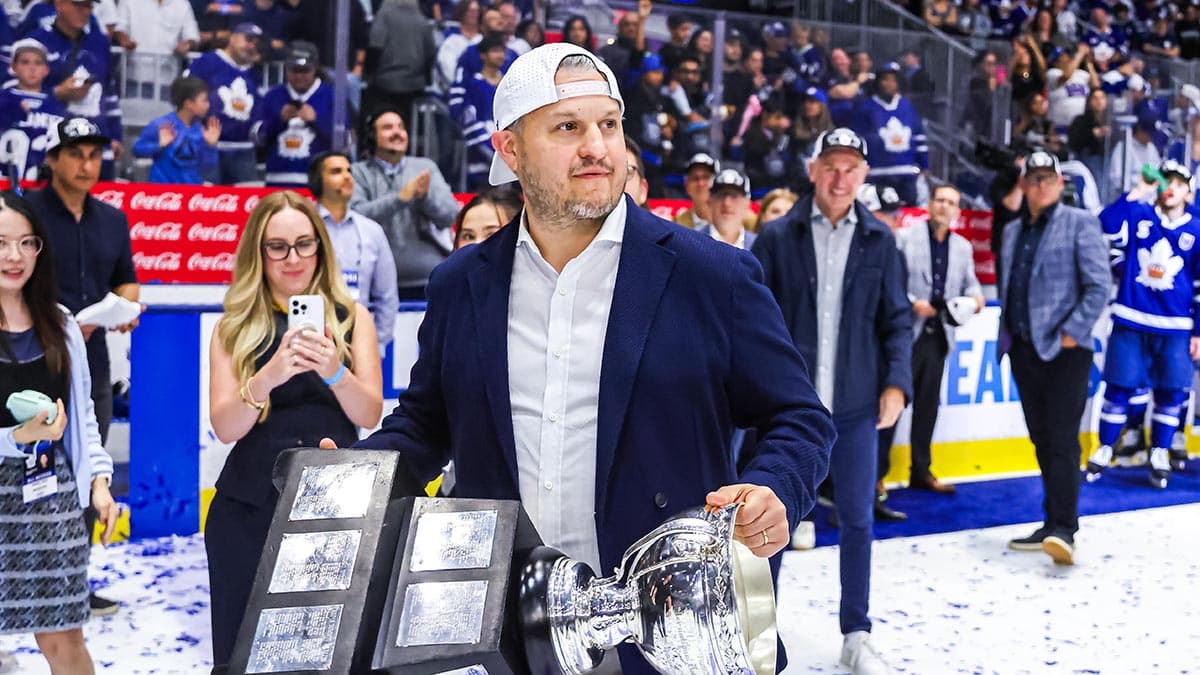
Toronto’s championship parade can wait. The harder part started the moment the Marlies lifted their second Calder Cup, because the same roster that won in June is now exactly the roster other teams want to pick at in July. That is the championship hangover in the AHL: success does not just reward you, it invites turnover, and Toronto has to retool without losing the depth, discipline, and timely goaltending that made the run work.
Championships create demand, not just celebration
The Marlies finished the job with a 4-3 win over the Chicago Wolves in Game 5 of the 2026 Calder Cup Finals on June 19, adding the title to the franchise’s first championship in 2018. Before that, Toronto took the Eastern Conference with a 2-1 overtime win over the Wilkes-Barre/Scranton Penguins on June 7, then built a 3-0 Finals lead on June 16 behind Artur Akhtyamov’s 24-save shutout in Game 3. Those results are the reason the summer matters so much now: the closer a team gets to the top of the league, the more its players become proof of concept for everyone else.
Ryan Hardy and Mike Dixon are the ones left managing that proof. Hardy, the general manager, came into the Maple Leafs organization in 2021 after a successful run with the USHL’s Chicago Steel, while Dixon has been Toronto’s director of minor league operations and assistant general manager since 2017. Their challenge is not merely to fill holes. It is to preserve the structure that let the Marlies win while also keeping the Maple Leafs pipeline moving.
Keep the spine: depth, structure, and the goalie who peaked on time
If Toronto is serious about repeating as a contender, the first priority is protecting the identity that got it here. The Marlies won by committee, and the organization’s own celebration coverage leaned into the contributions of rookies Luke Haymes and Landon Sim, along with Easton Cowan, as part of the youthful core that fueled the postseason. That matters because the team was not carried by one aging AHL veteran group; it was built on players who could still grow into bigger roles.
Akhtyamov is the clearest example of what Toronto has to hold onto. He was named the Jack A. Butterfield Trophy winner as playoff MVP after a 22-game run that produced a 2.22 goals-against average and a .923 save percentage. In a league where goaltending often swings a series more than name recognition does, that kind of postseason line is not a nice bonus. It is the backbone of a championship, and Toronto’s future plans have to treat it that way.

Dennis Hildeby also remains part of the equation, giving the club another important piece in the netminding pipeline. With Hannu Toivonen guiding the goaltenders, the Marlies have built a system that can develop one goalie for the present and another for the future. That is exactly the sort of organizational depth the Maple Leafs need if the AHL club is going to keep winning while serving the NHL side.
Where the turnover will hit first
The easiest way to see the offseason pressure is to look at the coaching staff. Michael Dyck, who was listed on the Marlies roster page as an assistant coach, returned to the WHL’s Vancouver Giants as head coach and general manager, with the announcement dated June 25, 2026. The Giants followed that with a welcome-back interview on June 26. Moves like that are what successful AHL seasons attract: other organizations see a winning staff and start shopping for its pieces.
Toronto’s bench also tells the story of how fluid this environment is. John Gruden is listed as the head coach, Hannu Toivonen as the goaltending coach, and Mark Giordano as a coaching advisor. Steve Sullivan joined the Marlies coaching staff on August 29, 2024, and TheAHL.com noted that Giordano’s role expanded after Sullivan moved to the Leafs’ coaching staff in December. In other words, even the staff hierarchy is built to flex with the needs of the broader organization.
That flexibility is a strength, but it also means turnover is baked into the model. The Marlies are not a closed system; they are part of a larger club that constantly promotes, shifts, and reassigns people based on need. Winning makes the AHL team more visible, but it also makes its coaches, players, and development ideas more portable.
What Toronto has to retain, and what can be rebuilt
Toronto does not need to keep every name to preserve the championship formula. It does need to keep the components that are hardest to replace: elite goaltending, reliable young drivers, and the structure that let rookies contribute without being buried. That means protecting players like Akhtyamov and maintaining the development runway for Easton Cowan, Ben Danford, Noah Chadwick, and Borya Valis, all of whom were part of the roster picture during the playoff run.
Some of the supporting cast can be replaced if the process stays intact. That is the reality of the AHL, where free agency and NHL depth-chart needs can turn a title team into a sorting exercise almost overnight. The Marlies’ job is to identify which veterans can be swapped out without changing the way the team plays, and which young players are ready to absorb bigger minutes before the Maple Leafs need them.
Maple Leaf Sports and Entertainment gives Toronto a real advantage here. The organization can support hockey operations, building services, travel logistics, media, and broadcasting in a way most AHL clubs cannot match. That infrastructure matters because retooling a champion is not just about signing players; it is about making sure the entire machine still works when the roster changes.
The bigger assignment: win now without blocking the NHL path
The Marlies’ second Calder Cup should not be read as an endpoint. It is better understood as a test case for how Toronto wants its development system to function: produce winners in the AHL, promote when the NHL needs help, and keep enough talent in the pipeline to stay dangerous on both fronts. That balance is delicate, but the 2026 run showed why the organization keeps betting on it.
A title team built on Haymes, Sim, Cowan, Hildeby, and Akhtyamov can lose pieces and still stay relevant if the framework remains sound. Lose too many of those pieces, or fail to replace the ones that leave, and the championship turns into a one-off. Toronto’s offseason is about preventing that second outcome, because the real measure of this run is whether the Marlies can keep winning while continuing to feed the Leafs.
This article was produced by Prism’s automated news system from verified source data, official records, and press releases, then run through automated quality and moderation checks before publishing. The system is built and supervised by the people who set the standards it runs under. Read our full AI policy.
Did this article answer your question?