Penguins Add Defenseman Brunicke to Wilkes-Barre/Scranton for Playoff Push
Brunicke's next AHL game starts his entry-level contract clock; the Penguins moved fast once Kamloops was swept from the WHL playoffs on April 1.

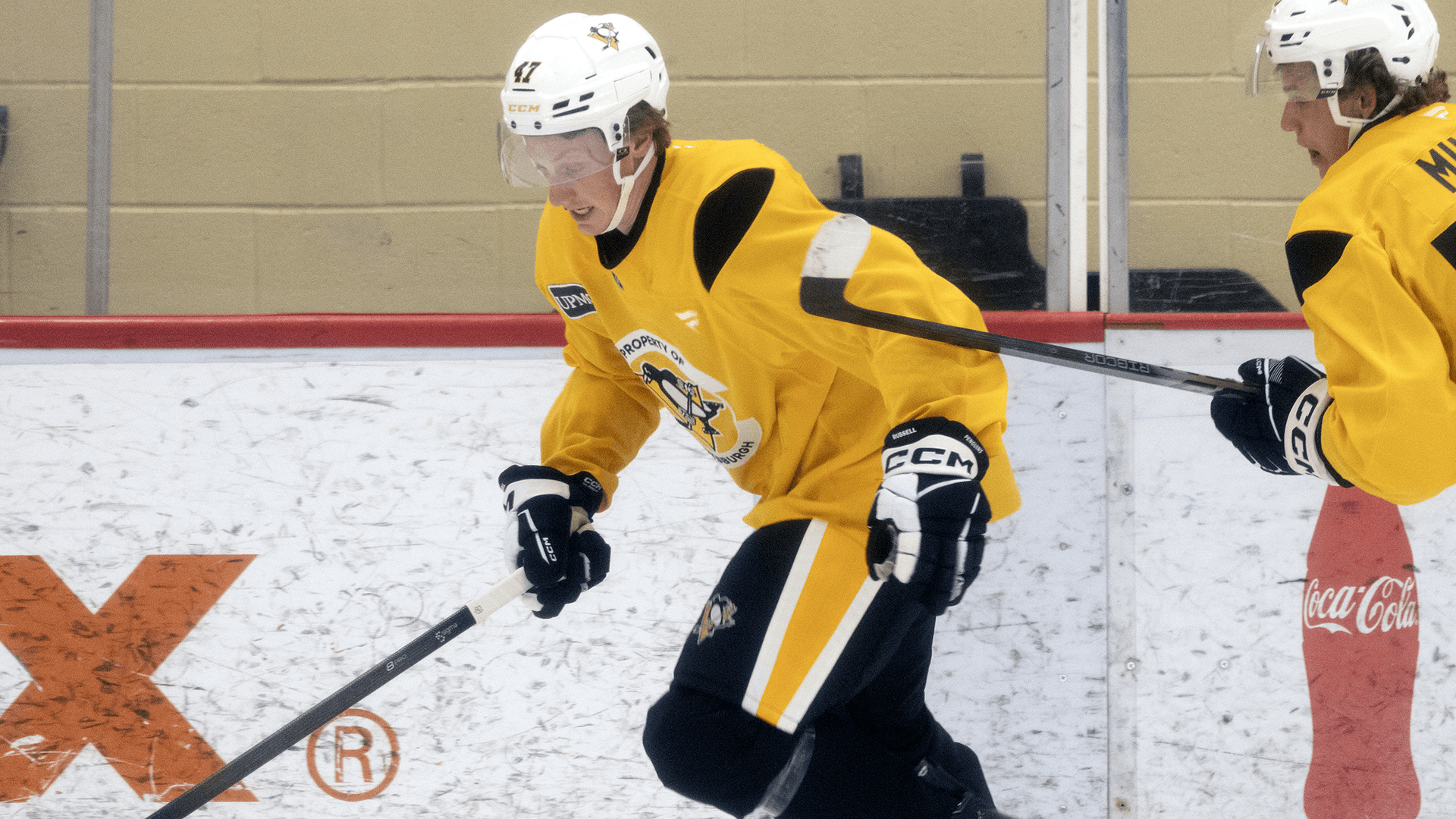
The moment the Kelowna Rockets completed their first-round sweep of the Kamloops Blazers on April 1, Harrison Brunicke's professional clock started ticking. Four days later, the Pittsburgh Penguins assigned their 19-year-old defenseman to the Wilkes-Barre/Scranton Penguins, and the move carries more developmental weight than a routine end-of-season roster adjustment.
The mechanics, in plain English: the NHL-CHL transfer agreement prohibits 19-year-old players from being assigned to the AHL while their junior team remains active. The rule exists to protect development, keeping teenage prospects in junior hockey rather than pressing them into professional lineups before they are ready. That restriction dissolves the moment the junior club's season ends. Kamloops was swept. Brunicke became eligible. Pittsburgh acted immediately.
The timing matters because Wilkes-Barre/Scranton is not absorbing a warm body for depth purposes. The club has clinched a playoff berth with a 38-16-6-2 record and 84 points, sitting five points clear for second place in the Eastern Conference. Recent NHL call-ups of forwards Avery Hayes, Ville Koivunen and Rutger McGroarty thinned the AHL roster's offensive punch just as the regular season approaches its final week. Brunicke arrives as a functional contributor.
The 6-foot-3, 203-pound blueliner has had an unusually compressed season even by prospect standards. He earned a spot on Pittsburgh's NHL roster out of training camp, appeared in nine Penguins games (one goal, eight shots on net, 13 blocked shots, four hits), then became a healthy scratch. A 14-day conditioning loan to WBS in November produced four assists in five AHL games before the organization returned him to Kamloops. He then represented Canada at the 2026 World Junior Championships in Minnesota, contributing two assists in seven games during a bronze medal run. Back in the WHL for the second half of the season, he posted two goals and 22 assists in 24 games, his first point-per-game junior campaign.
In WBS's Calder Cup Playoffs run, Brunicke should settle into a sheltered third-pair role initially rather than drawing top-line opposition matchups. The Penguins do not need him to anchor a shutdown pairing; they need a mobile, communicative defenseman who can handle lower-leverage minutes with professionalism while absorbing his first genuine postseason environment. Scouts characterize him as a defender who finishes checks, excels at pushing rush attacks wide, and has the foot speed to recover positionally. Those attributes translate directly to playoff hockey, where structural reliability outweighs offensive upside. Matchup responsibility is a conversation for later rounds if he earns it.
One additional detail sharpens the stakes: Brunicke's first AHL game officially starts the clock on his entry-level contract, which carries cap hits of $875,000 through 2026-27 and $845,833 through 2027-28. Pittsburgh drafted him 44th overall in 2024 with a pick acquired in the Jake Guentzel trade to Carolina, and the organization's investment in his trajectory is deliberate. A full AHL playoff run, earned rather than gifted, is the logical conclusion to a season that began on an NHL bench and could end with a legitimate shot at the Calder Cup.
This article was produced by Prism’s automated news system from verified source data, official records, and press releases, then run through automated quality and moderation checks before publishing. The system is built and supervised by the people who set the standards it runs under. Read our full AI policy.
Did this article answer your question?