Russell uses Penguins stint as offseason blueprint for growth
Russell's four-game Penguins taste produced points, a playoff education and a summer plan built around strength, pace and pro habits.
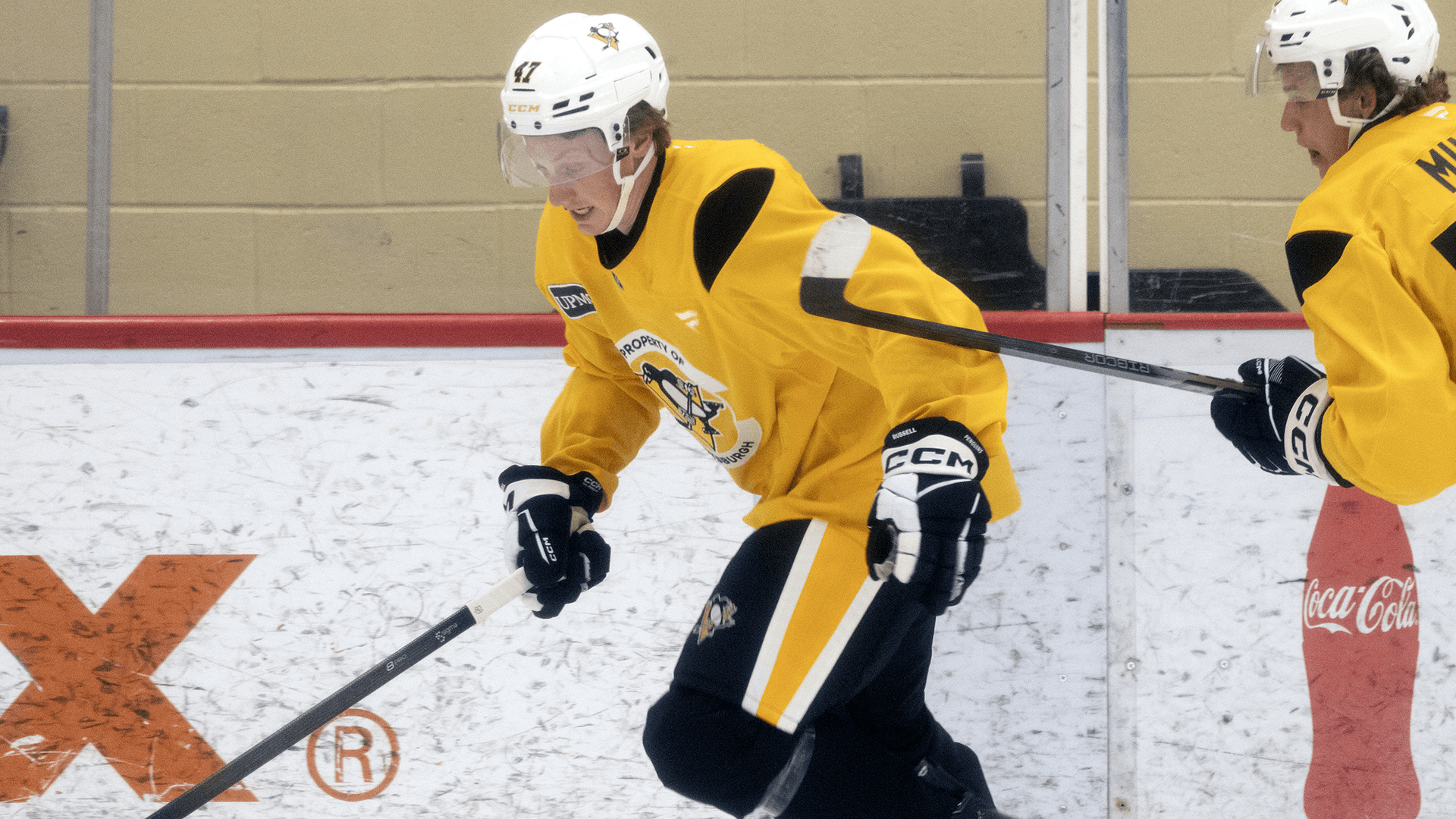
Daniel Russell did not leave Wilkes-Barre/Scranton with just a short stat line. He left with a template for what it takes to last in the American Hockey League, and that is what makes his offseason so relevant. After logging a point in each of his first two AHL games and appearing in four total games, Russell is now building his summer around the habits, pace and physical demands he saw up close with the Penguins.
A short stint that pointed to the next step
The Penguins signed Russell to an American Hockey League contract starting in the 2026-27 season and brought him in immediately on an amateur tryout agreement on April 1, 2026. The club’s weekly transaction log later dated the ATO signing to April 2, but the larger point is unchanged: Russell got his first pro look while the season was still alive and used it as an education. His debut came in a 6-5 overtime loss at Bridgeport, where he and Mikhail Ilyin both picked up assists, and Russell’s first pro assist set up Finn Harding for a tap-in on the back post.
That matters because the early offensive production gave him something concrete to build on. A player can leave a brief call-up with no scoreboard proof and still learn plenty, but Russell did both. He made plays right away, then spent the rest of the stint absorbing how a pro room operates, how the skating load differs from college hockey, and how a full AHL game asks for more than one shift of polish.
What Russell learned from the room, not just the games
Russell’s offseason plan starts with the lessons that do not show up in a box score. He said he is using the experience to get bigger, stronger and faster, which gives his summer work a clear target instead of a generic training block. That is the kind of detail coaches watch for in a young player trying to turn a cup of coffee into a real pathway.
He was especially drawn to the habits of Rutger McGroarty and Avery Hayes. Those are the standards he saw in the locker room and around the rink, where routine can matter as much as talent in a league built on schedule, travel and repetition. Russell also came away with a better feel for how a playoff team carries itself. The Penguins’ spring run gave him a look at how veterans manage the daily grind of a series, which is a different test from college hockey, where the elimination path is usually one night at a time.

That distinction is central to his development. In the AHL, a player is not just learning how to win a game. He is learning how to survive the long season, the playoff push and the physical demands that stack from October through spring.
Why the Penguins environment matters
Russell’s timing placed him inside one of the league’s most established development environments. Since joining the AHL in 1999, Wilkes-Barre/Scranton has qualified for the Calder Cup Playoffs 21 times in 25 tries, a run that speaks to how consistently the organization has stayed in the mix. The Penguins reached the 2026 Eastern Conference Final, their first conference-finals appearance since back-to-back trips in 2013 and 2014, which meant Russell’s first pro stretch came in a room that understood the pressure of late-season hockey.
That backdrop matters because the AHL playoff structure rewards teams that can keep layering responsibility on young players without losing results. Twenty-three teams qualify, and the first round is best-of-three, which compresses the margin for error and raises the cost of every shift. For a player like Russell, even a brief look in that setting can sharpen the next phase of training more efficiently than a long stretch of summer skates ever could on their own.
The Penguins were also integrating young players during a deep playoff push, which made Russell’s adjustment to pro habits more immediate. He was not just watching from the outside. He was in the middle of a team that asked prospects to fit quickly, learn fast and keep pace with veterans who had already lived through the demands of the league.
The Michigan State background behind the physical push
Russell’s listed college profile adds another layer to why this summer matters. Michigan State identifies him as a 5-foot-10, 160-pound senior from Traverse City, Michigan, and that frame explains why the words bigger, stronger and faster are not just offseason clichés. They are a necessary step if he wants to turn a short AHL sample into a larger role next year.
His family background adds context to the climb. Michigan State’s roster bio says his father, Kerry Russell, played at MSU from 1987-91 and was drafted by the Hartford Whalers in 1988. Brothers Jonny and Marcus also played college hockey, which puts Daniel’s path inside a family tree that already understands high-level hockey habits. That lineage does not finish the job for him in the pro game, but it helps explain why the transition from college to the AHL is built on details as much as skill.
What his first pro goals say about his role
Russell’s first two AHL games produced points, and that kind of start gives a young forward a cleaner read on where he stands. The scoring chances he created across his four-game look showed he can contribute beyond simply surviving the pace, while the assists in his debut showed he can keep plays moving at pro speed. Still, the offseason work is about more than offense.
If Russell adds the strength and pace he is targeting, the Penguins gain a player whose habits match his skill. That is how a brief AHL stint turns into a blueprint: one part production, one part education, and one part physical change. When camp opens, the question will not be whether he saw enough to know what the league looks like. It will be whether the summer turned that exposure into the kind of readiness that earns a larger AHL job.
This article was produced by Prism’s automated news system from verified source data, official records, and press releases, then run through automated quality and moderation checks before publishing. The system is built and supervised by the people who set the standards it runs under. Read our full AI policy.
Did this article answer your question?