7 popular pickleball paddles ranked by spin rate in lab testing
Spin now drives the paddle market, and lab data shows which popular models can actually turn the ball hardest without leaning on hype.
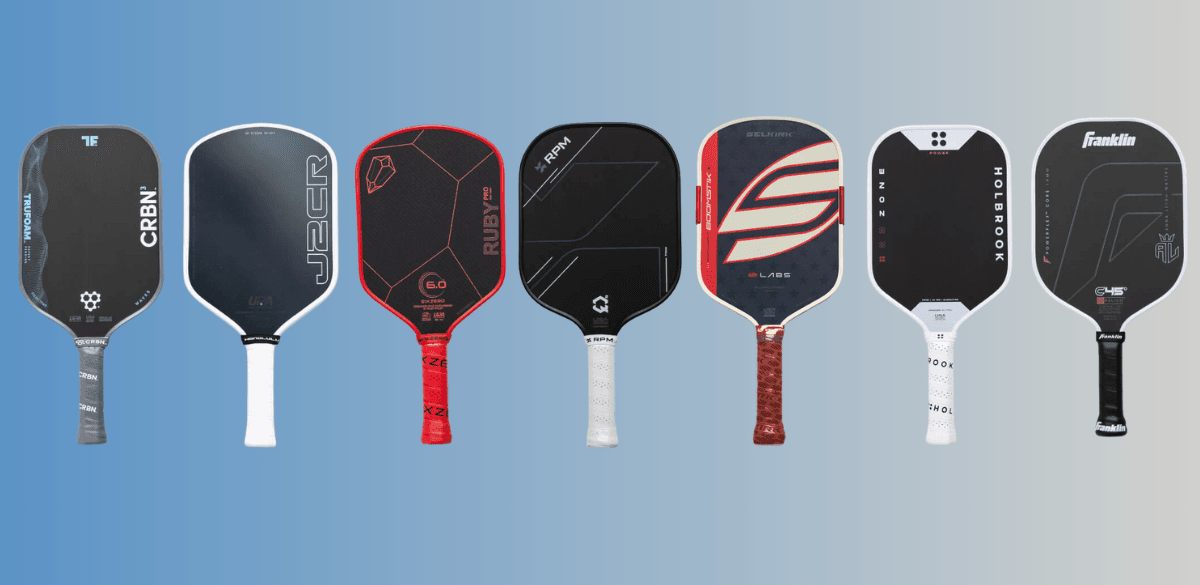
The old pickleball pitch was simple: buy more power. The new one is more nuanced, and for a lot of players it is more useful. In lab testing from Kansas City-based JustPaddles, paddles are being compared on six measures, including spin rate, swing weight, twist weight, exit velocity, balance point, and consistency, which gives everyday buyers a way to sort real performance from marketing noise.
1. CRBN3 TruFoam Waves
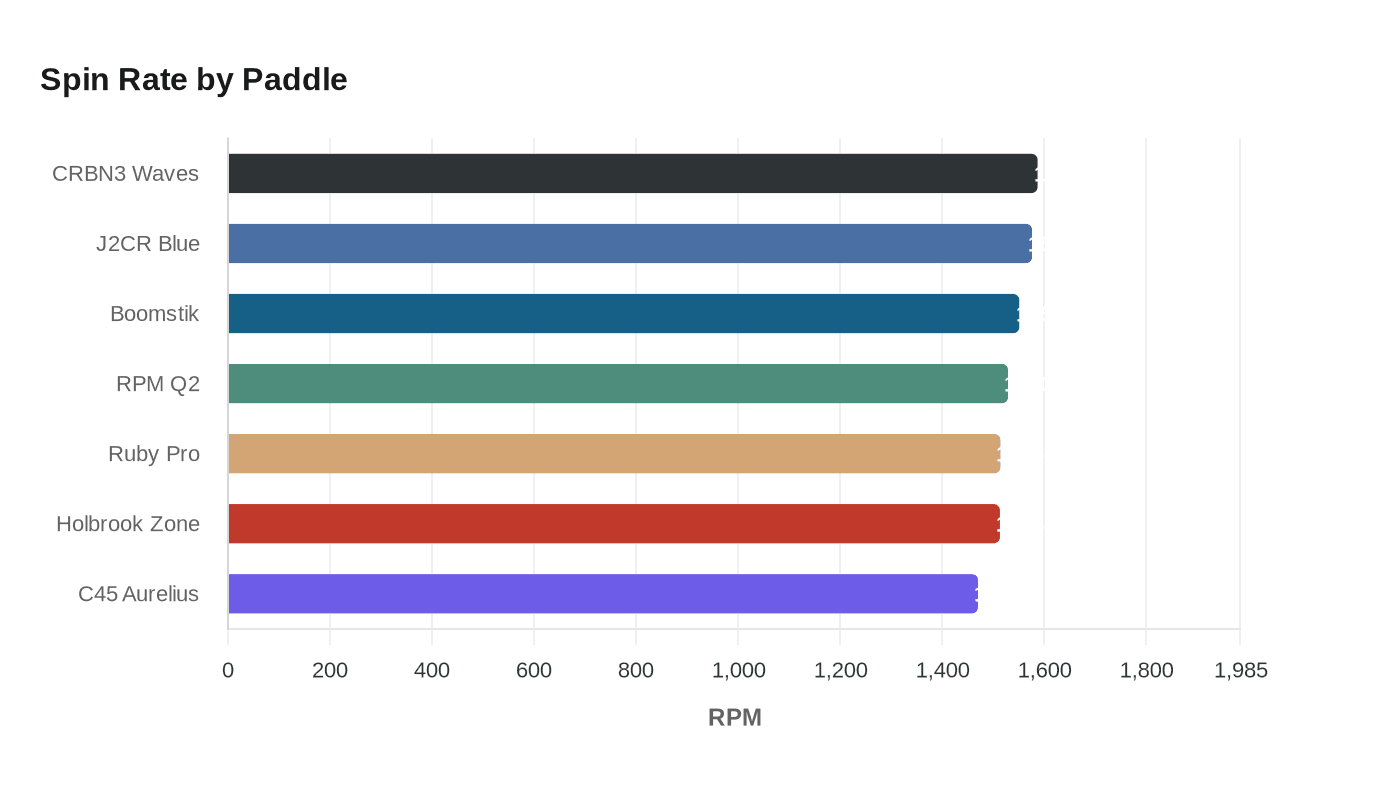
At 1,588 RPM, the CRBN3 TruFoam Waves sits at the top of this list and makes the clearest case for players who want maximum rotation on drives, rolls, and dips. If your game depends on heavy topspin to keep third shots low or to pull opponents into mistakes, this is the model that leads the pack.
2. Honolulu J2CR Crystal Blue
The Honolulu J2CR Crystal Blue posts 1,577 RPM, barely behind the leader, which tells you how tight the spin race has become at the top. That kind of number matters if you want a paddle that can create margin over the net without giving up the feel needed for resets and counterattacks.
3. Selkirk Boomstik
Selkirk’s Boomstik comes in at 1,552 RPM, keeping the brand in the conversation for players who want a known name with elite spin potential. The significance here is not just the raw number, but the fact that a mainstream performance brand is competing directly with newer, highly specialized models on spin instead of relying only on power branding.
4. RPM Q2
The RPM Q2 checks in at 1,530 RPM, which puts it squarely in the upper tier for players who want a paddle that can help shape the ball on serves and rolls. In practical terms, that spin ceiling can be a real advantage if your baseline game is built around controlled aggression rather than flat drives.
-6209-10-25.png&w=1920&q=75)
5. Six Zero Ruby Pro
With 1,515 RPM, the Six Zero Ruby Pro shows how control-focused paddles can still produce serious rotation. That balance matters for amateurs who want to win points with touch and placement, because high spin only helps if the paddle also lets you keep the ball on a leash in fast hands exchanges.
6. Holbrook Zone
The Holbrook Zone lands at 1,514 RPM, just one RPM behind the Ruby Pro, which is a reminder that the middle of this ranking is crowded with paddles that can all do damage in the spin department. If you are shopping by numbers, this is the sort of model that deserves attention from players who want high rotation without jumping all the way to the top of the price or power spectrum.
7. Franklin C45 Aurelius 14mm
Franklin’s C45 Aurelius 14mm closes the list at 1,471 RPM, but that still places it well inside the range that serious amateur players will notice on court. The broader value here is that a 14mm paddle from a familiar brand can still generate enough spin to matter, which helps explain why the market is no longer split cleanly between pure power paddles and touch-only options.
What makes this ranking useful is not just the order, but the method behind it. JustPaddles says every new paddle is tested under the same conditions with the same type of pickleball, and its spin work relies on high-speed cameras, controlled trials, and a 45-degree-mounted paddle to calculate RPM. The lab’s public data page lists 288 paddles, while the broader database referenced in the May 13 review is said to include about 500 paddles and to be growing every day, which means the comparison set is large enough to reveal real patterns instead of isolated outliers.
For buyers, the lesson is straightforward: high-RPM paddles are best for players who already use spin as a weapon, especially on topspin drives, heavy serves, and dipping passing shots. The tradeoff is that more spin can come with more nuance to manage, because a paddle built to help you shape the ball still has to suit your swing weight, control needs, and consistency under pressure.
The bigger backdrop is that the sport is also tightening its rules around paddle performance. USA Pickleball’s 2025 Equipment Standards Manual says paddle surfaces cannot contain rough texturing or other features that allow excessive spin, and the same revision introduced the Paddle/Ball Coefficient of Restitution test to characterize power. The organization says its Equipment Evaluation Committee has been in place since 2016 and that more than 5,000 paddles and 400 balls have been tested since then.
That enforcement effort is now moving fast on the court. USA Pickleball said its paddle-testing program was fully implemented at two 2026 Golden Ticket events in Glendale, Arizona, and Las Vegas, and that it tested more than 2,000 paddles with 6% failing specifications. Riley Burgess, the group’s vice president of equipment compliance, said the point is to preserve the sport and avoid a version of the game that feels like “target practice.”
Taken together, the data and the rules show where pickleball is headed: spin is no longer a niche preference, it is a core performance metric. For amateur players shopping in 2026, that means the smartest buy is not simply the paddle with the biggest marketing claim, but the one whose spin number, control profile, and all-around behavior match the shots you actually hit.
This article was produced by Prism’s automated news system from verified source data, official records, and press releases, then run through automated quality and moderation checks before publishing. The system is built and supervised by the people who set the standards it runs under. Read our full AI policy.
Did this article answer your question?


