Anna Bright spotlights rise of DreamBreaker specialists in MLP
Anna Bright is helping redefine value in MLP, where a DreamBreaker specialist can now matter as much as a do-it-all doubles player.
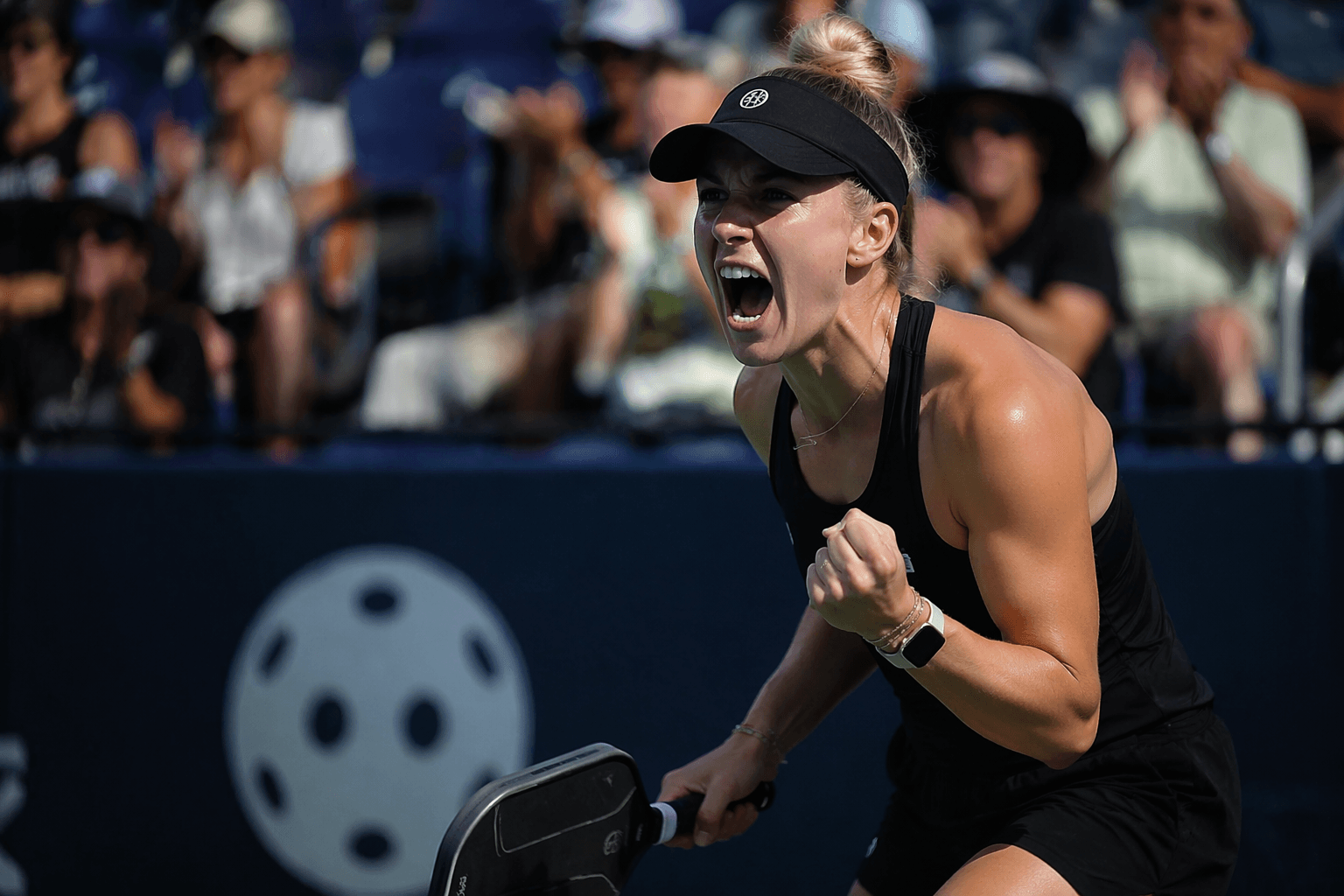
Anna Bright is putting a sharper label on a shift Major League Pickleball has been building toward for years: in this league, the most valuable roster spot is not always the most complete player. With expanded rosters, substitutions, and a format that can end in a singles tiebreaker, MLP is creating room for a new kind of specialist, the DreamBreaker closer. That matters because it changes how teams think about depth, and it changes what kind of player can swing a match.
The DreamBreaker is no longer a side note
MLP’s standard match still starts with four games: women’s doubles, men’s doubles, and two mixed doubles games. If the teams split those four games and finish tied 2-2, the match goes to a DreamBreaker, a singles tiebreaker played to 21, win by 2, with players rotating every four points. That structure has always given late-game value to single-point pressure, but the league’s latest rules make that pressure easier to plan for and harder to ignore.
Under MLP’s 2026 competition updates, DreamBreaker lineups are set after the second mixed game, and teams can choose any four players from the roster, two men and two women, regardless of substitutions used in doubles. That is a major strategic shift. It means the final tiebreaker is no longer just an extension of the doubles lineup. It is its own roster problem, and teams can now build around it with much more intent.
Why specialization is gaining ground
Traditional pickleball has long rewarded the all-court player, the athlete who can help in singles, men’s or women’s doubles, and mixed. MLP is changing the math. Because rosters are larger and match days include more lineup juggling, a player does not need to be the best across every format to be indispensable. If someone can provide a real edge in one high-leverage setting, especially a DreamBreaker, that player can be worth carrying even if they are not the cleanest fit in the rest of the draw.
That is why the conversation around roster construction is drifting away from generic versatility and toward targeted value. Coaches are starting to build rosters more like chess sets, not just collections of good players. The question is no longer only, “Who is the best doubles player?” It is increasingly, “Who wins us the exact moment that decides the match?”
Bright is making the case from inside the format
Bright has not treated DreamBreaker prep like an afterthought. She has framed a return to singles as a way to get the reps she would want if a match later came down to a poor DreamBreaker performance. That mindset is revealing, because it shows how seriously a top player is taking the final tiebreaker as a separate skill set, not just a variation of doubles.
Her newsletter sharpened the point even more, arguing that women “don’t carry the same weight as men” in DreamBreakers. Whether teams agree with her conclusion or not, the takeaway is clear: a top MLP player sees the format as one that can distort value inside a roster. If one side of the lineup is asked to absorb more pressure, then roster construction has to account for that imbalance instead of pretending every position is interchangeable.
Bright’s standing in the sport gives that view extra force. MLP describes her as a former college tennis standout with MVP honors and championships, and she is one of the clearest public voices tying individual prep to the league’s changing structure. When a player with that resume says DreamBreaker readiness matters, front offices listen.
The 2026 schedule makes flexibility even more important
MLP’s 2026 season only strengthens the case for specialization. The league is playing nine regular-season events, a Mid-Season Tournament, and expanded three-week playoffs, with every team scheduled for five of the nine regular-season events and 23 Group Play matches. That is a lot of team-building across a busy calendar, and it creates more chances for a lineup to be stress-tested in different ways.
The league also describes itself as a coed team league that uses rally scoring for DreamBreakers. That combination pushes roster planning toward scenario management. You are not just assembling the best four players for a normal doubles night. You are managing who can survive the stretch where a match turns into a singles sprint under pressure, with the lineup chosen after the second mixed game and the clock effectively handing more weight to late-game execution.
What local teams should copy from the pro model
For amateur clubs and league teams, the lesson is not that every roster needs a full-time singles ace. It is that the right specialist can be more valuable than one more balanced doubles option when the format rewards a specific finish. If your league uses a DreamBreaker, a singles tiebreaker, or any late-match singles decider, you need to ask whether your final points are more likely to be won by versatility or by one player who is especially hard to solve under pressure.
- your doubles core is already strong enough to keep matches close
- your league rules regularly produce a tied final score
- you can choose from a flexible roster late in the match
- one player is clearly better in pressure singles than in one more doubles slot
- the team’s biggest weakness is the tiebreaker, not the opening games
A singles weapon makes sense when:
- your league rarely reaches a singles decider
- your mixed and gender doubles combinations are unstable
- your roster is too thin to hide a one-format specialist
- the same player is needed to cover too many games in a short window
A more balanced doubles player makes more sense when:
That is the real value of the DreamBreaker specialist trend. It does not replace all-around talent, but it does punish teams that still build as if every roster spot has to do everything. MLP’s rules are rewarding a more modern idea of value, one where the best player for the last five points can be just as important as the best player for the first 20. For amateur teams, that is the part worth stealing.
This article was produced by Prism’s automated news system from verified source data, official records, and press releases, then run through automated quality and moderation checks before publishing. The system is built and supervised by the people who set the standards it runs under. Read our full AI policy.
Did this article answer your question?


