Decatur pickleball center boosts play with low-cost indoor courts
Decatur’s indoor pickleball boom now has a weatherproof home at Point Mallard, with low-cost daily play and events turning drop-ins into regulars.

The Jimmy Johns Pickleball Center has given Decatur something every growing amateur scene needs: a place where the action does not disappear when the weather turns or the schedule gets messy. With 12 covered courts, low daily rates, and a steady stream of players from kids to seniors, the facility is not just filling court time. It is building a real pickleball habit.
A center built for volume, not just novelty
This is not a token amenity tucked into a park. Decatur Parks and Recreation describes the Jimmy Johns Pickleball Center at Point Mallard Park as a brand-new indoor facility inside a 15,000-square-foot, $3 million ClearSpan structure. The setup includes 12 covered courts, court dividers, industrial fans, heaters, and a new restroom facility on site.
That matters because pickleball communities grow or stall based on repeat access. A weatherproof, enclosed building keeps the runs going when heat, rain, or winter would otherwise wipe out a night of play. Decatur also expanded beyond the building itself by converting outdoor tennis courts to function as pickleball courts, which widens the playing footprint and makes the sport harder to outgrow.
Why the pricing model is pulling in more than one age group
The biggest reason the center feels like a true community hub is that it lowers the cost of entry without lowering the level of activity. Daily play is set at $5 for adults ages 19 to 61, $3 for players 62 and older, and free for kids 18 and under. Annual memberships are available too: $250 for adults, $200 for seniors 62 and older and military, and $350 for families in the same household.
That pricing structure tells you exactly who the city wants on the courts. It is built for retirees who can play in the morning, parents looking for a weeknight outlet, and kids who can try the sport without a financial barrier. In amateur pickleball, that mix is gold. It gives the center a bigger base of repeat players, and repeat players are what turn a venue into a scene.
From soft opening to full-speed traffic
The numbers from the opening stretch show there was demand waiting to be unlocked. The indoor facility had a soft opening in early June 2025, with about 50 players on the first day and 93 on the second day. The city started charging for play on June 27, 2025, after an initial free-play period, and the center officially opened on July 2, 2025.
That early turnout is the kind of signal local pickleball people watch closely. A first-day crowd of 50 and a second-day crowd of 93 says this was not a one-off curiosity. It was a base of players ready to convert from casual interest to routine. In a sport where participation depends on convenience and consistency as much as talent, that kind of launch matters.
What it is like to actually show up
The center’s summer schedule is built around volume, not exclusivity. Reported hours run from 7 a.m. to 1 p.m. and 4 p.m. to 9 p.m. Monday through Saturday, with Sunday play from 1 p.m. to 6 p.m. The daily closure from 1 to 4 p.m. creates a clean reset in the middle of the day, while the extended evening window gives working players a real shot to get on court.
There are a few practical rules that make the operation smoother. The center accepts cashless payments only. Visitors are encouraged to bring water, and food as well as sweet or sticky drinks are not allowed. That may sound minor, but details like that are what keep a high-traffic indoor facility moving, especially when courts are busy and turnover matters.
Why players keep coming back
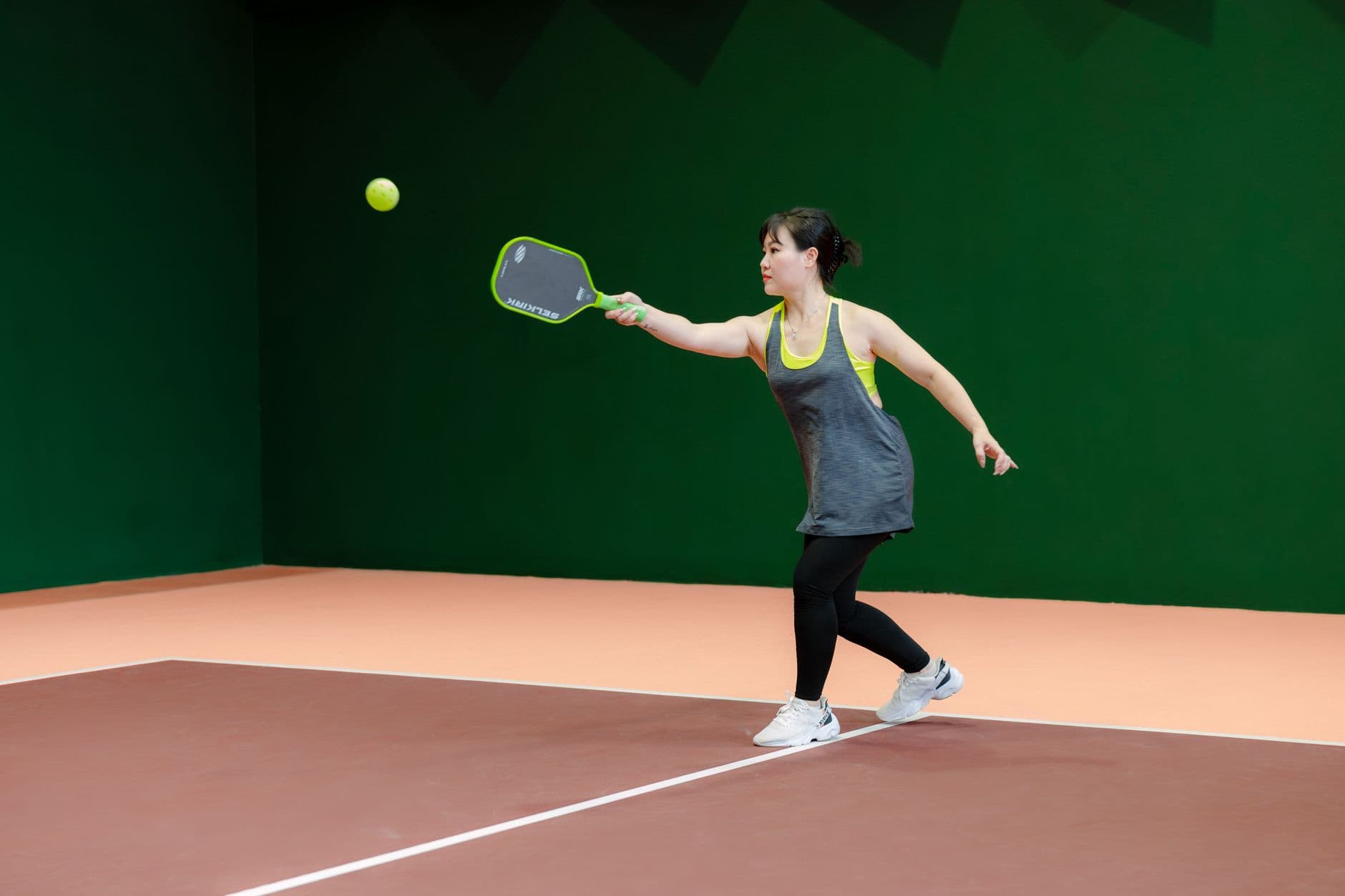
The best argument for the center is not the building itself. It is the way people use it. Local reporting and city coverage describe the atmosphere as friendly and welcoming, with players rotating between different partners and age groups. That matters because pickleball can be a solo entry point: you can show up alone and still get into games without feeling like an outsider.
One player said the experience pulled her off the couch and into a routine that improves balance, coordination, strength, and social interaction. Another regular pointed to the sport’s community value, not just the fitness piece, because the format naturally mixes people across ages and skill levels. That is the real Decatur story here. The center is not only creating a place to sweat. It is creating a repeatable social rhythm.
Instruction, leagues and the next step up
The center also gives newer players a path beyond casual rallying. Instructional classes, including fundamentals sessions, help beginners learn enough to stop being passive participants and start understanding strategy. That progression is important in a growing amateur market: a player who learns the basics is far more likely to return, join open play, and eventually stick with the sport.
For Decatur, that is the difference between a busy opening and a sustainable scene. The center is helping players move from first-timers to regulars, and from regulars to people who know where to show up, who to play with, and what level to expect. That is how a local pickleball scene reaches critical mass.
A civic venue as much as a sports facility
The city has treated the center as more than a place to play. Local reporting said the nets and posts can be removed so the space can double as an event venue, and city officials said they expected the project to bring visitors to Decatur and generate economic activity. That is already happening.
The Rotary Club of Decatur Daybreak held its Daybreak Paddle Battle fundraiser at the center on April 25, 2026. The Decatur-Morgan County Chamber of Commerce’s Excellence in Leadership class also planned the Point Mallard Pickleball Classic for June 28-29, 2025, with proceeds going to local charities. Those events show the facility can work as a tournament site, a fundraiser host, and a community gathering spot all at once.
That is the real value of the Jimmy Johns Pickleball Center: it gives Decatur a low-cost indoor base, a broader outdoor footprint, and a place where amateur pickleball can keep growing without having to prove itself every week. The infrastructure is there now, and the players are already turning it into a habit.
This article was produced by Prism’s automated news system from verified source data, official records, and press releases, then run through automated quality and moderation checks before publishing. The system is built and supervised by the people who set the standards it runs under. Read our full AI policy.
Did this article answer your question?


