MLP contenders treat regular-season losses as lessons, not verdicts
St. Louis and Columbus are treating regular-season losses as checkpoints in a longer MLP season built for pacing, not panic.
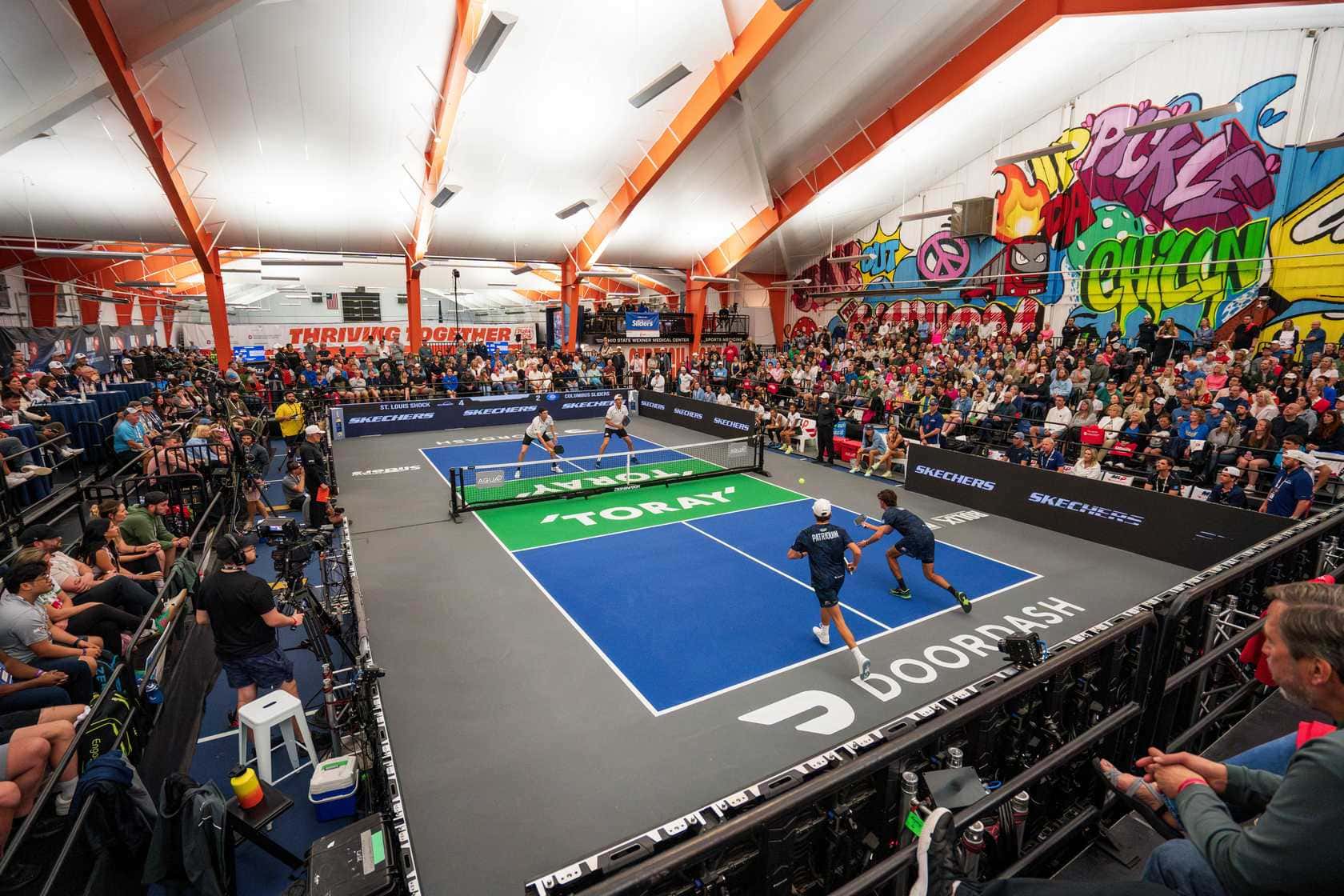
Nine regular-season events from May through August, a mid-season tournament, and an expanded three-week playoff run have changed how Major League Pickleball’s best teams handle the regular season. The 2026 calendar rewards clubs that learn fast, stay healthy, and peak late rather than chase spotless records in June.
The season now rewards patience
MLP’s format makes that shift easier to see. Teams play group matches from Thursday through Saturday, then move into Sunday crossover matchups that still carry standings value, so a narrow loss is not the same as a dead weekend. The league’s standings system also gives teams something to salvage from close days: 3 points for a regulation win, 2 for a DreamBreaker win, 1 for a DreamBreaker loss, and 0 for a regulation loss.
That structure changes how contenders think. A bad result can now be useful if it clarifies who fits together, who needs rest, and which pairings hold up when the matches pile up across travel-heavy weekends. The schedule reinforces that logic, with the opener in Dallas from May 22-25, the second event in Columbus from May 28-31, and the third in St. Louis from June 4-7, all before the mid-season grind really arrives.
St. Louis is protecting the long game
The St. Louis Shock are the clearest example of a team refusing to let one loss dictate the story. The franchise is owned by the Chaifetz family, named Erik Lange head coach on a multi-year deal in December 2025, and came off a 2025 regular season in which it went 24-1 before winning the inaugural MLP Cup. That profile brings expectations, but the current approach is about more than protecting a record.
The Shock have taken recent defeats without collapsing into panic. The 2026 St. Louis event runs June 4-7 at Chaifetz Arena as the next test of communication, role clarity, and health management.
Columbus keeps changing and keeps winning
Columbus is proving that roster movement does not have to equal instability. The Sliders continually reshaped themselves through 2024 and 2025, with moves involving CJ Klinger, Andrei Daescu, Parris Todd, Lea Jansen, Roscoe Bellamy, Marcela Hones, and Ross Whittaker. That kind of churn can look messy in the short term, but in MLP’s format it can also be the cost of finding the right combinations for the stretch run.
The payoff came in 2025, when Columbus won the Premier Level Championship after beating St. Louis, Dallas, and New Jersey on a run that stretched across about ten days. Columbus’s 2026 home event at Pickle & Chill in Columbus, Ohio, runs May 28-31 with home court and standings points at stake.
Grand Rapids turns the middle of the calendar into a pressure test
The Edward Jones Mid-Season Tournament begins Wednesday, July 8 in Grand Rapids, Michigan, and brings together all 20 MLP teams for standings points, prize money, and momentum. The field also includes four additional squads, Collegiate All-Stars, Team Australia, Team Canada, and Team Europe, which adds more variables to an already crowded month.
The event expands the kinds of opponents teams see before the playoff push. When international and collegiate talent share the stage with the league’s established rosters, the results become harder to judge by a single weekend’s scoreline.
What amateur players can copy from the pro shift
The lesson for amateur pickleball is not to shrug off losses. It is to use them the way the best MLP teams do: as information. If the top clubs can survive a calendar built on group play, crossover matches, and a standings system that rewards even DreamBreaker losses, then a local team or tournament doubles pair can be just as deliberate about pacing, pairing, and peaking.
- Treat early rounds like scouting sessions. The point is to learn which cross-court patterns, serve targets, and speed-up choices hold up once the score tightens, the same way MLP teams use group play to test combinations before Sunday crossover matches.
- Protect your best pairings when fatigue starts to matter. St. Louis is leaning on communication, role clarity, and health over perfection, and that is the same logic amateur players can use when a long weekend starts to expose tired legs and frayed decision-making.
- Save your sharpest combinations for the matches that decide placement. Columbus showed how a team can look unfinished in the regular season and still peak in the playoffs, and MLP’s points structure makes that timing even more valuable than a shiny early record.
The season’s path now runs through Dallas, Columbus, St. Louis, Grand Rapids, Orlando, Newport Beach, and New York City before the final three-week playoff run begins.
This article was produced by Prism’s automated news system from verified source data, official records, and press releases, then run through automated quality and moderation checks before publishing. The system is built and supervised by the people who set the standards it runs under. Read our full AI policy.
Did this article answer your question?


