Philippines emerges as pickleball’s next fast-growing market
Pickleball in the Philippines still feels like a sport being discovered, with packed clinics and new pathways turning enthusiasm into structure.

Pickleball in the Philippines feels less like a finished scene than a sport catching its breath between surges. Packed clinics, crowded tournaments, and players who keep showing up in conditions that would thin out many North American clubs point to the same conclusion: this is a growth-stage market, not a saturated one. The real story is not just how many courts exist, but how much energy sits behind them.
A market built on momentum, not maturity
That energy matters because pickleball in the Philippines is still early enough to feel aspirational. In the United States, much of the conversation has shifted to court access, saturation, and how to sustain growth. In the Philippines, the challenge is different: meeting demand, building structure quickly, and keeping up with a public that is still discovering the sport with real excitement.
The Philippine Pickleball Federation’s own site shows how quickly that base is formalizing. It lists 447 clubs, 1,115 courts, and 19 ambassadors, numbers that would have sounded improbable only a short time ago. The federation has also launched an official Philippine Pickleball Player Registry, tied to sanctioned events, national rankings, and DUPR integration, a clear sign that the sport is moving from loose participation toward a more organized competitive ladder.
From first clinics to a national footprint
World Pickleball Magazine traces the Philippine story back to a first clinic in Cebu in 2016. By 2020, it reported just 5 clubs and fewer than 250 players. By 2025, that had climbed to more than 220 clubs and just over 13,000 players. However you slice the trend line, the picture is the same: the game moved fast because it was still new enough to feel exciting.
That freshness shows up in the way people talk about it. PPF President Armando Tantoco said in 2025 that facilities were “popping up everywhere,” while Leander Lazaro said he knew all the players in 2021 but by 2025 could no longer keep track of everyone. Those comments capture a market where participation is not merely growing, but fragmenting into something bigger than a single club, a single city, or a single network of friends.
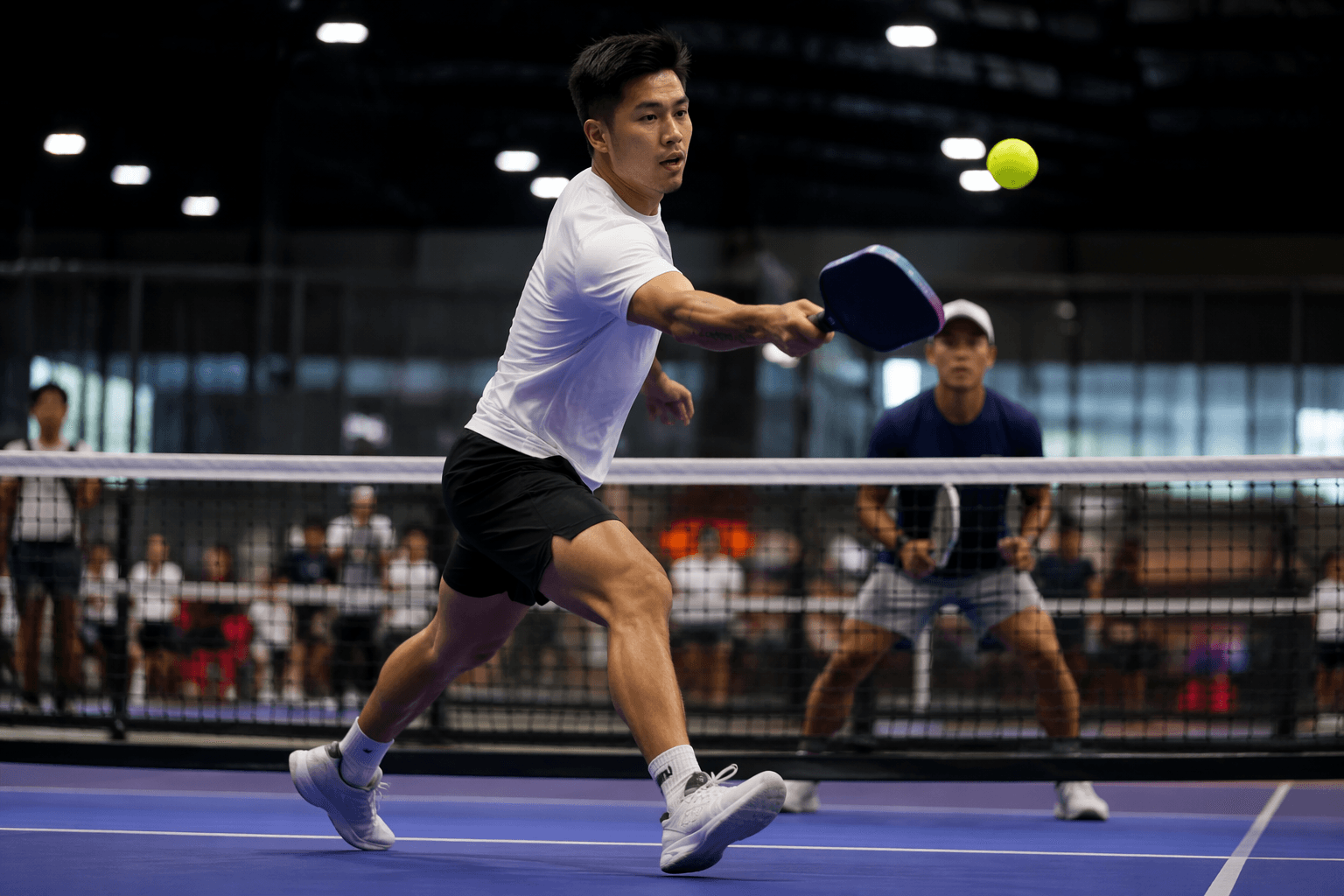
How the competition structure is catching up
The first Philippine Pickleball National Championship gave that growth a formal frame. ABS-CBN News reported that the inaugural event was held in Marikina City, and the INQUIRER.net BrandRoom said it ran from May 30 to June 1, 2025 at Dink and Shot. Players came from Metro Manila, Pangasinan, and Iloilo, and the field was split into three age divisions: 19+, 35+, and 55+.
The championship was more than a trophy event. PPF’s championship page said qualification was based on results from the 2024 PPF Circuit Leg Tournaments and the 2024 PPF Nova Invitational, and gold medalists were identified for consideration in a national pool. That kind of structure matters in a market like this because it turns enthusiasm into progression. It gives players a path, not just a place to play.
A clearer route to international play
The federation is also tying the domestic system to the wider pickleball map. PPF says it has partnered with Pickleball Global so sanctioned events are managed on that platform and players can earn Philippine Ranking Points and Global Pickleball Rankings points. It also says the road to the 2026 Pickleball World Cup in Da Nang, Vietnam runs through its expression-of-interest process.
That linkage gives Philippine pickleball something many fast-growing scenes struggle to build early: a visible bridge from local play to international relevance. For amateur players, that changes the meaning of a Saturday clinic or a weekend bracket. You are not just hitting balls in a casual setting. You are stepping into a system that connects to rankings, national selection, and, eventually, global competition.
The mall model is widening access
Infrastructure is expanding in ways that fit the country’s social landscape. Rappler reported that SM Active Hub had opened 86 pickleball courts across 29 SM malls nationwide by June 2026 and had hosted more than 100 tournaments, open-plays, and clinics. That makes the mall a central piece of the Philippine growth story, because malls are not peripheral spaces there. They are public gathering points, social stages, and everyday consumer hubs.
That matters for pickleball’s culture. A sport grows differently when it lives inside visible, high-traffic spaces instead of behind closed club gates. In the Philippines, the game is being seen by people who did not set out to find it. That kind of exposure can turn curiosity into participation faster than a closed ecosystem ever could.
What American amateur players can learn from it
If you play in a mature U.S. market, the Philippine example offers a useful reminder: growth is not only about court inventory. It is about first-time-player enthusiasm, easy entry points, and the feeling that everyone in the room is still learning the game together.
- Build spaces that make discovery feel social, not intimidating.
- Give players a visible path from open play to rankings and sanctioned events.
- Treat packed clinics as a feature of the sport’s culture, not a temporary phase.
- Use public-facing venues, like malls, to keep the game in everyday view.
The Philippines is not just adding pickleball courts. It is converting excitement into an ecosystem, one club, one tournament, and one visible gathering place at a time. That is what a true growth market looks like: the sport still feels new, and because it does, it still has room to surprise everyone.
This article was produced by Prism’s automated news system from verified source data, official records, and press releases, then run through automated quality and moderation checks before publishing. The system is built and supervised by the people who set the standards it runs under. Read our full AI policy.
Did this article answer your question?


