1980 Calcutta world championships show arm wrestling's global reach
Calcutta and Brasília hosted full world championships with five and four nations respectively, showing arm wrestling was global long before streaming.
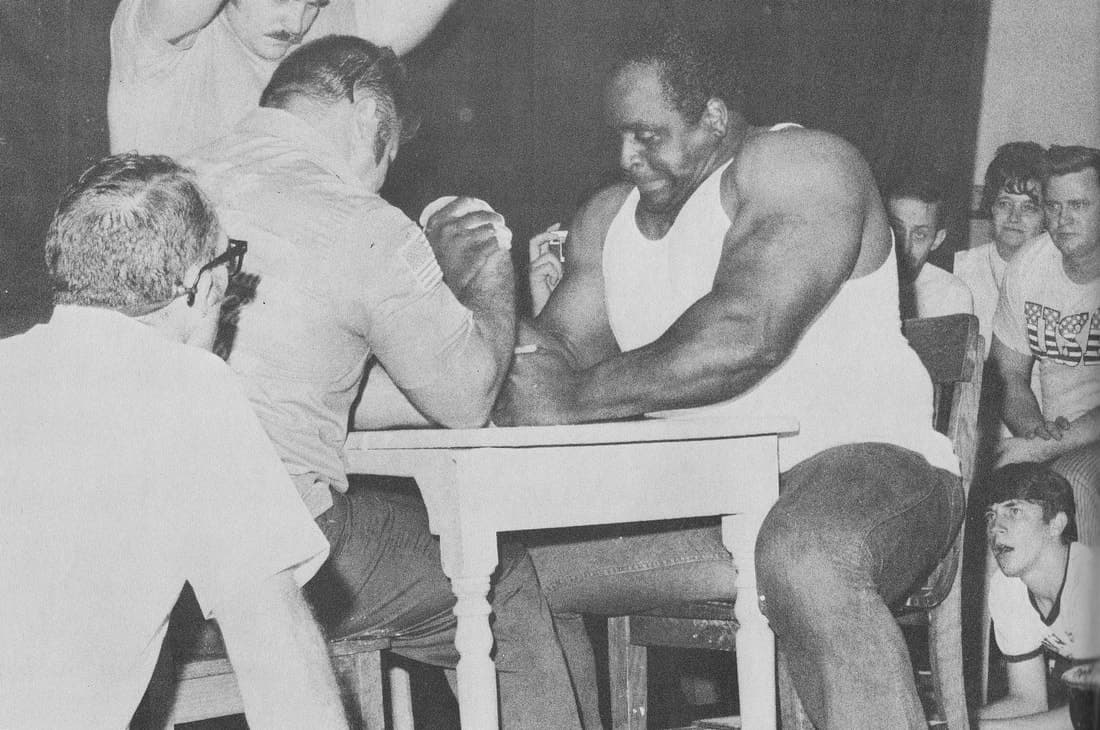
Five countries were in Calcutta for a world championship on December 6-7, 1980, and the structure was already too complete to mistake for a novelty bout. James Edgecombe, Mike Petrarca, Roger Pareja, and a women’s ladder led by Beauty Das, Kuntala Dutta, Maria Martinez, and Aileen Motz gave the WAWF event the look of a mature international sport. Brasília followed on November 7-8, 1981, with four nations back in the mix, and that sequence upends the idea that arm wrestling only went global once cameras and algorithms found it.
Calcutta was a real world championship
The 1980 sit-down WAWF World Championships in Calcutta, India, had five countries in attendance: India, Canada, the USA, Brazil, and Australia. That matters because the event was not built around a single exhibition match or a local club scene. It carried men’s and women’s divisions, multiple weight classes, and the kind of medal structure that separates a true championship from a one-off crowd pleaser.
The men’s results alone show how wide the field was. Canada’s James Edgecombe won the 61 kg class, the USA’s Mike Petrarca took the 185 lb class, and Brazil’s Roger Pareja captured the 220 lb title. Those wins are important not only as individual achievements, but because they show competitive balance across continents and weight brackets at a time when many fans still imagine the sport as a regional oddity.
The women’s side was just as consequential. The 1980 results include a dedicated women’s right-hand ladder, with winners such as Beauty Das, Kuntala Dutta, Maria Martinez, and Aileen Motz. That detail changes the story from “international participation” to “international structure,” because it shows the championship already treated women’s competition as an essential part of the event rather than an afterthought.
Brasília kept the circuit alive
The following year’s WAWF World Championships in Brasília, Brazil, ran November 7-8, 1981, and the country list still stretched across borders. Brazil, the USA, Canada, and India were all present, a sign that the international architecture seen in Calcutta was not a one-time experiment. The archived results show Brazil dominating several men’s classes while the USA stayed highly competitive in the heavier divisions, which gave the event the feel of an emerging world circuit rather than a single-host showcase.
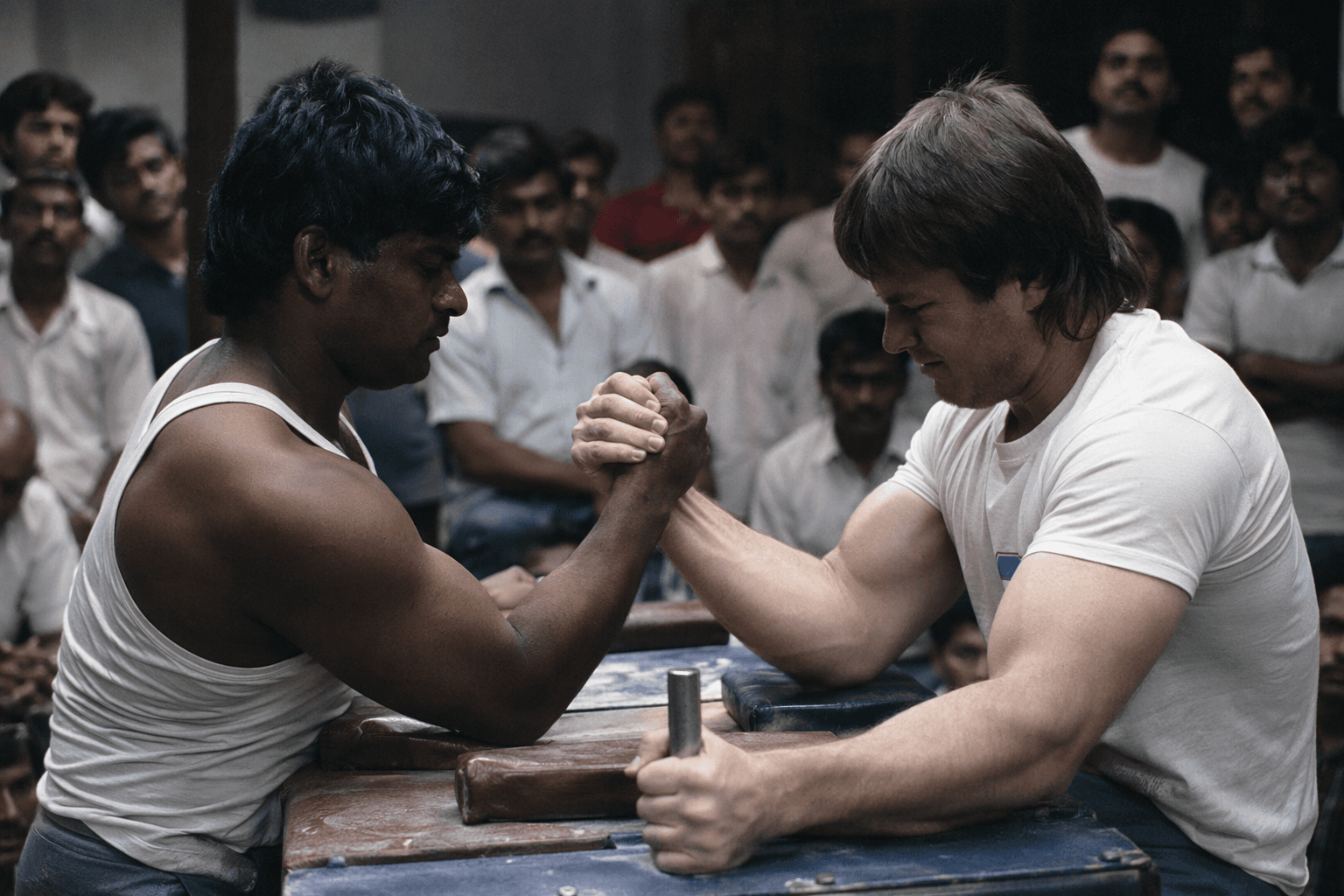
That continuity is the key point. Calcutta did not stand alone as a colorful outlier, and Brasília was not a reset button. Together, the two championships show a sport moving through an organized international calendar in the early 1980s, with repeated travel, recurring rivalries, and a competitive ladder that already looked global.
The federation was built before the spotlight
The World Arm Wrestling Federation was founded in 1976 by Bob O’Leary in Scranton, Pennsylvania, and the first WAWF Worlds were held that same year at the Greater Scranton YMCA in Dunmore, Pennsylvania. The Armwrestling Archives says O’Leary had already begun organizing tournaments in 1970 at the Scranton YMCA, which places the Calcutta and Brasília championships inside a longer build-out rather than a sudden boom.
The Luzerne County Sports Hall of Fame calls O’Leary “the father of arm wrestling,” and identifies him as the founding chairman of both the American Armwrestling Association and the WAWF. That is the business and organizational backbone behind the sport’s early globalization: rules, publications, rankings, and repeatable championship formats did not appear by accident. O’Leary also pushed for magazine coverage and results publication, because legitimacy in a niche sport depends on more than who wins a bracket.
The archives go even further, framing armwrestling as a practice with roots that reach back thousands of years before it became organized. That historical sweep matters because it explains why a 1980 world championship in Calcutta can feel both ancient and modern at once: the contest itself is old, but the federation machinery around it was being built in real time.
1981 was a money year, not just a title year
The early 1980s were not only about symbolism. The archives say 1981 was one of the biggest years for major pro armwrestling tournaments in North America, with more major pro events active than in any other year since. Total prize money across those tournaments exceeded $10,000, which the archives place at roughly $30,000 in 2020 dollars.
That figure is small by major-sport standards, but it is large enough to signal a serious competitive economy. Prize money changes travel decisions, weight-class depth, and the level of commitment from top pullers. It also helps explain why the same names and national programs could surface across different host cities, because the sport was already offering prestige and enough financial incentive to make a circuit worth following.
The modern global federation follows the same blueprint
The International Federation of Armwrestling presents the sport as open to all people regardless of age, nationality, religion, gender, and race, while also emphasizing unified competition rules and safety standards. Its listed member federations include India, Brazil, Canada, the USA, Japan, Romania, and Poland, which mirrors the international spread already visible in Calcutta and Brasília.
The federation’s own milestone on April 20, 2018, when it received full membership status with GAISF, shows how far that early structure has traveled. The IFA’s 2025 world championships invitation also shows the modern shape of the sport, with junior, masters, seniors, and disabled divisions included and doping control in place. That combination of inclusion and regulation is the direct descendant of the championship model that was already working in the early 1980s.
Calcutta and Brasília prove that arm wrestling did not wait for streaming platforms to become worldwide. By the time the sport arrived on modern feeds, it already had world titles, international attendance, women’s divisions, and a federation history stretching from Scranton to South America to South Asia.
This article was produced by Prism’s automated news system from verified source data, official records, and press releases, then run through automated quality and moderation checks before publishing. The system is built and supervised by the people who set the standards it runs under. Read our full AI policy.
Did this article answer your question?