Denis Cyplenkov and the rise of modern arm wrestling
Denis Cyplenkov turned arm wrestling from a bracket sport into a rivalry business. His rise tracks the shift from amateur titles to supermatches fans pay to see.

Denis Cyplenkov is the rare arm wrestler who explains two eras at once. He came up through the old strength-sport pipeline, then became one of the faces of the supermatch economy that now drives the sport’s biggest paydays, biggest rivalries, and biggest nights.
From strength culture to the table
Cyplenkov was born on March 10, 1982, in Krivoi Rog, now commonly written as Kryvyi Rih, Ukraine. A translated autobiography says he began kettlebell lifting in 1993 under coach Yakimenko S.A., and that early start matters because it puts him in the broader strength ecosystem before he ever became an arm-wrestling headliner. He was not built only for bracket wrestling; he came through lifting, coaching, and the kind of gym culture that still feeds the top end of the sport.
That background also helps explain why his name carries weight beyond his own win-loss record. He became a junior champion of Ukraine and Europe, moved to Moscow, and kept developing through professional strength and arm-sport competition. In other words, Cyplenkov did not arrive as a specialist who only knew one lane. He was a crossover athlete whose power base made sense in a sport where raw hand strength, elbow control, and table discipline all matter at once.
Why Cyplenkov fits the modern era
The Armwrestling Archives describes organized armwrestling as a sport practiced in more than 80 countries, and the World Armwrestling Federation now counts members in 82 countries. That global base is important, because the modern pro scene has not replaced the old federation model so much as layered on top of it. The brackets still exist, but the center of gravity has shifted toward major events, major names, and matchups that can sell outside the usual championship format.
Cyplenkov fits that shift better than most of his peers. The Armwrestling Archives notes that the 2010s brought professional leagues, wider media exposure, and prize purses the sport had never seen before. It also singles out Cyplenkov as unusual among the decade’s elite because he focused less on the European and world amateur championships and more on major pro events such as Zloty Tur, the Nemiroff World Cup, the A1 Russian Open, and big-money tournaments in the United States and Canada. That is the hinge point in his career: he helped make prestige feel portable, moving it away from a single championship path and toward a calendar of headline events.
The 2011 breakout: a statement beyond one division
If you want one result that captures Cyplenkov’s ascent, start with the 2011 Arnold Classic Armwrestling Challenge in Columbus, Ohio. The Armwrestling Archives shows him winning the +90kg class, with Michael Todd second and Dave Chaffee third. That podium still reads like a snapshot of an era, because it places Cyplenkov at the top of a field that already included some of the sport’s most recognizable heavyweights.

The result mattered for more than the medal itself. The Arnold platform gave arm wrestling a mainstream strength-sport stage, and Cyplenkov used it to underline a simple point: he was not just another big man with a crushing hand. He was one of the few pullers who could turn mass, leverage, and hand control into a result against elite opposition. The same archives also connect his name to the Nemiroff World Cup’s super heavyweight and Absolute divisions, which is exactly the kind of open-weight framing that made comparisons across classes and countries feel meaningful to fans.
That is where the modern sport starts to separate from the older version. Brackets still produce champions, but Cyplenkov’s best results helped create a different kind of conversation: who beats whom, under what conditions, and in what kind of one-on-one setting. Modern arm wrestling now sells those questions as much as it sells titles.
Armfight 50 and the supermatch economy
The cleanest example is Armfight #50 Vendetta All Stars at Zloty Tur in Rumia, Poland, on November 17 and 18, 2018. XSportNews identifies that event as the Larratt-Cyplenkov matchup, and the structure tells you everything about the shift. The draw was not built around a wide bracket. It was built around a marquee pairing, and the pairing itself was the product.
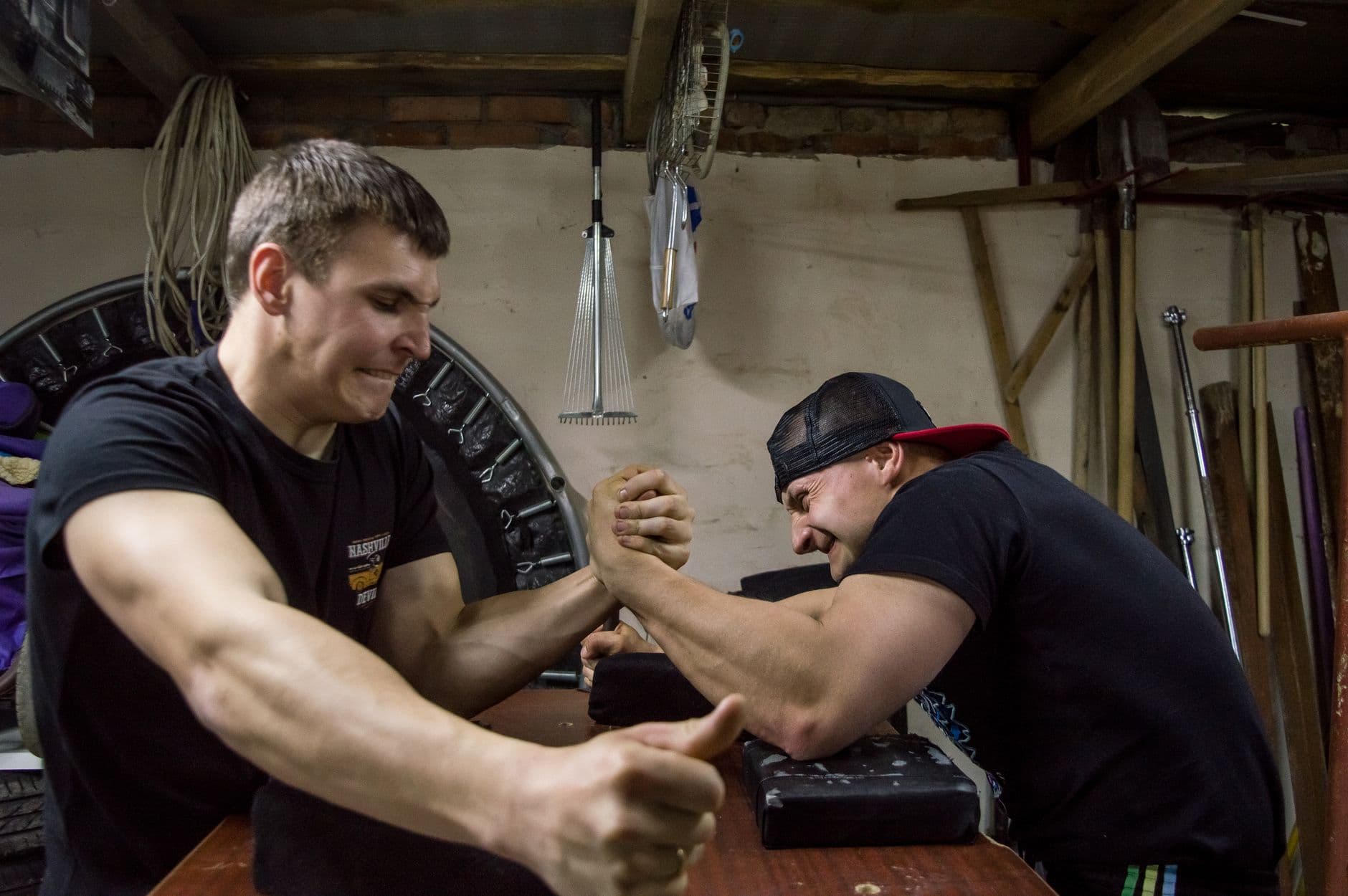
Devon Larratt said that match was among the most anticipated arm-wrestling bouts of the past decade, which is exactly the kind of language that defines the supermatch era. Fans were not only watching to see who won a division. They were paying attention to style, timing, defense, set-ups, and whether one star could solve another star over multiple rounds. That is a very different consumer model from the old tournament-first logic. In the supermatch economy, the rivalry is the show.
Cyplenkov also became a useful bridge between two kinds of strength obsession. Later reporting says he held the strict curl world record at 113 kg, or 250 lbs, until 2021. That number matters because it explains why he resonated beyond arm-wrestling diehards. He looked like a man built out of gym records, not just table results, and that made him legible to lifters, strongmen, and casual fans who understood brute force before they understood hand control.
What his career changed in practice
Cyplenkov’s influence was not just that he won. It was that his biggest matches helped reshape what promoters thought they could sell. A tournament crown is a clean endpoint, but a Cyplenkov-style supermatch is a narrative asset: a rematch, a style clash, a size-vs-technique debate, or a heavyweight collision that can be billed months in advance. That is why his name appears again and again in the sport’s modern memory alongside Andrey Pushkar, Devon Larratt, Michael Todd, and Dave Chaffee. Those are not just opponents. They are storylines.
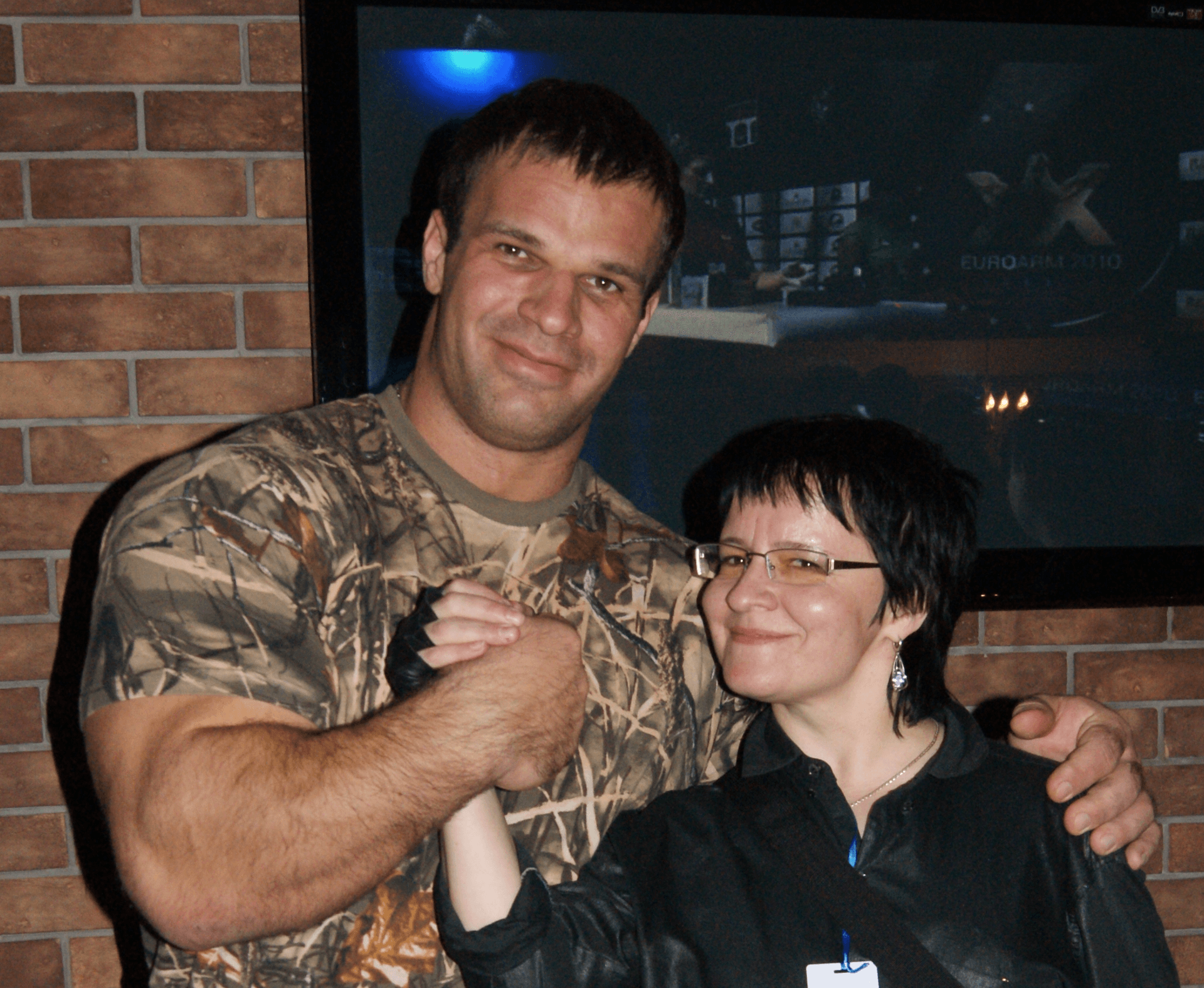
The preparation side changed too. When one athlete becomes the standard for superheavyweight power, everyone else has to train as if the match is going past simple strength. Table time, hand position, wrist containment, endurance, and recovery all matter more when the audience expects a long, tactical rivalry rather than a quick bracket run. Cyplenkov’s career helped normalize that expectation. His presence made arm wrestling feel less like a one-night tournament and more like a year-round negotiation between bodies, styles, and promoters.
The cost of being the sport’s physical benchmark
There is a darker side to that same story. Later profile reporting linked Cyplenkov’s career to serious health issues and substantial weight loss, which makes him more than a symbol of power. He also represents the strain that comes with living at the extreme end of superheavyweight sport, where size becomes both an advantage and a burden.
That is the final reason Cyplenkov sits at the center of modern arm wrestling. He embodies the transition from a sport defined by brackets and federations to one driven by recognizable headliners, pay-per-view logic, and rivalry-first promotion. The titles still matter, but the sport now sells the collision of names. Cyplenkov was one of the men who made that model work.
This article was produced by Prism’s automated news system from verified source data, official records, and press releases, then run through automated quality and moderation checks before publishing. The system is built and supervised by the people who set the standards it runs under. Read our full AI policy.
Did this article answer your question?