Eastside Arm Wrestling builds Singapore hub for coaching and weekly practices
Eastside is turning Singapore arm wrestling into a public pipeline, pairing weekly practices and coaching with a first professional gym and youth push.
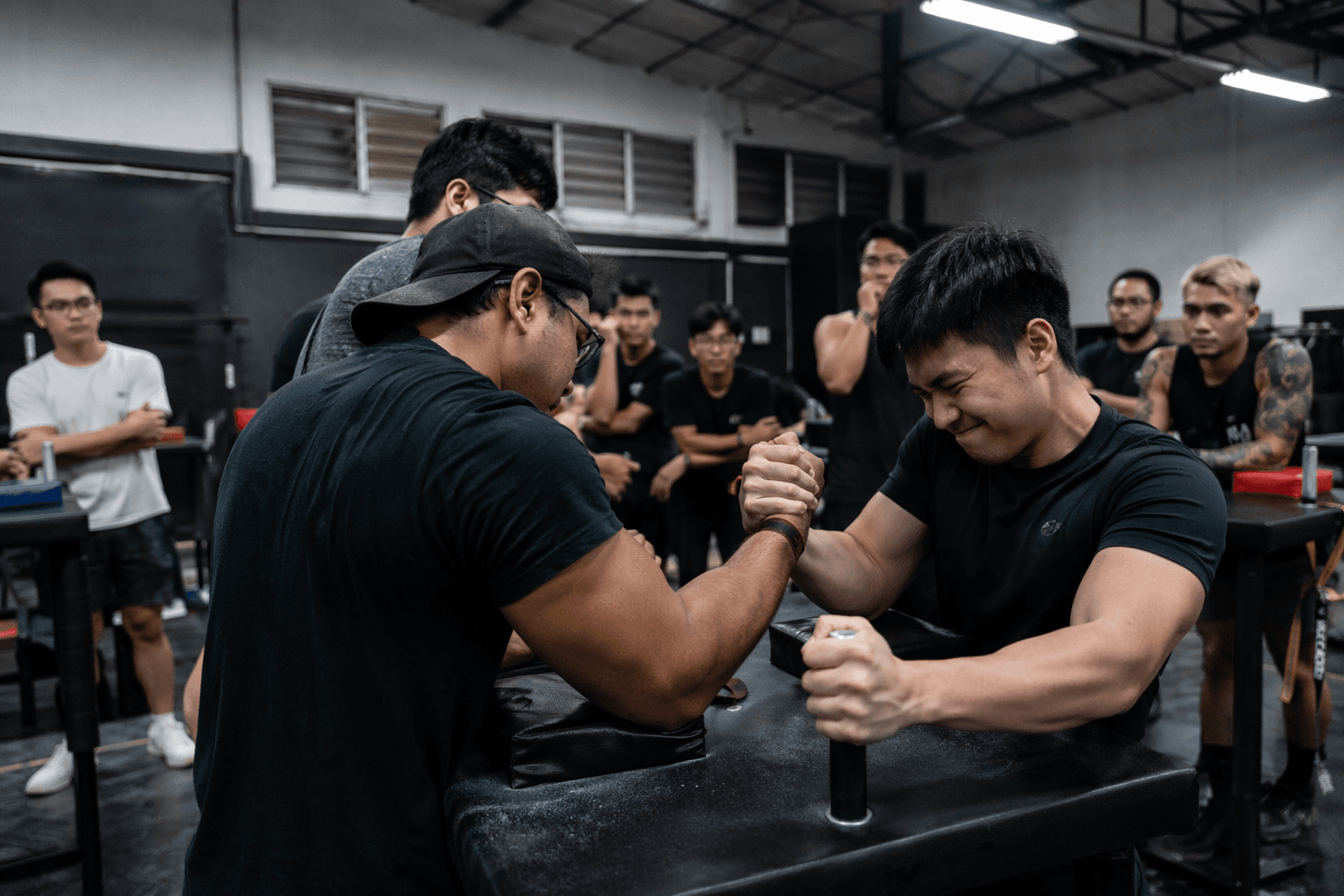
Eastside Arm Wrestling is trying to do more than advertise itself. In Singapore, where arm wrestling has spent years building from void-deck training sessions into a real competition scene, the group is now putting coaching, news, merchandise, and weekly open practices in one public place, the kind of setup that can move a sport from gym culture into something with a clearer entry path.
A public front door for a private sport
Eastside’s pitch matters because arm wrestling rarely grows through one-off showcases. It grows when a newcomer can find a place to train, a place to ask questions, and a place to keep returning to the same people week after week. Eastside says it is Singapore-based and focused on developing arm wrestling in Singapore and across Asia, which gives the project a regional frame instead of a local hobby page.
The group’s public profile says it offers coaching services, arm wrestling merchandise, and open practices every week for pullers of all levels. That combination is the real signal here. Coaching creates structure, weekly practices create habit, and merchandise is the visible edge of a brand trying to be recognized beyond a single gym session. Eastside’s own framing is less about selling a product and more about giving the sport a front door.
What the Singapore scene already looked like
This did not appear out of nowhere. Singapore Armwrestling, better known as SGAW, says the community began in 2011 with a handful of enthusiasts training under a void deck. From there, it grew into an island-wide network of clubs, certified referees, and medal-winning athletes, which is the difference between a pastime and a sport with real infrastructure.
The milestone that marked that shift on the public stage came in late 2021, when CNA covered Singapore’s first national arm wrestling championships at Downtown East. That event mattered because it showed the sport had moved beyond informal sessions and into organized national competition. The scene has also gotten broader: The Straits Times said there are at least 13 clubs within SGAW, and that some weekly sessions can draw as many as 30 arm wrestlers.
Against that backdrop, Eastside’s public-facing push looks less like a launch than a consolidation. SGAW’s club directory currently shows Eastside Armwrestling as the only affiliated armwrestling club listed there, which gives the group a clear visibility advantage in a sport that still depends heavily on word of mouth and club networks.
The gym is the proof of concept
Eastside says it opened Singapore’s first professional arm wrestling gym on September 19, 2025, and that more than 40 local arm wrestling enthusiasts attended the grand opening. That is the kind of number that matters in a small scene. It shows there is already enough demand to fill a room, and enough curiosity to pull in people who want more than casual practice.
The gym changes the sport’s footprint in two ways. First, it gives regular pullers a stable place to train instead of relying only on borrowed space. Second, it gives new athletes a clearer on-ramp, because a professional gym is easier to find, understand, and trust than scattered informal meetups. In a sport where technique and consistency matter as much as raw strength, that visibility is a competitive advantage.
The youth pipeline is where the ambition gets tested
Eastside says it launched a Youth Empowerment Program on May 17, 2026, which is the clearest sign that it wants to shape the next generation, not just host the current one. If coaching and weekly practices are the entry point, youth development is the long game. That matters in arm wrestling because the sport’s depth comes from repeat participation, not single-event spikes.
Singapore already has one visible youth pathway in the sport. SGAW says youth arm wrestling has expanded through Junior Armwrestling Singapore, or JASG, which it says has grown to more than 180 members. SGAW also links that growth to Cody Foo, who founded Wristmongers and launched JASG. Put those pieces together and the competitive pipeline gets easier to see: Eastside is building another access point into a scene that already has a youth base.
Singapore’s international results raise the ceiling
The regional and international record explains why this local buildout matters. SGAW says Singapore made its first appearance at the World Armwrestling Championships in 2015, then returned to the WAF World Championships in 2025 after a decade away. That gap tells you how hard it is for even a developing national program to sustain an international presence.
The results also show that the program has started to convert participation into medals. SGAW says Singapore’s best world result came in 2023 under the IFA, when the team won 3 gold, 4 silver, and 3 bronze medals. Eastside adds another marker, saying Singapore’s two-man squad won five medals at the 2024 Asian Cup in Mumbai. Those are not vanity totals. They are proof that the country’s arm wrestlers can travel, compete, and come home with hardware.
For Eastside, that international backdrop is the key test. A stronger local hub should create more matches, more regular sessions, and more athletes ready to move into national and regional competition. The sport in Singapore already has history, federation structure, and proven medal talent. Eastside’s next job is to make that system easier to enter, easier to find, and harder to ignore.
This article was produced by Prism’s automated news system from verified source data, official records, and press releases, then run through automated quality and moderation checks before publishing. The system is built and supervised by the people who set the standards it runs under. Read our full AI policy.
Did this article answer your question?