How arm wrestling became a global sport in the 1970s
The sport’s global rise started with TV, cash prizes, and promoters, then split into overlapping federations that still shape titles and legitimacy.
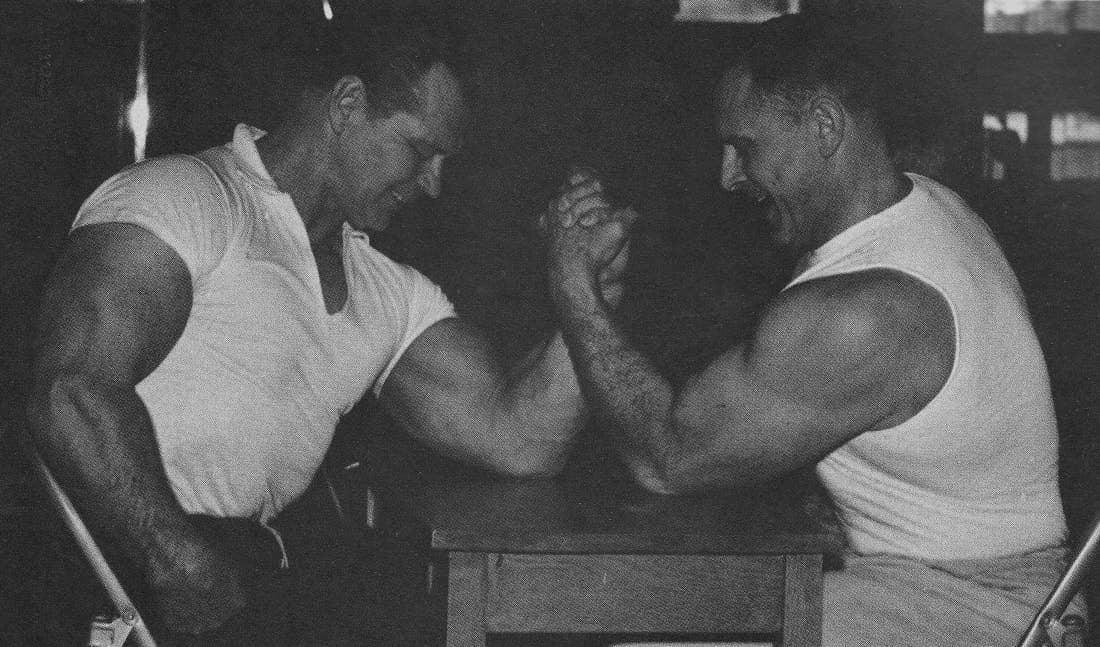
In November 1979, Wetaskiwin, Alberta, Canada, hosted the first “true” world arm wrestling championship under the World Arm Wrestling Federation. The 1970s turned a tavern side act into a structured international contest, with television exposure, cash prizes, and new promoters pushing wristwrestling and armwrestling toward a professional model. By the end of the decade, the sport already had world championships, national federations, and rival paths to the same prize: the right to call someone a world champion.
The 1970s shift from spectacle to structure
The organized era accelerated in the 1970s around Bob O’Leary and the World Arm Wrestling Federation. The World Arm Wrestling Federation was founded in 1976 in Scranton, Pennsylvania.
National federations emerged in the United States, Canada, India, Brazil, and Japan during the same decade, and the first true world championships drew competitors from three continents. By 1980, the sit-down WAWF World Championships in Calcutta drew five countries, India, Canada, the USA, Brazil, and Australia, and featured results across men’s and women’s weight classes.
Why there is no single top body
Arm wrestling’s governance never settled into one universal authority, and the reason is built into its history. The sport moved through different promoters, rule systems, and recognition campaigns rather than being unified from the start. The World Armwrestling Federation, usually shortened to WAF, is the premier global body, but it grew out of the same early international scene and was previously known as the World Arm Wrestling Federation, or WAWF.
WAF’s history places its founding in 1977. Over four decades, WAF grew from a single member country to 80-plus member countries, with AIMS now listing 82 member countries. That reach gives WAF real weight, but it does not erase the existence of other international bodies.

GAISF recommended WAF for full membership on January 30, 2018, after it first gained observer status in October 2017, and armwrestling received full membership status on April 20, 2018.
How the International Federation of Armwrestling fits in
The International Federation of Armwrestling adds a second modern pathway, and that is where fans start to see why titles can get confusing. IFA is a democratic non-profit organization registered in Zurich, Switzerland, with founding countries Finland, Poland, and Ukraine. Its first general assembly took place in Rumia, Poland, with 18 national representatives present and 26 membership applications received at that stage.
IFA aims to develop armwrestling worldwide, represent members in international and national organizations, unify competition rules and safety standards, run world and continental qualifying championships, and cooperate with anti-doping agencies. Athletes who compete under IFA move through a different institutional pipeline than athletes in WAF events. The result is a sport with more than one calendar, more than one championship ladder, and more than one organization claiming to set the standard.
What federation splits change for athletes
Titles are only meaningful inside the federation that sanctions them, and rankings are only as comparable as the rules that produced them. A puller who is unbeaten in one federation may never meet the top names in another if the calendars do not overlap or the memberships do not mix.

Eligibility can change too. National federations decide who enters which international pathway, and those decisions affect who gets to travel, who can qualify, and which championship a result is attached to. In a sport with separate global bodies, the same athlete can be a national champion in one system, a world medalist in another, or both, depending on where the bracket and the paperwork lead.
WAF adopted anti-doping rules on December 4, 2020, and they came into force on January 1, 2021. IFA also cooperates with anti-doping agencies. A world title depends on which federation’s eligibility rules, testing standards, and officiating structure were in force when the athlete won.
How to read a world champion claim
When arm wrestlers call themselves world champions, the first question is not whether they won, but who sanctioned the event. The second is which weight class, because the 1980 Calcutta championships already showed how quickly the sport was splitting into distinct men’s and women’s divisions across multiple countries. The third is whether the title comes from WAF, IFA, or another body with its own rules, because the same phrase can mean different things in different federations.
A good rule of thumb is simple:
- Check the federation name attached to the title.
- Check the year and venue.
- Check whether the result came through WAF, IFA, or a national body feeding into one of them.
- Check whether the athlete’s eligibility and the event’s anti-doping standards matched that federation’s rules.
This article was produced by Prism’s automated news system from verified source data, official records, and press releases, then run through automated quality and moderation checks before publishing. The system is built and supervised by the people who set the standards it runs under. Read our full AI policy.
Did this article answer your question?