Naga Arm Benders rise from schoolyard duels to world champion glory
Naga Arm Benders have turned schoolyard pulls into national hardware, with a world champion, more than 30 medals and another big haul in Gandhinagar.

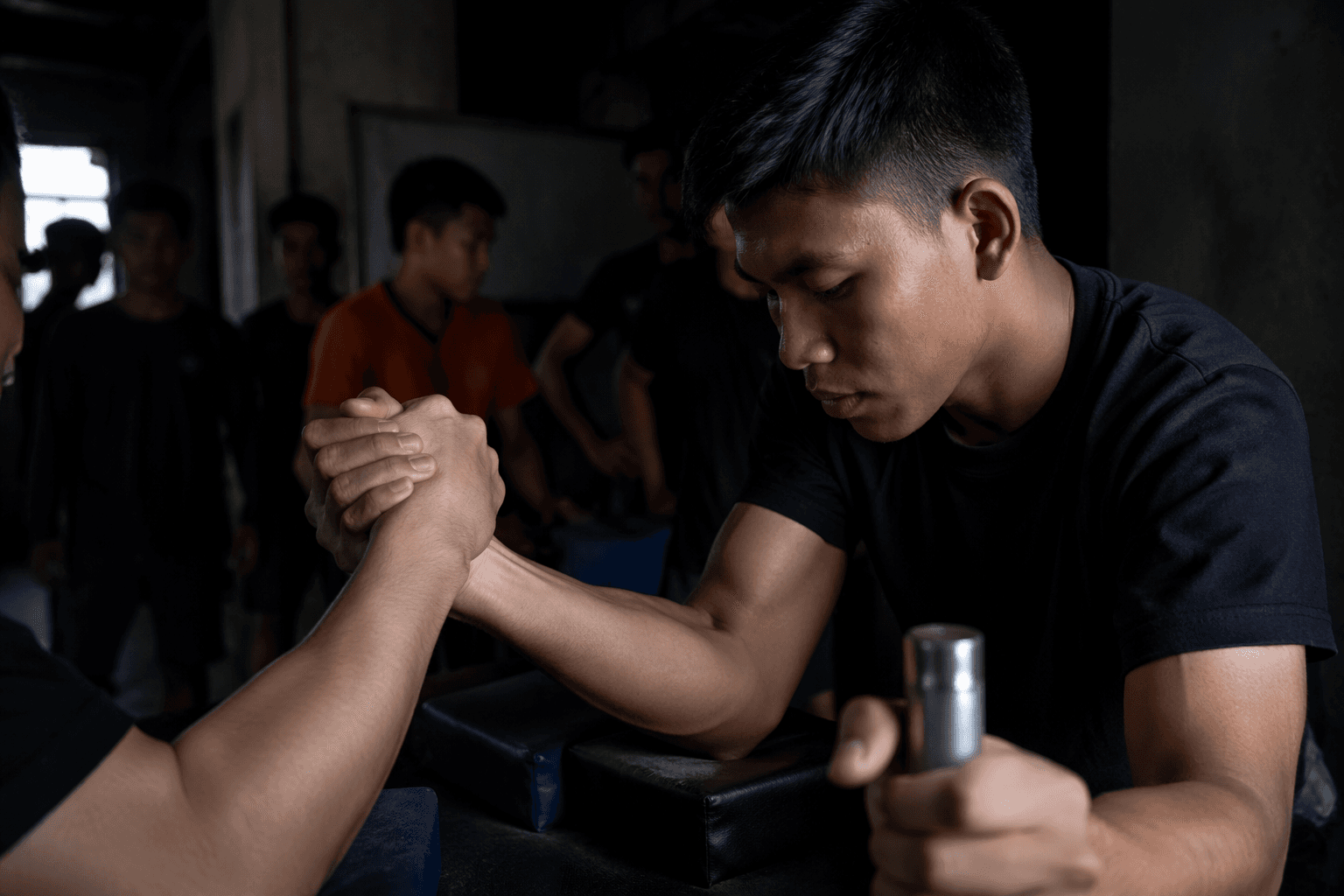
Naga Arm Benders are no longer just a schoolyard story, they are a medal-producing force that has given Nagaland a real place on India’s arm-wrestling map. What started as informal duels between classmates has grown into the state’s first official arm-wrestling community, and the payoff is now visible in national podiums, Champion of Champions finishes and a world champion in the program’s lineage.
From school benches to a serious pipeline
The early version of this group had almost none of the things that usually build a sports program. There were no coaches, no dedicated infrastructure and no steady funding, only determination, repeated table time and a culture that kept drawing athletes back into the sport. That matters because arm wrestling in Nagaland did not rise through a top-down system, it grew through informal networks, family support and self-taught technical progress.
That bottom-up rise is what makes the Naga Arm Benders story feel larger than a club profile. The organization has already piled up more than 30 national medals and has won two Champion of Champions titles, which is extraordinary for a grassroots setup that began with little institutional backing. It has also produced a world champion, a marker that shows the group is not just surviving, but exporting elite talent.
Why the latest medals matter now
The newest results show that the pipeline is still producing. At the 4th National Arm Wrestling Championship in Gandhinagar, Gujarat, from May 29 to June 2, 2026, Team Nagaland came away with a strong medal haul under the Arm Wrestling Association of Nagaland, or AWAN. Avilie Zuyie won gold in the youth 100 kg right arm category, gold in the youth 100 kg left arm category and the youth Champion of Champions title, while Vethozo Lohe took gold in the senior 85 kg right arm category and Seyievil Vitsu earned bronze in the youth 75 kg category.
That matters for more than the medal table. It shows Nagaland is not relying on one standout year or one star puller, but on a spread of athletes who can score across age groups and weight classes. A program that can produce youth champions and senior gold medalists in the same national meet has moved beyond novelty and into competitive legitimacy.
The 2025 national meet reinforced that point too. Six athletes from Naga Armbenders represented Nagaland at the National Arm Wrestling and Para Arm Wrestling Championship in Thrissur and returned with six medals, a result that confirmed the club’s depth was widening, not narrowing. When a small program keeps sending multiple athletes to the podium, it becomes harder to dismiss the rise as a one-off burst.
Avilie Zuyie sets the standard
If there is one name that captures the ceiling of this Nagaland surge, it is Avilie Zuyie. In June 2024 at the National Armwrestling and Para Armwrestling Championship in Nagpur, Maharashtra, the 20-year-old from Rusoma village in Kohima district won two gold medals in the youth men’s 90 kg category, one on the right arm and one on the left. He also finished second overall in the youth Champions of Champions standings and was selected to represent India at the World Armwrestling Championships in Moldova.
His earlier results show how quickly he climbed. In 2023, he finished fourth on the left arm at the World Armwrestling Championship in Malaysia and was already national champion in the youth men’s 86 kg category for both left and right arms. That kind of progression is important in a sport where hand control, leverage and repetition often separate good pullers from world-level ones.
Zuyie’s rise gives Nagaland something even bigger than a medal count: a proof point. Young athletes in the state can now look at a local puller who moved from regional promise to national dominance and onto the world stage. In a niche sport, that kind of visible pathway changes what feels possible.
Nagaland’s identity around the table is getting stronger
The team’s return to Dimapur after the 4th PAFI National Arm Wrestling and Para Arm Wrestling Championship captured the pride around the program. It was not just a homecoming for medal winners, it was a public sign that arm wrestling has become part of Nagaland’s sporting identity rather than an isolated hobby. The applause around the team reflected how deeply the sport has taken hold in a state that is still building its place on India’s arm-wrestling map.
That identity is also becoming more formal. In 2025, Nagaland athletes competed under the banner of Naga Armbenders Kohima, while in 2026 the state team was listed as the Arm Wrestling Association of Nagaland, or AWAN. The change signals an organization that is moving from club culture toward a more defined state structure, with clearer representation and a bigger competitive footprint.
The wider Indian backdrop
Nagaland’s rise fits into a larger national growth story. The Indian Arm Wrestling Federation says the sport was introduced in India in the early 1970s and has since spread to 28 states. That expansion has helped arm wrestling move from a local test of strength into an organized competitive circuit with state associations, national championships and elite pathways.
The federation’s calendar shows how far the sport has come. It lists a 47th National Arm Wrestling Championship for 2025 in Ludhiana, Punjab, a reminder that the national structure now reaches deep across the country. For Nagaland, that broader ecosystem has created the stage where a small schoolyard culture could become a serious sporting identity.
Naga Arm Benders now stand as one of the clearest examples of how a grassroots group can build its own ladder into elite sport. The medals in Gandhinagar, the breakthrough years of Avilie Zuyie and the formal rise of AWAN all point to the same conclusion: Nagaland is no longer just participating in Indian arm wrestling, it is helping shape the standard.
This article was produced by Prism’s automated news system from verified source data, official records, and press releases, then run through automated quality and moderation checks before publishing. The system is built and supervised by the people who set the standards it runs under. Read our full AI policy.
Did this article answer your question?