Petaluma's Gilardi's Saloon gave birth to organized armwrestling</final
Gilardi's Saloon in Petaluma turned a bar-room dare into organized armwrestling, and Bill Soberanes' championship model still shapes how the sport is run today.
Bill Soberanes did more than promote wrist wrestling in Petaluma, California. He helped turn a local challenge into a sport with repeat events, named champions, and a public identity, starting from matches that began in Gilardi's Saloon in 1952 and growing into a championship culture that still anchors armwrestling history.
How Petaluma became the sport's starting line
The earliest organized matches are traced to Gilardi's Saloon in Petaluma, where the Indian Arm Wrestling Federation and Karatians Rajasthan history pages both place the start of the modern story. Karatians Rajasthan dates those matches to 1952 and identifies Bill Soberanes, then a young journalist, as the founder of the organized sport. That matters because the sport did not emerge first as a league or federation, but as a recurring local contest that became stable enough to keep score across years.
Armwrestling itself is far older than Petaluma. Ward Coffman's armwrestling history points to a painting of what appears to be an armwrestling contest in an Egyptian tomb dating to about 2,000 B.C., while also noting that the modern sport is based on a Native American game. Petaluma's role was not to invent the act of contesting strength across a table, but to give the modern version its first durable structure: a place, a promoter, and a schedule people could return to.
The Armwrestling Archives make that progression visible through their history pages, including The Beginnings, WWC Results, and the split histories for the World's Wristwrestling Championship from 1954-1961 and 1962-1969. Those divisions are more than file labels. They show that the Petaluma scene had become organized enough to preserve results, track eras, and treat champions as part of a continuous record rather than isolated winners of a one-night dare.
Bill Soberanes and Dave Devoto built the first real championship model
The pivot from local attraction to organized event came in 1962, when Bill Soberanes and Dave Devoto formed World's Wrist Wrestling Championship, Inc. and moved the event into one of Petaluma's largest auditoriums. That change put the sport into a venue built for a crowd, not just a saloon corner, and it gave wrist wrestling a corporate wrapper that made it easier to promote, schedule, and repeat.
The move worked. One source describes the event as "tremendously successful," and another says the World Wristwrestling Championships were televised on ABC's Wide World of Sports for 16 years. That television run is one of the clearest signs that Petaluma had done something most local contests never do: it turned an offbeat strength challenge into a format that national audiences could understand, follow, and remember.
For today's armwrestling scene, this is the blueprint that still matters. Modern events depend on the same basic ingredients Petaluma introduced early on: recurring titles, recognizable promoters, and a structure that lets different athletes be compared across time. The sport's current branding, from championship names to event identity, still traces back to the idea that a local contest becomes meaningful only when someone gives it rules, records, and a stage.
The records that made the sport legible
The reason Petaluma's early years still carry so much weight is that the history was documented instead of mythologized away. A Sonoma County Library record says a 1962 Petaluma wrist-wrestling contest was won by Earl Hagerman, and that Tiny Benedix returned to Petaluma and won the championship three times. Those details matter because they show a sport settling into continuity, with repeat names and repeat wins that made rivalries and legacies possible.
Calisphere adds to that record with photographs of Bill Soberanes with wrist wrestlers in Petaluma in 1963 and again in 1970. The images put a face to the organizing era and show how long Soberanes remained tied to the scene. Instead of a single breakout moment, the archive suggests a sustained culture, one that lasted long enough to be photographed, cataloged, and remembered across multiple seasons.
That record-keeping is the connective tissue between Petaluma and modern governance. A promotable sport needs more than a strong champion. It needs archives, names, dates, and outcomes that let fans tell the difference between a local one-off and a title that actually means something.
The statue turned history into public memory
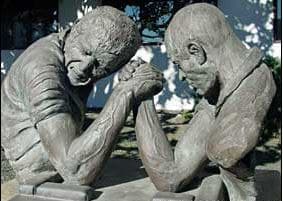
Petaluma's wrist-wrestling statue is the clearest symbol of how deeply the town embraced the sport's origin story. The New York Times noted in 2011 that the statue commemorates Bill Soberanes, who founded the town's World Wristwrestling Championships. A separate account says Soberanes died on June 2, 2003, at age 81, and SFGATE described him as a longtime local columnist who called himself "Mr. Petaluma" and worked the streets of the town for 50 years.
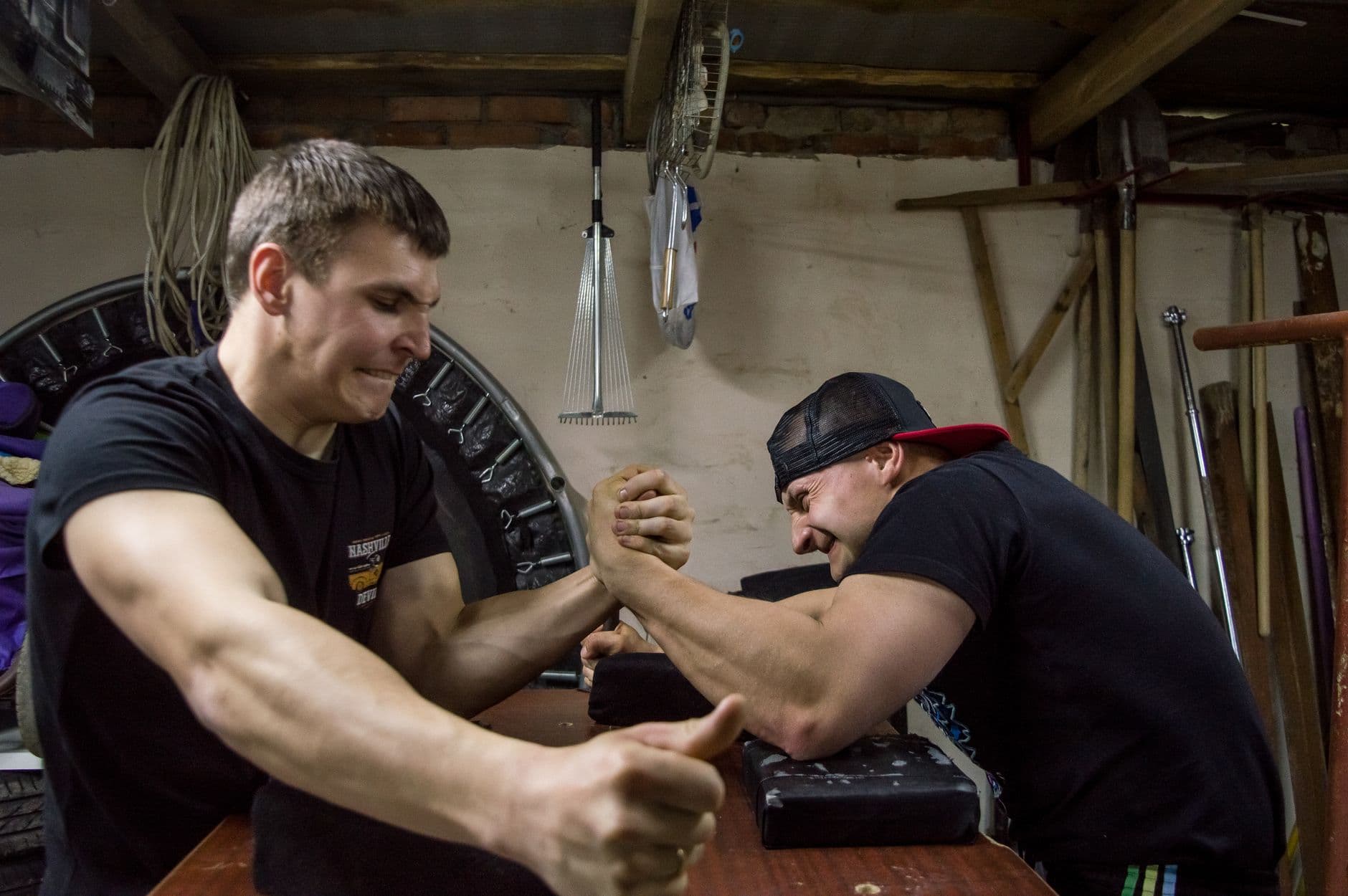
That public memory matters because armwrestling rarely gets the civic treatment reserved for mainstream sports. In Petaluma, the statue says the opposite: the sport's founder and its first organized era are part of the town's identity, not just a footnote in niche competition history. It also signals that the people who built the sport understood branding before most outside observers did. A statue, a championship, a television package, and a repeatable annual event all help transform a bar-room contest into something closer to a legitimate sporting property.
Why Petaluma still matters to modern armwrestling
Petaluma is still the hinge point between the old challenge culture and the modern competitive scene. The early matches at Gilardi's Saloon show how the sport began, the 1962 launch of World's Wrist Wrestling Championship, Inc. shows how it became organized, and the archive pages, photographs, and results show how it was preserved as a sport with history rather than a series of anecdotes.
That is the Petaluma lesson modern armwrestling still lives by: legitimacy comes from repeatable events, clear promoters, and records that hold up over time. The sport's current tournaments, branding, and governing identity all rest on choices made when Soberanes, Devoto, and their Petaluma circle decided the match was bigger than the bar where it started.
This article was produced by Prism’s automated news system from verified source data, official records, and press releases, then run through automated quality and moderation checks before publishing. The system is built and supervised by the people who set the standards it runs under. Read our full AI policy.
Did this article answer your question?