Scottish arm wrestler Michael Jervis finds success through technique and training
Michael Jervis turned online curiosity into table craft, and his routine shows why arm wrestling is won by hand control, timing and leverage, not just force.
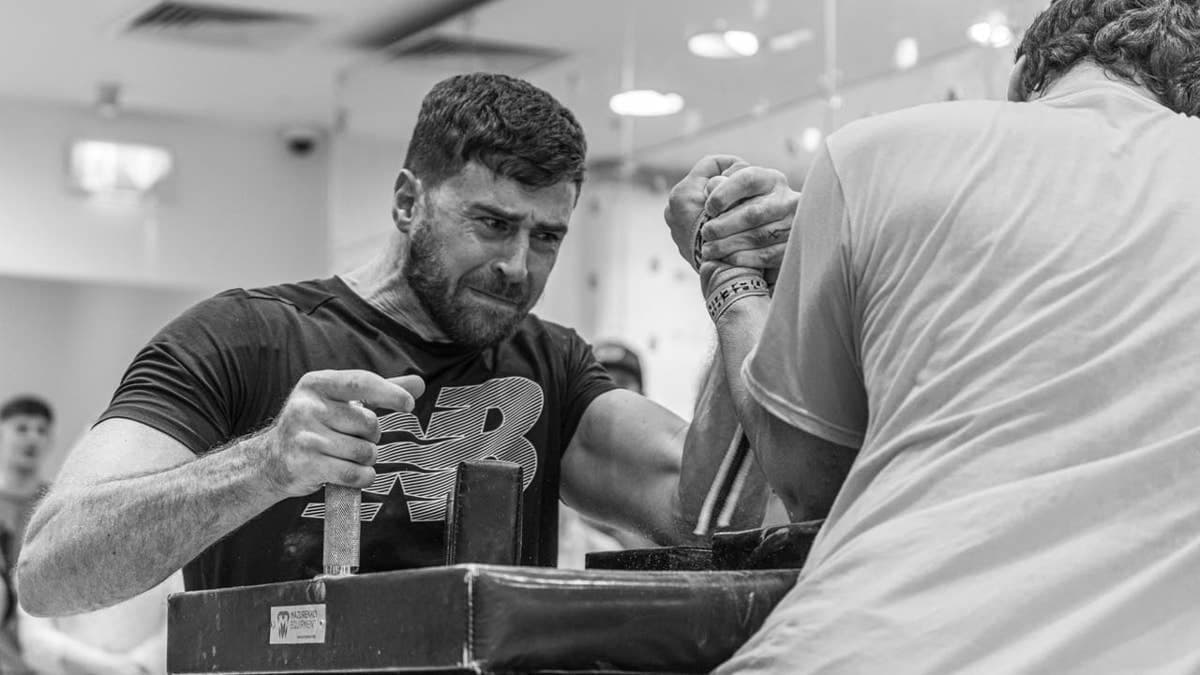
Michael Jervis did not come to arm wrestling through the usual strength-sport doorway. He found it through clips online, then through Pulling John, the John Brzenk documentary about a much smaller man dominating much larger opponents when the hand fight is technical enough. That idea sent Jervis looking for a club, and when restrictions lifted he found Team Hawk in Edinburgh, walked in, and got beaten by everyone. He kept returning anyway, and now his week is built around the table.
The rhythm that makes a puller
Jervis trains at the gym on Wednesdays and pulls at the table on Saturdays, the split serious competitors use to separate conditioning from table-specific work. The gym session builds the base, but the table session teaches the sport’s real language: pressure, angle changes, and the ability to read what an opponent is trying to do before the hand is lost.
What actually decides a match
Outsiders often reduce arm wrestling to a forearm contest, but the table punishes that mistake quickly. Elbows have to stay on the pads, wrists and grip control the exchange, and a match ends only when one hand is pinned. If the hands slip, the bout can go into a strap restart, which turns the contest into a different kind of control battle without changing the fact that leverage still rules.
Body movement is part of the work too. A puller is not just squeezing and hoping; the torso, shoulder, wrist and fingers all have to coordinate with timing.
Toprolls, hooks and the language of hand control
Jervis’s story also makes sense of the sport’s two best-known styles. A toproll attacks the fingers and wrist, trying to open the opponent’s hand and take away their leverage before the side pressure ever settles in. A hook does the opposite: it drags the fight inside, where the battle becomes shorter, tighter and far more about hand and arm control.
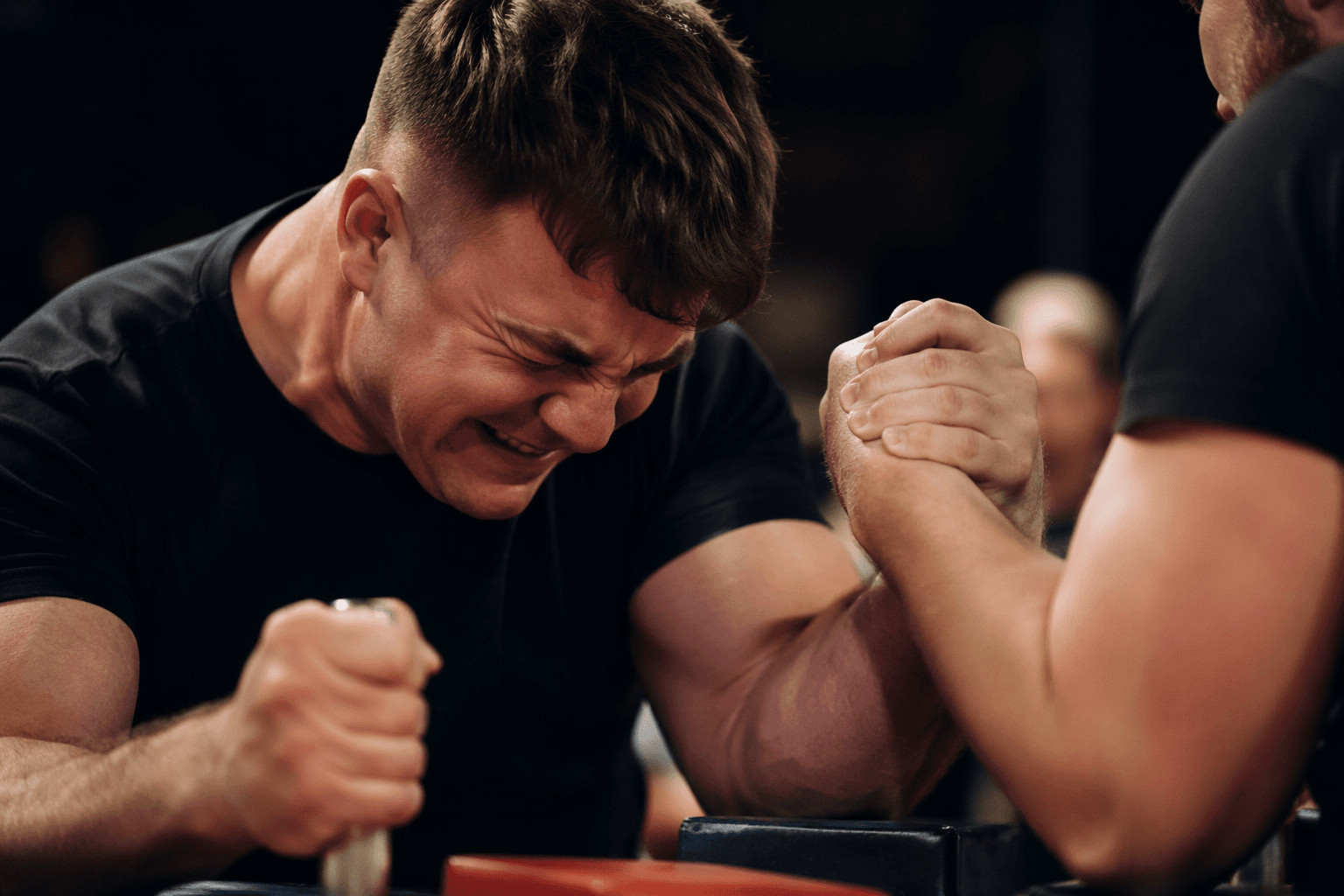
Those choices shape the whole match, from the start position to the way a puller uses the strap to change the geometry of the hand.
Why technique keeps beating size
Jervis’s remarks about genetics and work ethic fit one of arm wrestling’s oldest truths: size helps, but only up to a point. The sport gives strength an opening, then immediately tests whether that strength can be organized into usable pressure. A bigger arm without the right angle can be dead weight; a smaller arm with better connection can own the table.
The sport’s best pullers are remembered not only for muscle but for learning, adaptability and the ability to solve an opponent in real time.
The rulebook behind the chaos
Arm wrestling’s formal structure is much broader than casual spectators assume. The World Armwrestling Federation, established in 1977, has members from more than 80 countries and runs the annual World Armwrestling Championships. In federation-sanctioned competition, athletes are divided into weight classes and compete in right-hand and left-hand events, with formal grip, start and strap procedures and foul rules shaping every table.
The rule set makes matches comparable across countries, clubs and championships, and it creates a common standard for how a puller enters the table, how a slip is handled and how a foul changes the exchange.
The injury risk that explains the discipline
The medical backdrop is part of the same story. Reviews in orthopaedic journals describe arm wrestling injuries that include soft-tissue damage, nerve injury and humeral fracture.
Those risks help explain why table discipline is treated so seriously by clubs and competition officials. Elbow placement, wrist position and controlled starts are part of the sport’s safety system, built into the technique itself.
Brzenk as the model every puller knows
Jervis’s documentary reference point, John Brzenk, remains the sport’s defining name. Born on July 15, 1964, Brzenk is the most successful arm wrestler in history, with more than 500 titles across a 40-plus-year competitive career. His reputation rests on exactly the quality Jervis chased when he started watching clips and reading the table: the ability to beat stronger and larger opponents through technical precision.
The club culture behind the growth
Team Hawk in Edinburgh sits inside a broader club network across the UK and Ireland, and that club culture is where the sport actually grows. The table gives beginners a place to lose, learn and come back.
Edinburgh’s arm-wrestling presence also shows how local clubs connect to a global sport. The same discipline that shapes a Wednesday gym session and a Saturday pull in Scotland is the discipline that carries athletes to the World Armwrestling Championships in Sofia and beyond.
This article was produced by Prism’s automated news system from verified source data, official records, and press releases, then run through automated quality and moderation checks before publishing. The system is built and supervised by the people who set the standards it runs under. Read our full AI policy.
Did this article answer your question?