Singapore arm wrestling grows from schoolyard challenge to global stage
Gregory Yeo's path from Maris Stella High School scraps to a world bronze mirrors Singapore arm wrestling's leap from five serious pullers to a nearly 500-strong scene.
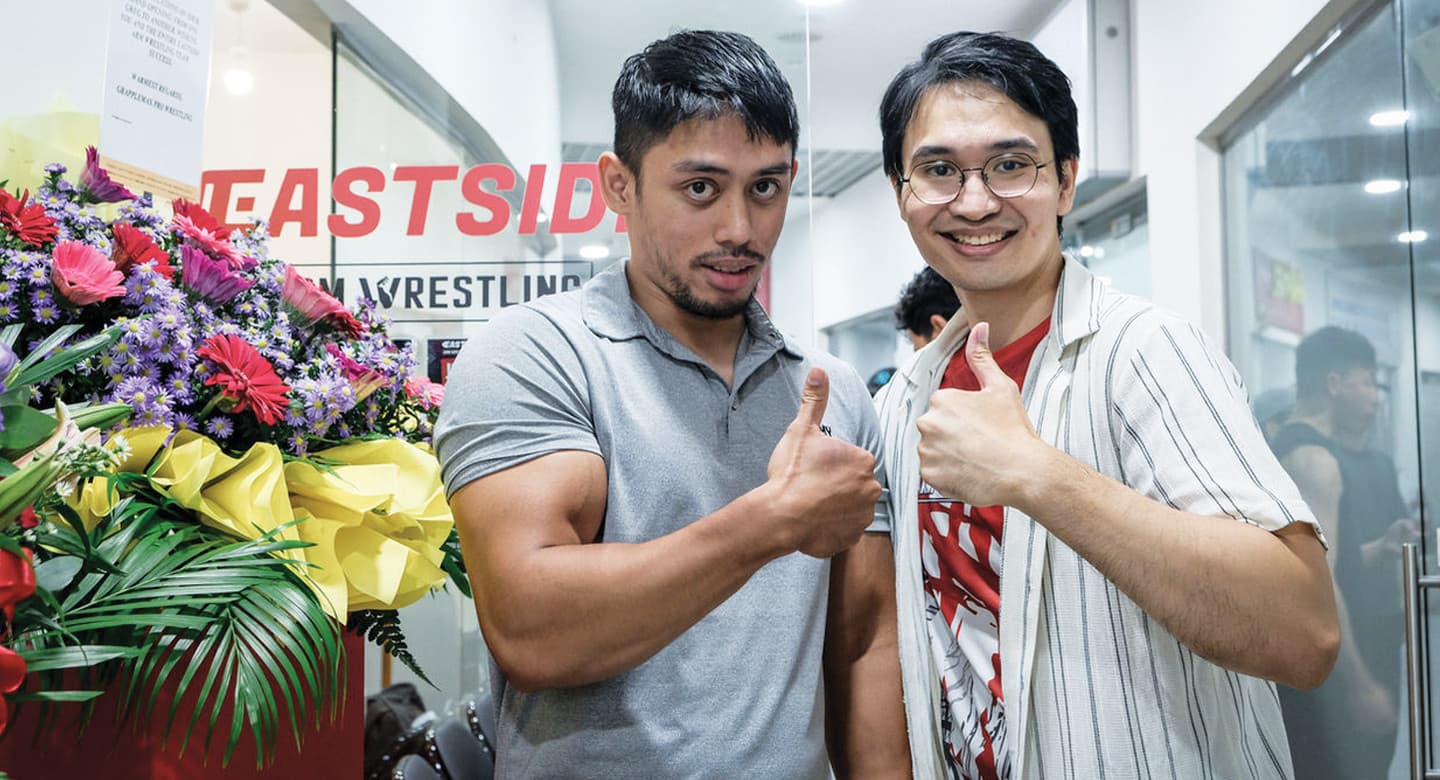
Gregory Yeo learned arm wrestling the hard way: by losing to bigger classmates at Maris Stella High School, then deciding he would not stay weak forever. What started as a schoolyard test between classes became a route into online forums, Facebook groups, a gym at NUS, and eventually a world podium for Singapore. His story tracks the sport’s own rise in Singapore, from a tiny scene that hid in plain sight to one with coaching, structure, and an international calendar.
From schoolyard dare to serious training
Yeo was first drawn in by the kind of challenge that happens before the bell rings and after lunch, when students size each other up over a desk. He has said the repeated losses at his all-boys school pushed him to look for better technique instead of just more strength, and that search led him to Valen Low, the founder and first president of Singapore Armwrestling. Yeo began training with Low at an NUS gym and entered his first competition in Malaysia in 2016, finishing fourth in the open weight category. That finish mattered because it showed him the sport was not just a novelty. It had rules, weight classes, and a path forward.
The names that gave the sport roots
Singapore’s arm-wrestling history did not begin with social media. Singapore Armwrestling says 2014 was a breakthrough year, when Valen Low became the first Singaporean to win an international championship by taking the FitX Cup in Australia and also winning an Asian Championship title. The same year brought Singapore’s first podium finish at a major open tournament in Pattaya, a marker that the country could compete beyond its own borders.
Low’s reputation was built earlier, too. A CNA profile in 2018 described him as a teenager who challenged strangers to arm-wrestling bouts, a reminder that the sport’s local growth began with stubborn individual obsession long before it became organized. By 2022, a CNA report put Singapore’s arm-wrestling participation at about 200 people, while the Singapore Armwrestling Open Brawl that January drew close to 50 competitors at Wan Min Community Services in MacPherson Road. Even then, the scene was still small enough that every event felt like a proof of concept.

How visibility changed during the pandemic
The pandemic slowed face-to-face meet-ups, but it pushed arm wrestling onto screens. Yeo started making his own content, putting out training videos, sparring clips, Q&As, and practical tips across YouTube, TikTok, and Instagram. His channel eventually reached 15.6 thousand subscribers and nearly 30 million views across those platforms, a scale that mattered in a sport where visibility is often the difference between a curiosity and a community.
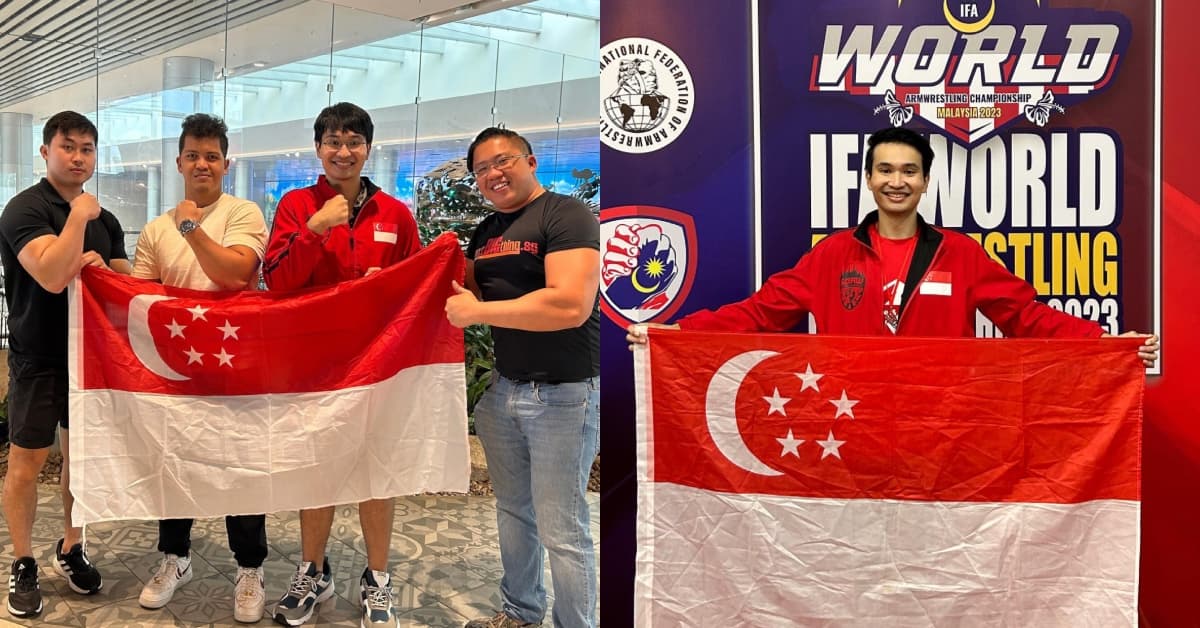
That online growth helped turn isolated training into a regular group. By 2022, the sport had moved from people’s homes and void decks to a steady core of around 35 members around Yeo. The results followed the audience: in 2023, he finished third in the senior men’s 78 kilogram right arm category at the IFA World Championships in Kuala Lumpur. For a sport that once lived in school corridors, a world championship bronze was a clear sign that Singapore pullers were no longer training in the margins.
A gym, a business and a bid for legitimacy
The next step was to make the sport visible on purpose. In September 2025, Yeo and fellow athlete Syed Uzair opened Eastside Arm Wrestling, a move that was about more than renting space. Eastside says Singapore’s first dedicated arm-wrestling gym opened in 2025, giving the sport a home built for coaching, technique work, and repeat exposure for newcomers.
Eastside also says it offers coaching services, merchandise, and weekly open practices for arm wrestlers of all levels. That matters in a sport where many people still discover the rules only after they have already tried to beat someone at a lunch table. Yeo’s own framing was blunt: the move was about legitimacy, coaching structure, and giving the sport a stronger social identity in Singapore. Eastside later described the community as nearly 500 strong in 2025, a jump that shows how quickly a niche activity can turn into a real sporting network when it has a fixed address and a repeatable routine.
The festival stage and the hidden sport
Singapore’s public sports calendar has also helped pull arm wrestling into the open. Sport Singapore said the inaugural Urban Sports + Fitness Festival in 2024 drew more than 70,000 participants and spectators. The 2025 edition opened with more than 15,000 participants on its first day and finished with more than 90,000 participants and spectators across three weekends. That kind of footfall gives a small sport something it rarely gets: an audience that did not come specifically to see arm wrestling.
The Singapore Armwrestling Open 2025 showed how far the sport had traveled. Eastside says the event ran on 29-30 November 2025 at Singapore Expo, drew close to 110 pullers from 15 countries and territories, and offered more than $10,000 in cash and prizes. For a scene that once had only about five serious arm wrestlers, that is a leap in scale as well as status.
The sport still feels hidden because its growth has been grassroots, not mainstream. It lives in gyms, online clips, festival tents, and open practices rather than televised arenas. But with a dedicated gym, a larger local base, and regular international fields coming through Singapore Expo, arm wrestling has built the kind of structure that turns a schoolyard challenge into a sport with a future.
This article was produced by Prism’s automated news system from verified source data, official records, and press releases, then run through automated quality and moderation checks before publishing. The system is built and supervised by the people who set the standards it runs under. Read our full AI policy.
Did this article answer your question?